
 Paul Kelly
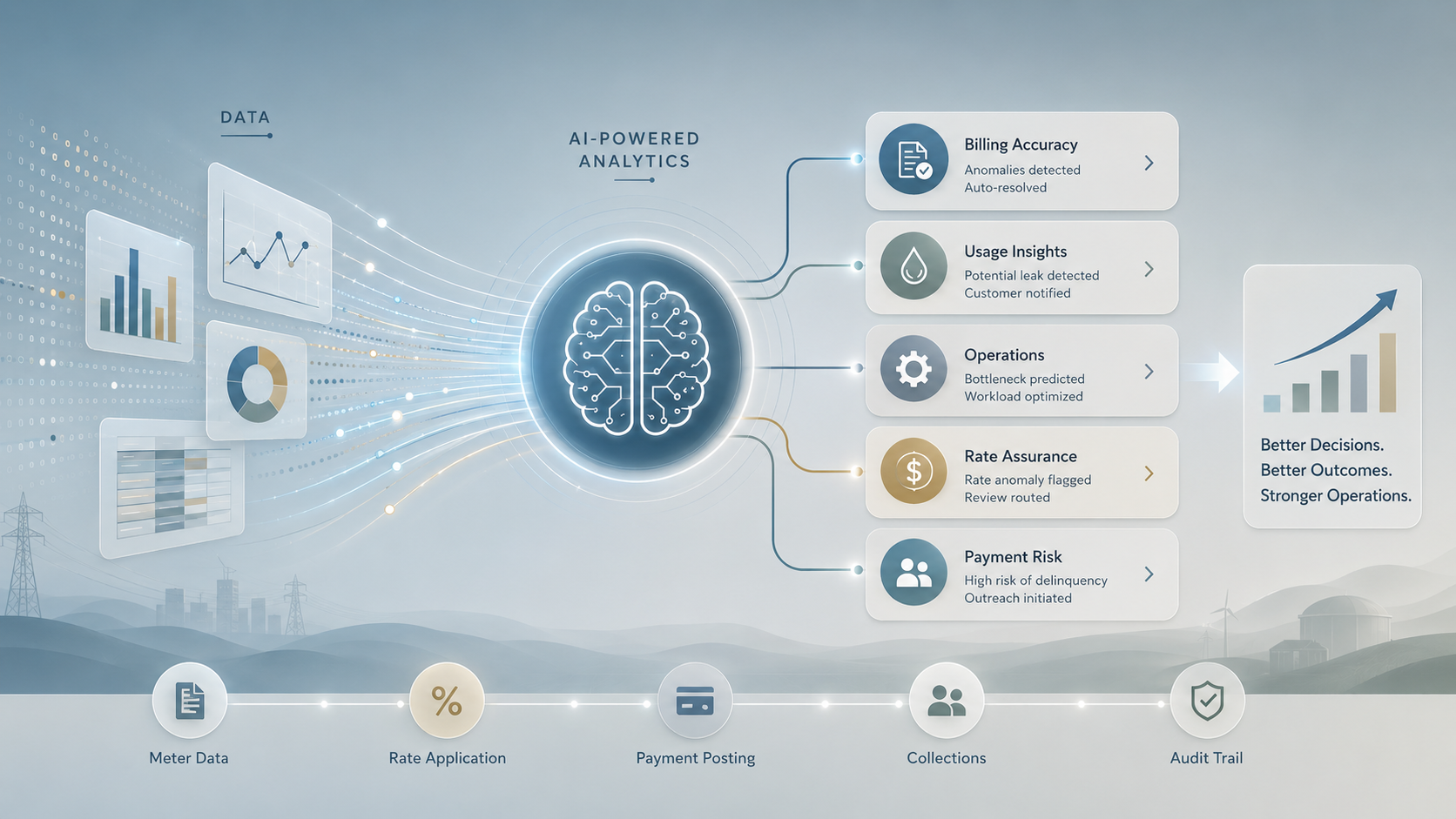
Data You Can See Is Not the Same as Data You Can Act On
Here's what you'll learn when you read this story:
• Why utility billing analytics is shifting from retrospective reporting to real-time, actionable intelligence that drives operational decisions.
• How AI transforms billing, usage, operations, rate, and payment data into continuous monitoring and automated risk detection.
• Why the next competitive advantage in utility operations comes from turning insight into immediate, governed action across the billing lifecycle.
Utility billing operations generate enormous amounts of data. The challenge is no longer access to information – it’s turning information into action.
For years, analytics in utility billing primarily meant dashboards, reports, and historical trend analysis. Managers could see what happened, but acting on that information still required manual review, interpretation, and operational follow-through. [1]
AI is changing that model completely.
The next generation of utility billing analytics is not just visual. It is actionable. Instead of simply identifying issues after they occur, AI-enabled analytics can continuously monitor operations, detect emerging conditions, classify risk levels, and trigger the appropriate response automatically or route it to the right team in real time.
This shift transforms analytics from a disparate reporting process into an operational infrastructure.
Five areas are seeing the greatest impact from this evolution.
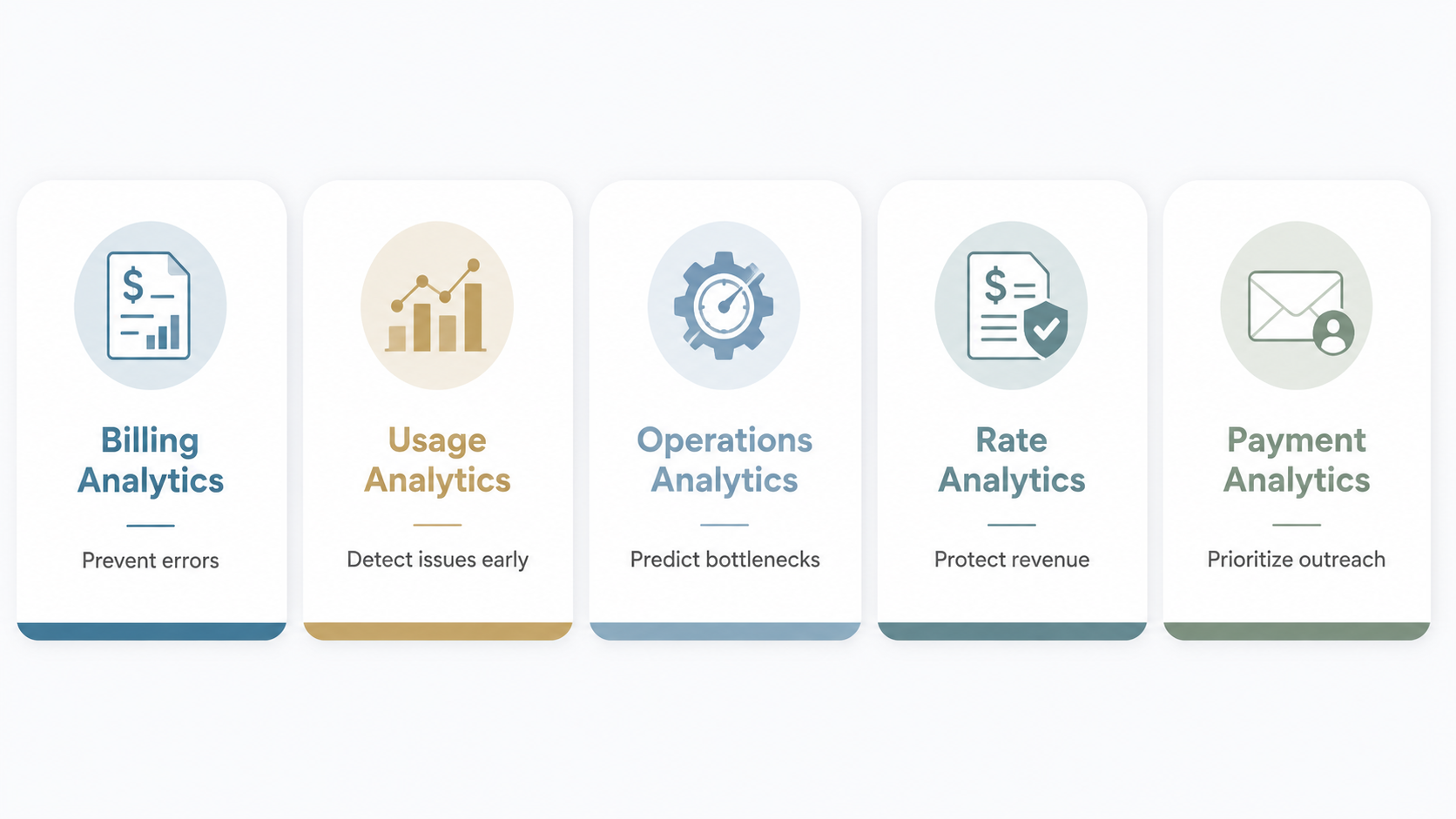
Billing analytics now extend far beyond post-cycle audits and exception reports. AI can continuously validate billing accuracy across every account before bills are released, classify exceptions automatically, and identify anomalies in real time instead of after customer disputes occur. [2]
Usage analytics have also become significantly more intelligent. By combining interval consumption data, weather patterns, occupancy behavior, and meter signals, AI can detect leaks, identify abnormal consumption patterns, surface conservation opportunities, and trigger proactive customer communications before small issues become expensive problems.
"Data you can see is not the same as data you can act on."
Operations analytics are evolving from reactive monitoring into predictive operational management. AI can identify developing workflow bottlenecks, rising exception rates, or process slowdowns before they create service disruptions or SLA failures. This gives operations teams the ability to intervene proactively rather than react after problems escalate.

Rate analytics now support continuous revenue assurance. AI can validate rate assignments, detect potential misapplications, monitor tariff anomalies, and model rate impacts across the billing portfolio before changes are deployed into production environments.
Payment analytics are becoming increasingly predictive as well. AI can continuously monitor delinquency risk, identify accounts trending toward non-payment, evaluate payment arrangement compliance, and optimize customer outreach strategies before balances become write-offs.
One of the most important outcomes of AI-driven analytics is that utilities can move from periodic operational reviews to continuous operational awareness.
A small leak that previously may have gone unnoticed for months can now be identified through interval usage analysis and incorporate weather-adjusted consumption monitoring before the customer even receives a high bill. Revenue leakage caused by incorrect rate assignments or unbilled accounts can be detected during the billing cycle rather than during quarterly audits. Operational slowdowns can be identified before customers experience delays.
This is where AI fundamentally changes the role of analytics in utility billing.
Without AI, analytics primarily describe what happened- an historical descriptive outcome
With AI, analytics can help determine what happens next, enabling diagnostic and predictive improvement initiatives.
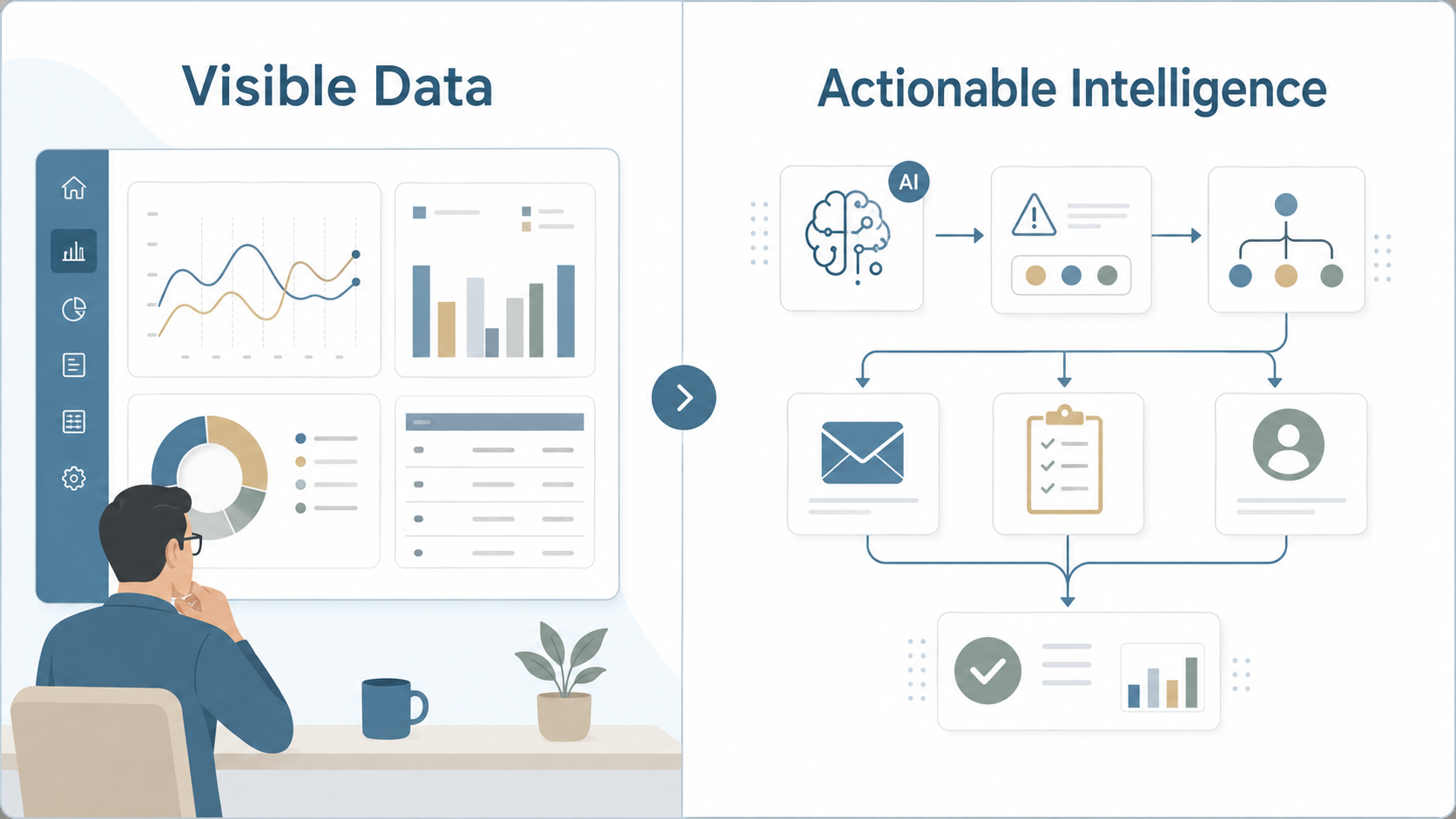
That distinction is becoming increasingly important as utilities manage growing operational complexity, larger data volumes, and rising customer expectations.
The utilities gaining the greatest value from AI are not simply collecting more data. They are building operational systems capable of turning data into timely, governed, and measurable action.

MultiBilling was built around this model. AI-driven analytics should not function as passive reporting layers sitting beside operations. They should actively support revenue assurance, operational efficiency, customer communication, workflow optimization, and continuous improvement across the entire billing lifecycle.
Because in the future of utility billing, visibility alone will not create competitive advantage.
The advantage will belong to the organizations that can act on operational intelligence faster, more accurately, and more consistently than everyone else. [3]


Schedule a personalized live demo of the new MultiBilling platform today and explore how AI-driven workflow orchestration, operational intelligence, and governed automation can transforming your utility billing operations.
Citations:
[1] McKinsey Global Institute. The State of AI: How Organizations Are Rewiring to Capture Value. McKinsey & Company, 2023.
[2] Deloitte. AI Governance and Risk Management: Building Trustworthy AI Systems. Deloitte Insights, 2024.
https://www2.deloitte.com/insights
[3] National Institute of Standards and Technology. Artificial Intelligence Risk Management Framework (AI RMF 1.0). U.S. Department of Commerce, 2023.
https://www.nist.gov/itl/ai-risk-management-framework