
 Daphne Davis
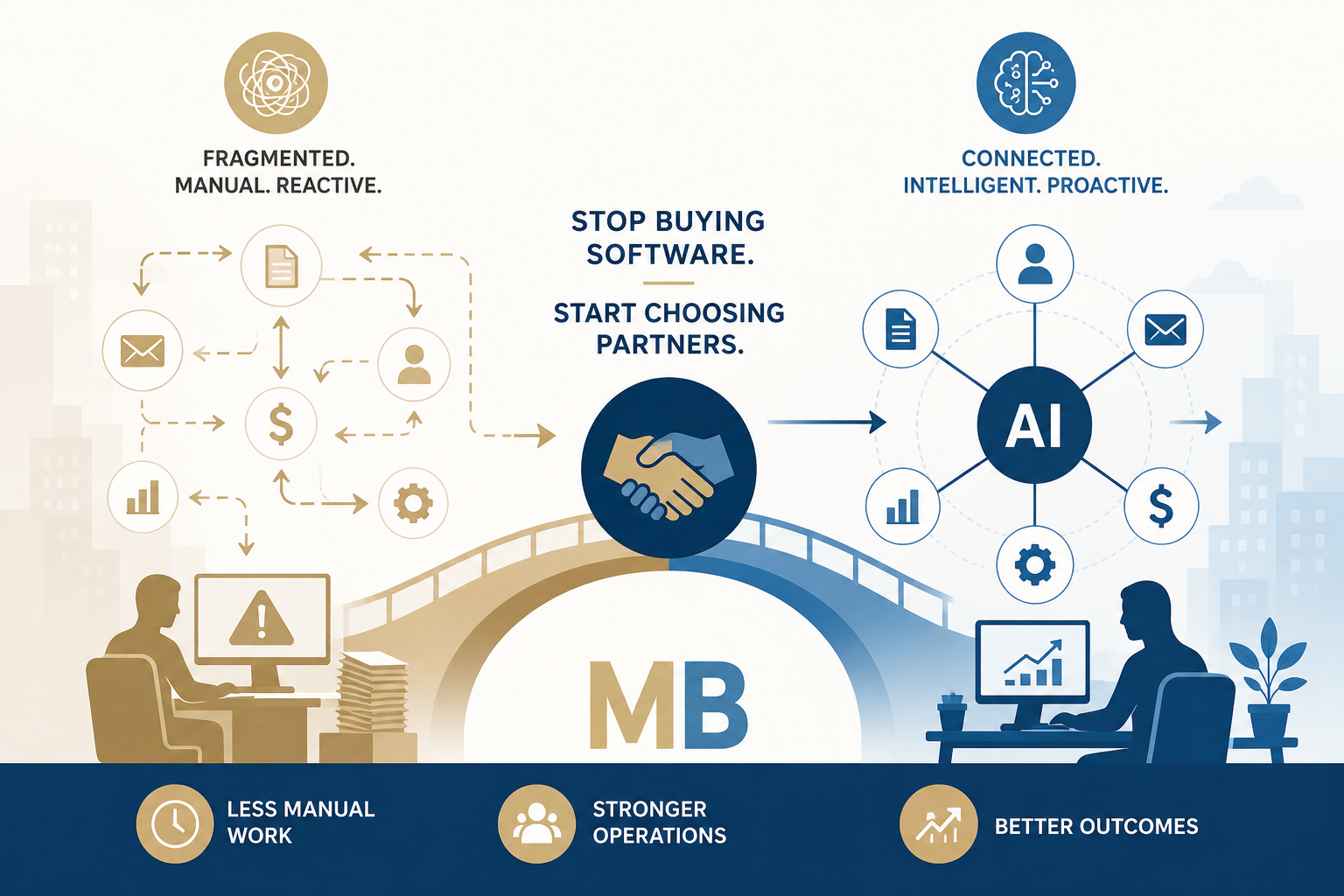
Stop Buying Software. Start Choosing Partners
Here's what you'll learn when you read this story:
• Why feature lists and demos no longer tell the full story when evaluating utility billing software.
• The critical questions organizations should ask to identify a true long-term technology partner.
• How the right platform can absorb complexity, preserve institutional knowledge, and strengthen operations over time.
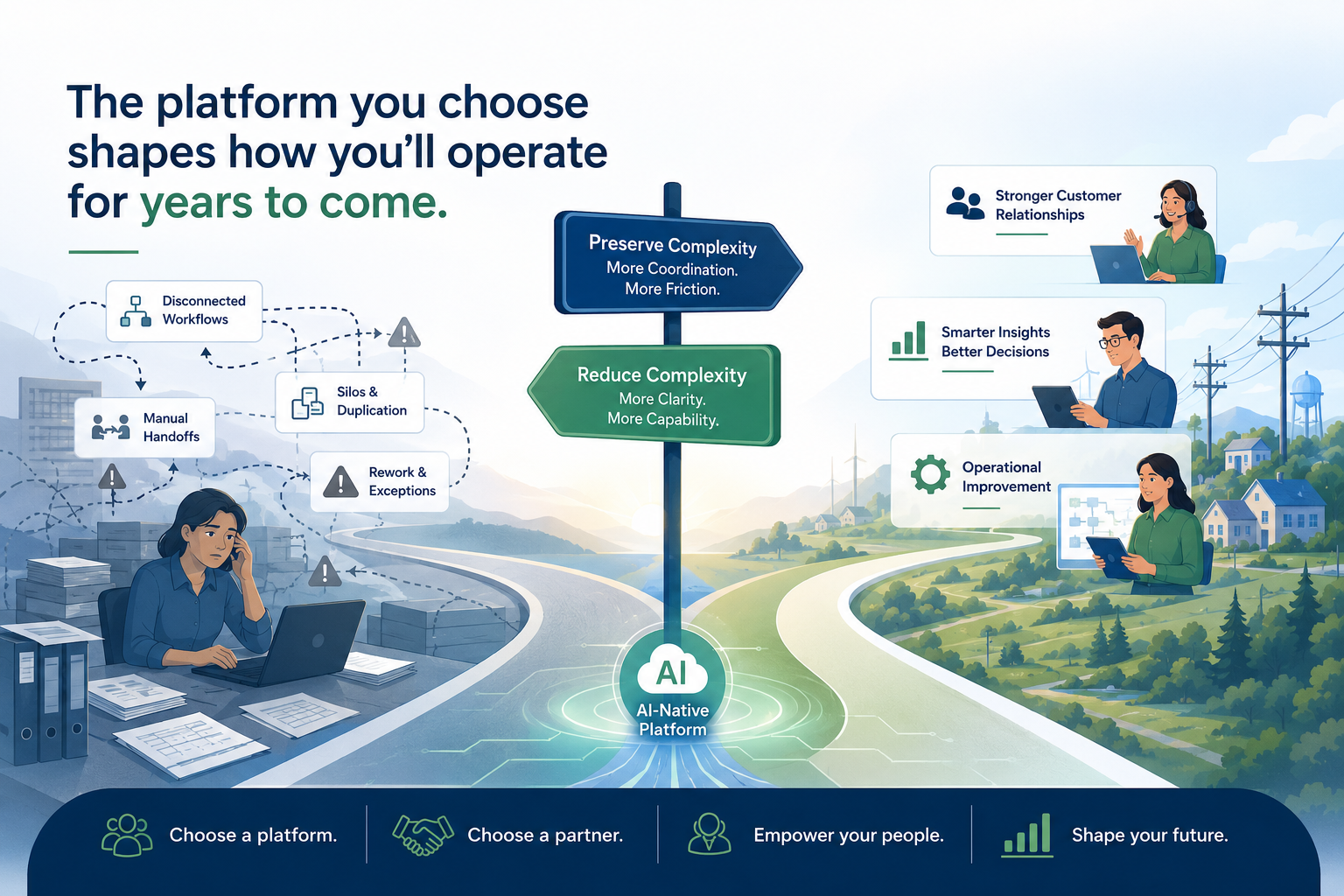
A billing platform is not simply a product your organization purchases. It is a long-term operational relationship that will shape how your team works for years to come. The system selected today will influence whether employees in the future are still manually reconciling disconnected workflows or focusing on higher-value work such as customer relationships, analysis, and operational improvement.
For years, billing systems were evaluated primarily on features, integrations, reporting, and implementation timelines. While those capabilities still matter, AI is changing the role software plays inside organizations. [1] Modern platforms are beginning to maintain context across workflows, coordinate actions between systems, and reduce the need for manual oversight. Software is no longer just supporting work, it is increasingly defining how work happens.

As AI reshapes utility billing, two software philosophies are emerging. Some systems simply preserve existing workflows by digitizing current processes and making individual tasks faster. Others are designed to reduce complexity altogether by embedding intelligence into operations, minimizing translation between departments, and maintaining operational continuity across the organization. The difference is significant because every manual handoff, reconciliation, and repeated interpretation creates long-term operational overhead.

Choosing a system that preserves fragmented workflows often locks organizations into years of coordination inefficiencies. Over time, this leads to more exception handling, greater departmental friction, and increased reliance on institutional knowledge that exists outside the system itself. Instead of improving outcomes, skilled employees spend their time compensating for disconnected processes. [2] AI-native platforms aim to change that equation by reducing the need for manual coordination and freeing teams to focus on judgment, strategy, and customer engagement.
This decision is no longer just about technology. It is about selecting a partner that will help your organization become more capable over time. A strong vendor relationship absorbs complexity instead of pushing it back onto staff, supports evolving operational needs, and treats employee expertise as valuable operational intelligence. A weak partnership, on the other hand, creates dependency and preserves inefficiencies that force employees to remain the bridge between disconnected systems.
When evaluating billing platforms, organizations should look beyond demos and feature lists. Important questions include whether the vendor is committed to making the operation stronger over time, how they respond when needs evolve beyond the original roadmap, and whether they truly understand the workflows and people behind the organization. Just as important is whether the platform preserves ownership of operational knowledge and data, rather than creating long-term dependency on the vendor itself.
"A strong vendor relationship absorbs complexity instead of pushing it back onto staff"
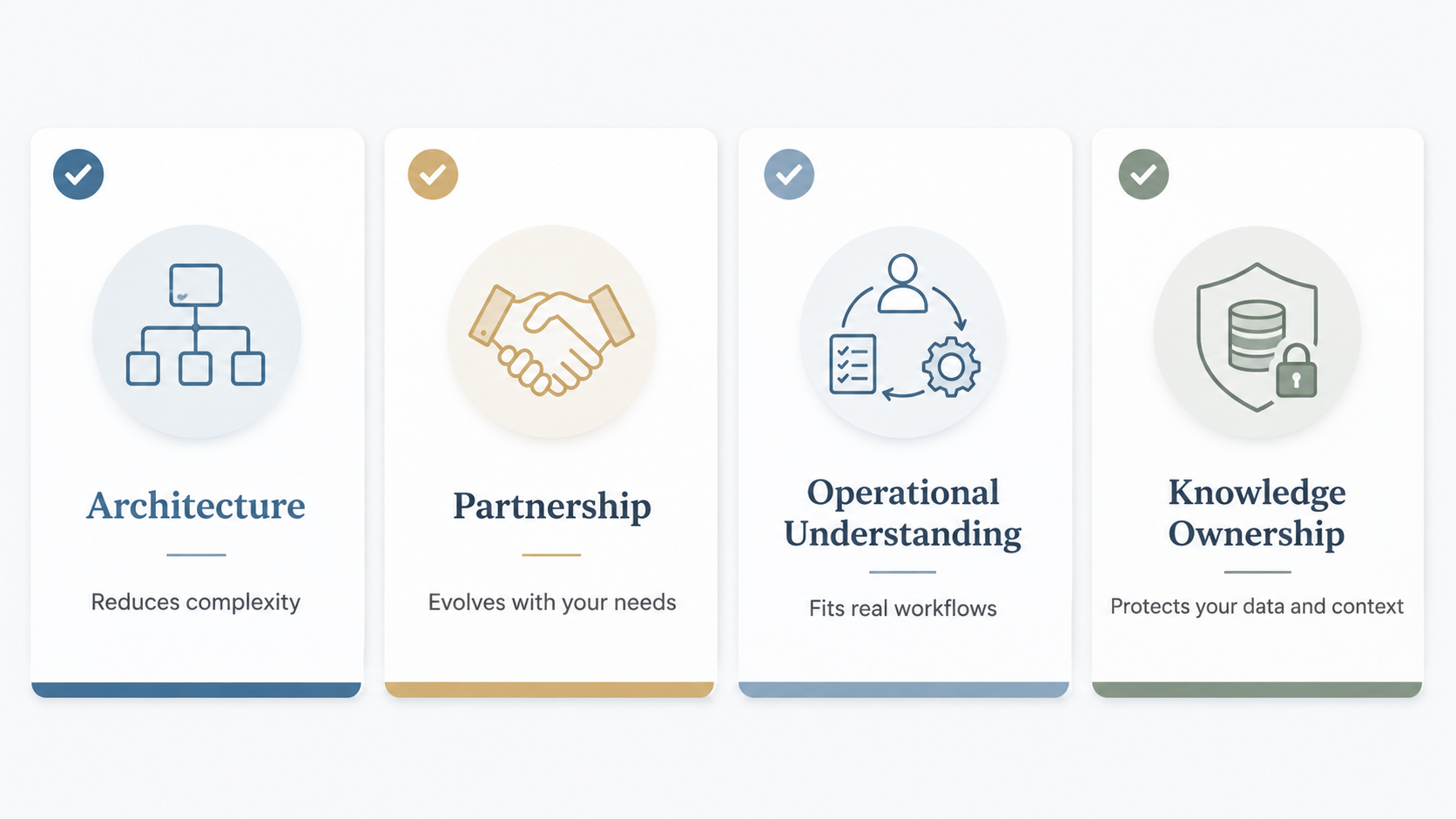
The future of utility billing is not simply about automating existing tasks. It is about eliminating unnecessary complexity so employees can focus on the work they were meant to do. AI has created an opportunity for systems to maintain operational coherence continuously rather than relying on humans to rebuild it at every step. [3] But achieving that future depends on architecture, design philosophy, and the partner behind the platform. In the end, organizations are not just selecting software, they are choosing how they will operate for the next decade.


Schedule a personalized live demo of the new MultiBilling platform today and explore how AI-driven workflow orchestration, operational intelligence, and governed automation can transforming your utility billing operations.
Citations:
[1] Accenture. The Front-Runners’ Guide to Scaling AI. Accenture Research, 2024. https://www.accenture.com/us-en/insights/artificial-intelligence/scaling-ai
[2] Gallup. State of the Global Workplace 2024. Gallup Press, 2024. https://www.gallup.com/workplace/349484/state-of-the-global-workplace.aspx
[3] IBM. Operational Intelligence and Real-Time Decision Making. IBM Institute for Business Value, 2024. https://www.ibm.com/thought-leadership/institute-business-value/report/operational-intelligence