
 Larry Foster
Earning the Right to Automate
Here's what you'll learn when you read this story:
• Why AI success in utility billing depends more on operational maturity than on advanced technology deployment.
• How leading utilities are using workflow mapping, cost analysis, and governance frameworks to prepare for intelligent automation.
• Why redesigning processes before implementing AI is essential to avoid scaling inefficiency and operational risk.
Artificial intelligence is rapidly becoming one of the most significant forces shaping the future of utility billing. Organizations across the industry are exploring AI-driven automation, predictive analytics, intelligent workflows, and agentic operations as they look for new ways to improve efficiency and customer service. Nearly 40% of Utility companies plan to implement AI into thie systems by 2027. [1] Yet despite the excitement, one reality remainsremarkably consistent across industries: most AI projects fail to deliver their expected value. The reasons are rarely technical. In most cases, the technology works exactly as designed. What fails is the operational foundation supporting it. Of those failures, only 23% were caused by model performance. The other 77% stemmed from strategy, governance, and operational issues. [2]
At MuniBilling, we believe the most important lesson utilities can learn about AI is that automation does not fix operational inconsistency. It accelerates it. If workflows are poorly defined, AI scales confusion. If decision-making is inconsistent, AI reproduces inconsistency faster. If governance is weak, automation amplifies risk.
The organizations achieving the greatest success with AI are not necessarily deploying the newest technologies. They are the organizations that understand their operations well enough to deploy those technologies strategically.
This is why operational clarity has become one of the most valuable assets a utility can possess. Before an organization can automate a process, it must understand the process. That sounds obvious, yet many workflows still depend heavily on institutional knowledge, unwritten procedures, and informal decision-making developed over years of operational experience.
Experienced employees know how to navigate exceptions, compensate for system limitations, and resolve unusual situations. The challenge is that AI cannot automate knowledge that only exists in someone's head. Before automation can occur, operational intelligence must first be documented, measured, and governed.
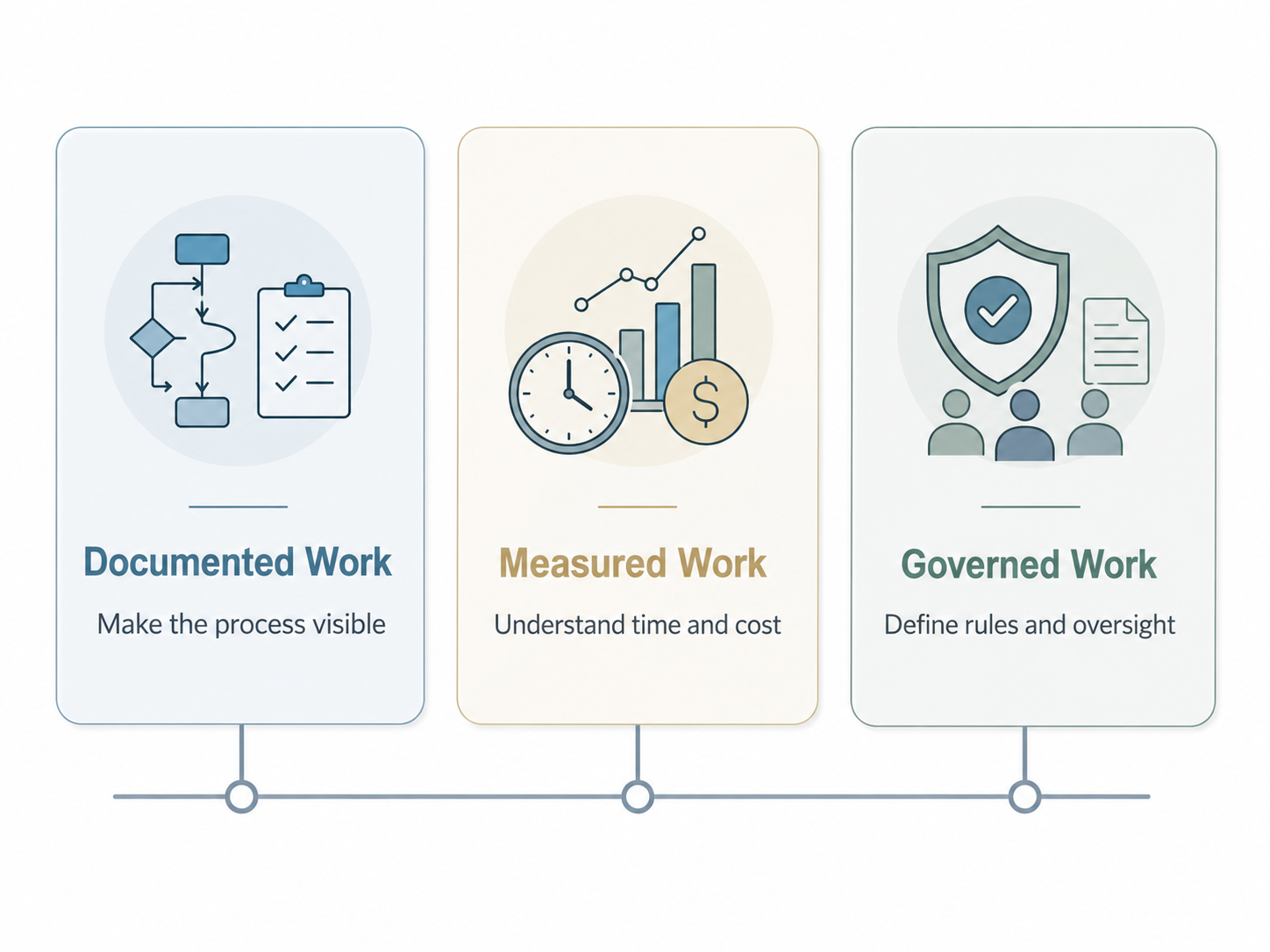
This reality explains why methodologies such as Lean, Six Sigma, and ITIL have become increasingly important in the AI era. These frameworks were originally designed to improve quality, reduce waste, and standardize operations. Today, they serve another purpose. They provide the structure that allows AI to operate effectively. AI performs best when workflows are repeatable, decision rules are clearly defined, quality standards are measurable, and governance frameworks are established. In many ways, operational maturity has become the prerequisite for successful AI adoption.
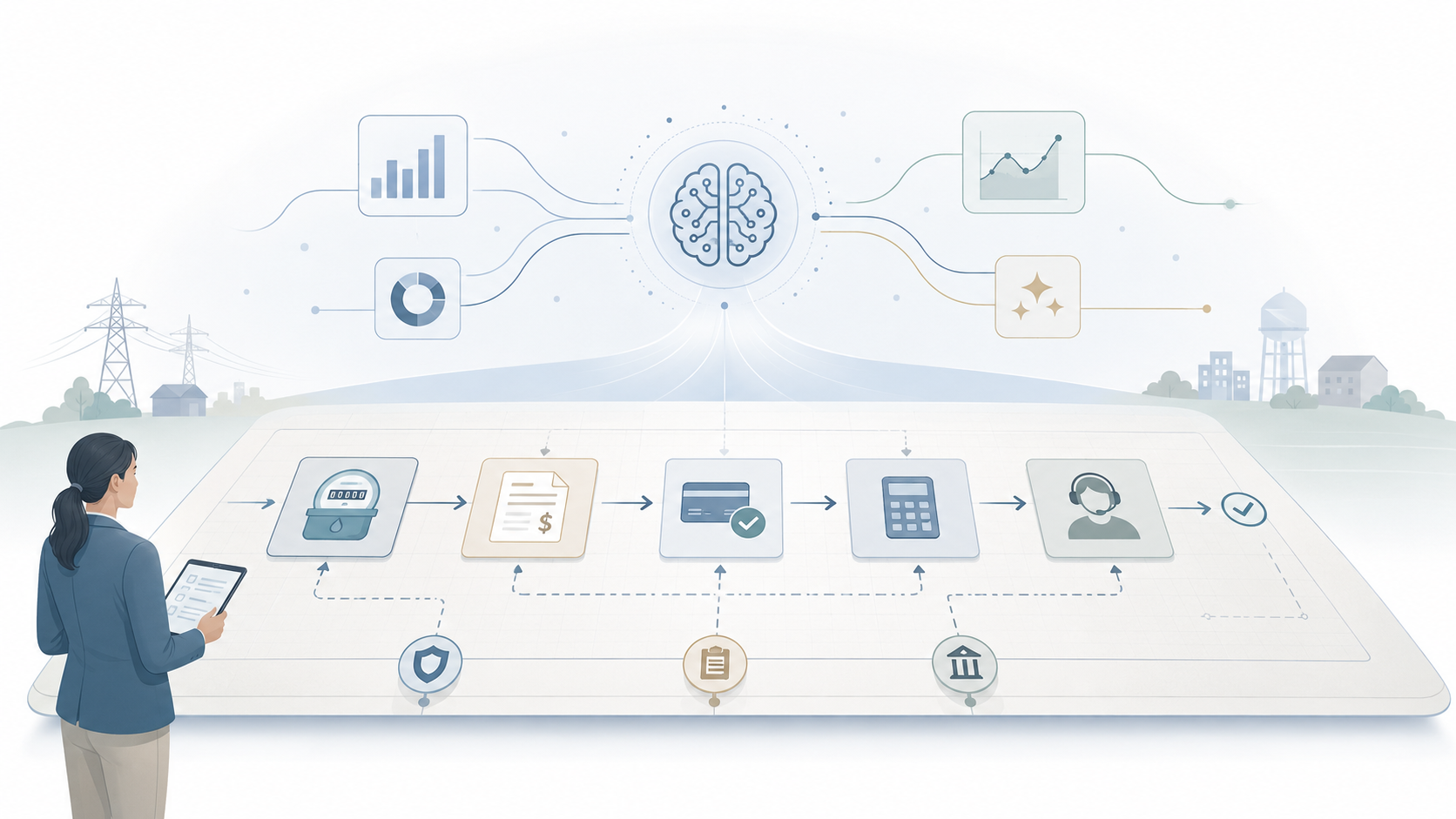
One of the most effective ways to achieve that maturity is by making work visible. Many organizations understand what they do, but fewer understand precisely how work moves through their operations. When billing workflows are mapped in detail, from meter data collection and validation to bill generation, payment processing, reconciliation, collections, and customer support, hidden inefficiencies become easier to identify. Delays often occur not within the visible stages of the billing cycle, but in the handoffs between them. Exception queues accumulate. Information is re-entered across multiple systems. Staff spend valuable time gathering context instead of applying expertise. These forms of operational friction are precisely where AI can create the greatest value.

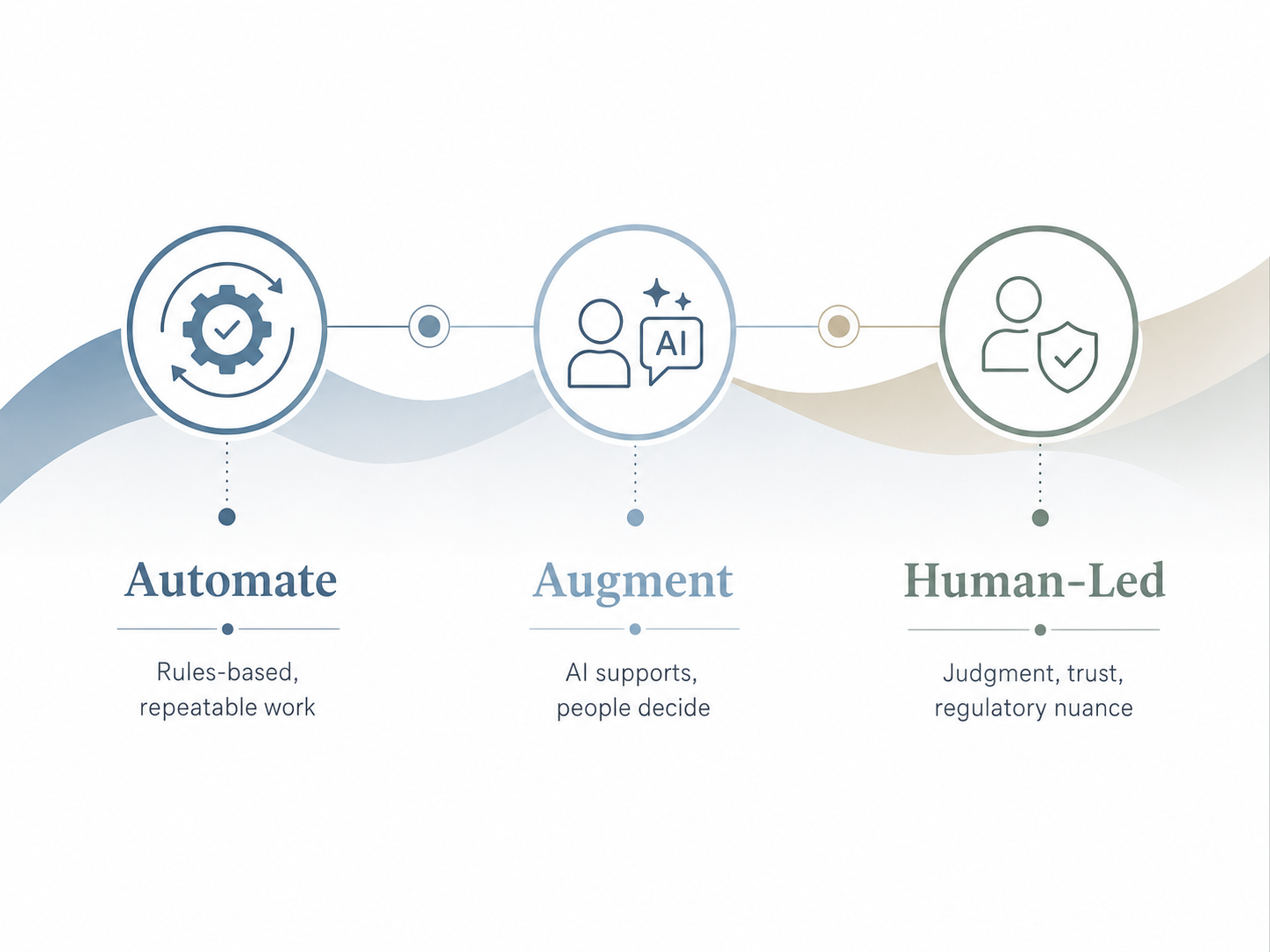
Understanding workflow structure also helps organizations answer a critical question: what should actually be automated? Not every task should be delegated entirely to AI. Some activities are highly rules-based and can be executed autonomously with minimal risk. Others benefit from AI assistance while still requiring human review. Certain decisions should remain entirely human because they involve customer relationships, regulatory interpretation, or nuanced judgment. Successful AI strategies recognize these distinctions and intentionally define where automation belongs, where augmentation is appropriate, and where human oversight remains essential.
Before AI agents can be deployed effectively, organizations must also understand what their current processes actually cost. This is where Time-Driven Activity-Based Costing (TD-ABC) becomes particularly valuable. By breaking workflows into individual activities, assigning time requirements, and calculating labor costs, organizations gain a clear picture of where resources are being consumed. Questions that are often overlooked become measurable. What does a billing workflow cost today? Which activities consume the most staff time? Where does rework occur? What savings would result from reducing manual effort by half? Establishing these baselines allows organizations to evaluate AI investments using operational data rather than assumptions.
The next step is redesign. One of the most common mistakes in AI deployment is attempting to insert automation into workflows that were originally designed for a completely different era of technology. This often results in automating inefficiency rather than eliminating it. AI-native organizations take a different approach. They redesign workflows before automation begins. Human responsibilities, AI responsibilities, escalation paths, approval checkpoints, governance controls, and accountability structures are defined in advance. The operating model evolves first, and automation follows.

This is where governance becomes increasingly important. AI agents require instructions, permissions, monitoring, and oversight just as employees do. They need clearly defined boundaries for what they are allowed to do, how exceptions should be handled, when escalation is required, and how decisions are documented. Frameworks such as ITIL provide valuable guidance because they address many of the same governance challenges organizations now face with AI. Incident management, change control, service request management, release governance, and audit readiness all become critical components of successful AI operations.
"Automation does not fix operational inconsistency. It accelerates it."
The organizations that succeed with AI tend to follow a remarkably consistent pattern. They begin by defining the business problem they are trying to solve. They document workflows thoroughly. They establish measurable baselines. They redesign processes around future-state operations. They train, test, and validate before deployment. Finally, they implement automation within governed environments that include monitoring, accountability, and continuous improvement mechanisms. Technology enters the process only after these foundational elements are in place.
The future of utility billing will not belong simply to organizations that use AI. It will belong to organizations that understand how to operationalize AI responsibly. Success will depend less on acquiring new technology and more on building the operational systems capable of supporting it. The utilities that invest in process discipline, governance, workflow visibility, and continuous improvement today are creating a foundation that will allow AI to scale effectively tomorrow.
At MuniBilling, this philosophy shaped everything from our SOP framework and runbook methodology to our TD-ABC analyses, AI assessments, workflow redesign process, and MultiBilling platform architecture. We believe the future of utility billing is not about automating work indiscriminately. It is about building operations that are clear enough, measurable enough, and disciplined enough to automate intelligently.
Because before any organization can benefit fully from AI, it must first answer a more important question: have we done the work required to earn the right to automate?

Schedule a personalized live demo of the new MultiBilling platform today and explore how AI-driven workflow orchestration, operational intelligence, and governed automation can transforming your utility billing operations.
Citations:
[1] - Gartner, Inc. “Gartner Predicts AI Adoption in 40% of Power and Utilities Control Rooms by 2027.” Gartner Newsroom, 15 Jan. 2025, https://www.gartner.com/en/newsroom/press-releases/2025-01-15-gartner-predicts-ai-adoption-in-40-percent-of-power-and-utilities-control-rooms-by-2027.
[2] - Folio3 AI. “AI Project Failure Rate in 2026: What the Data Shows.” Folio3 AI Blog, 2026, https://www.folio3.ai/blog/ai-project-failure-rate-stats.