
 Jai Lewis
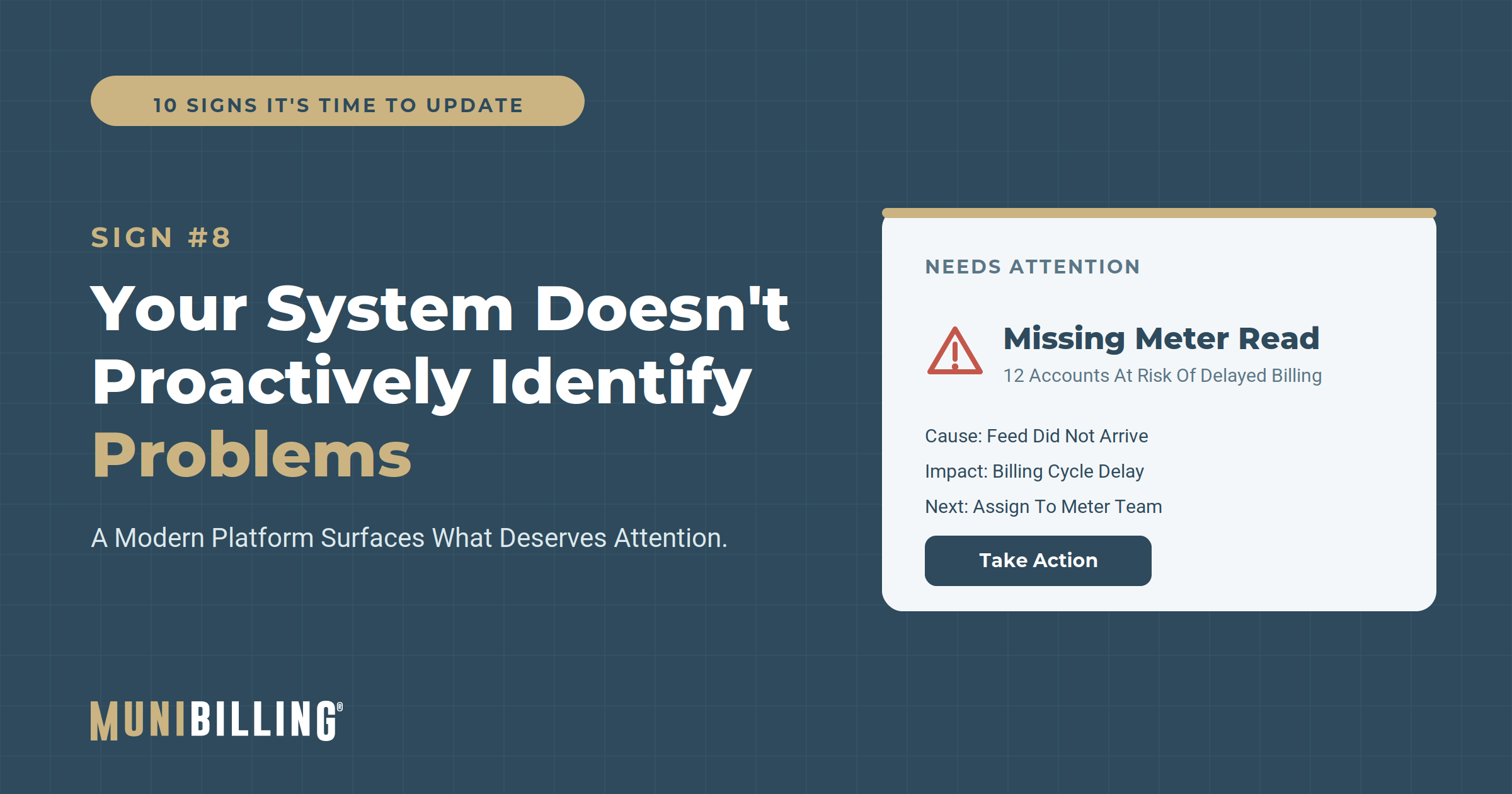
Sign #8 - Your System Doesn't Proactively Identify Problems
Most utility billing systems are good at recording what happened.
A meter read came in.
A bill was generated.
A payment was posted.
An account became delinquent.
The system records the event, and your staff figures out what to do with it.
But modern utility operations require more than a system that simply records transactions.
Your billing system should help your team identify what needs attention.
If employees have to constantly run reports, search for exceptions, compare spreadsheets, and manually investigate problems, your software may be keeping records without providing the operational intelligence your team needs.

Your Team Shouldn't Have to Find Every Problem
Think about how many things can go wrong during a billing cycle.
A meter read might be missing.
A payment might fail.
A customer's usage might suddenly change.
A property management feed might not arrive.
A billing exception might prevent an account from being billed.
An accounting total might not reconcile.
A service interruption might affect an account.
In a traditional system, these issues may exist quietly until someone notices them.
That creates a reactive process:
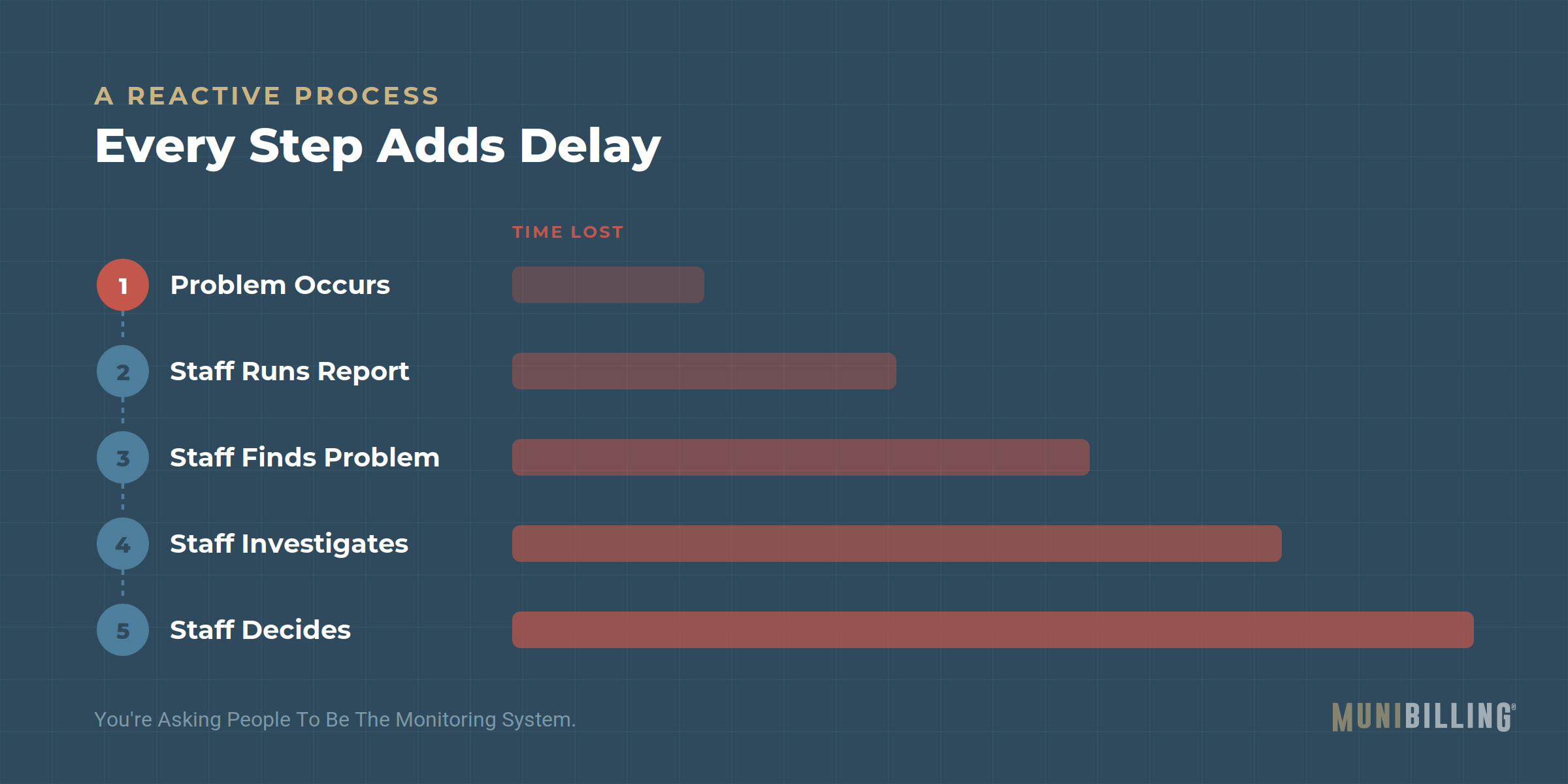
Problem Occurs → Staff Runs Report → Staff Finds Problem → Staff Investigates → Staff Decides What to Do
The longer it takes to identify an issue, the more difficult it can become to resolve.
Reports Tell You What Happened. Intelligence Helps You Decide What to Do.
Reporting is important.
Your billing team needs access to accurate information about accounts, payments, meter data, billing activity, and financial performance.
But there's a difference between reporting and operational intelligence.
A report might tell you that 47 accounts have missing meter reads.
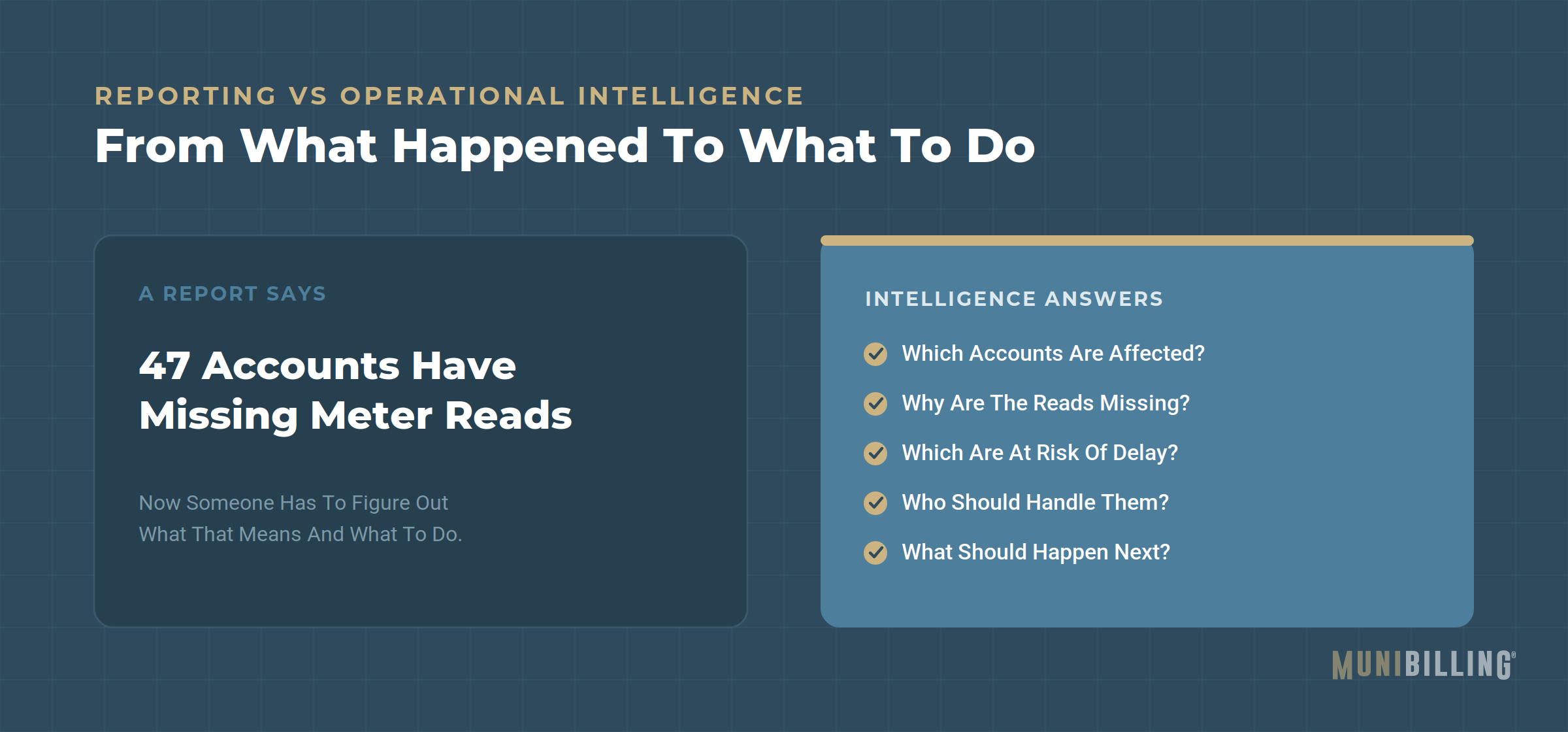
Operational intelligence should help answer:
- Which accounts are affected?
- Why are the reads missing?
- Which accounts are at risk of delayed billing?
- Which issues require immediate attention?
- Who should handle them?
- What should happen next?
That's a fundamentally different experience.
MuniBilling's Reporting & Analytics capabilities are designed to give utility teams greater visibility into their operations, while connected workflows can help turn information into action.
Manual Exception Management Doesn't Scale
Many billing departments have developed their own ways to monitor problems.
Employees may:
- Run daily reports
- Export data to spreadsheets
- Sort and filter accounts
- Compare multiple reports
- Email coworkers about issues
- Maintain exception lists
- Track problems manually
- Follow up with other departments
- Recheck the same information later
These processes may work when the operation is small.
But as the number of accounts, properties, meters, integrations, and billing requirements grows, manual monitoring becomes harder to maintain.
The problem isn't that your employees aren't paying attention.
The problem is that you're asking people to be the monitoring system.
That's another reason spreadsheets can be a warning sign that your billing software has become a liability.

The Cost of Waiting
A small operational issue can become a much larger problem when it isn't identified quickly.
Consider a missing meter read.
If your system identifies it early, an employee may be able to investigate and resolve the issue before billing.
If nobody notices until after the billing cycle, the problem may require additional work:
Missing Read → Delayed Billing → Manual Research → Customer Impact → Additional Staff Time
The same principle applies to failed payments, integration failures, billing exceptions, and reconciliation issues.
The earlier a problem is identified, the more options your team has.
Proactive Doesn't Mean Fully Automated
Proactive utility billing doesn't mean eliminating human oversight.
Some decisions should absolutely remain with your staff.
Instead, modern software should help employees focus their attention where it matters most.
For example, rather than asking a billing specialist to review thousands of accounts looking for potential problems, the system can surface exceptions that warrant investigation.
The employee can then use their expertise to determine the appropriate response.
The software finds what deserves attention. The billing professional makes the decision.
That's a much better use of human expertise.
This Is Where AI Changes the Conversation
Artificial intelligence creates an opportunity to move beyond software that simply reports problems.
AI can potentially help interpret operational events, identify patterns, prioritize exceptions, and recommend next steps.
For utility billing, that could include situations such as:
- Missing or delayed meter reads
- Failed payments
- Unusual consumption
- Billing exceptions
- Vendor billing variances
- Integration disruptions
- Late-payment thresholds
- Service interruptions
- Accounting reconciliation issues
- Customer support escalations
The important distinction is that AI shouldn't simply produce another notification.
It should help provide context.
Instead of:
"Exception detected."
The goal is closer to:
"This exception was detected, here's what appears to have caused it, here's the potential impact, and here's the next action that should be considered."
MuniBilling's approach to AI-native utility billing is built around the idea that AI can become part of the operational architecture rather than simply another feature added to the software.
From Detection to Action
The next step beyond identifying a problem is helping move it toward resolution.
A modern operational workflow can follow a simple pattern:
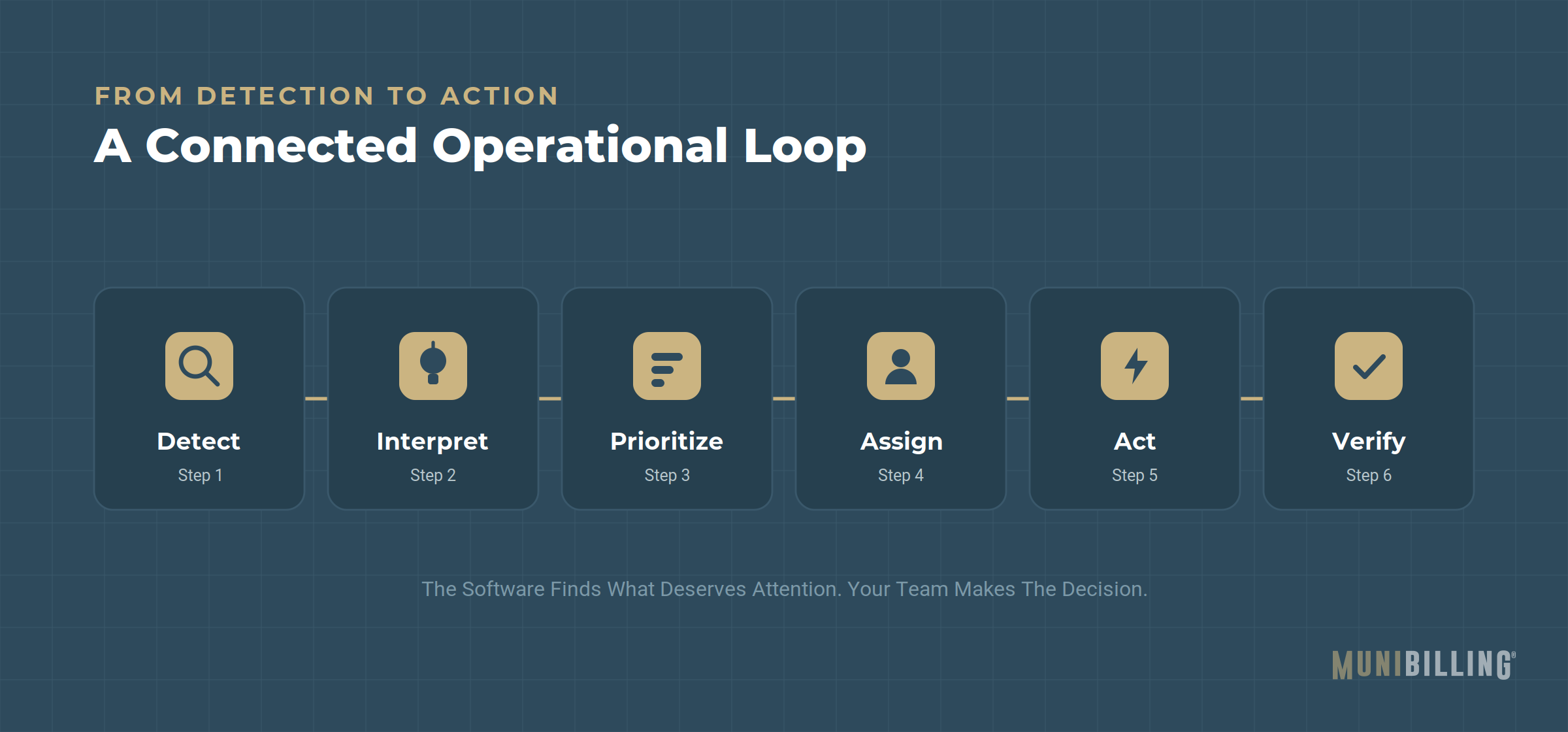
Detect → Interpret → Prioritize → Assign → Act → Verify
For example:
A payment failure occurs.
The system detects the event.
The platform interprets the relevant account and payment information.
The issue is prioritized based on its circumstances.
The appropriate employee or workflow is assigned.
The next action is initiated.
The result can then be verified.
This creates a more connected operational loop instead of leaving employees to piece together the process themselves.
That concept becomes particularly powerful when billing software is connected to other systems. Integrated utility billing software can provide the broader operational context needed to understand what's happening across the billing environment.
Your Employees Shouldn't Have to Watch the System All Day
One of the hidden costs of older billing technology is constant monitoring.
Someone has to remember to run the report.
Someone has to check the spreadsheet.
Someone has to look for missing data.
Someone has to compare yesterday's numbers with today's.
Someone has to notice that something doesn't look right.
And someone has to decide what happens next.
That's a lot of human attention spent looking for problems that technology should be capable of helping identify.
Your billing professionals have more valuable work to do.
They should be analyzing exceptions, improving processes, helping customers, managing billing operations, and making decisions—not acting as a human alert system.
The Better Question
Instead of asking:
"What reports does our billing system provide?"
Ask:
"How does our billing system help us know what needs attention?"
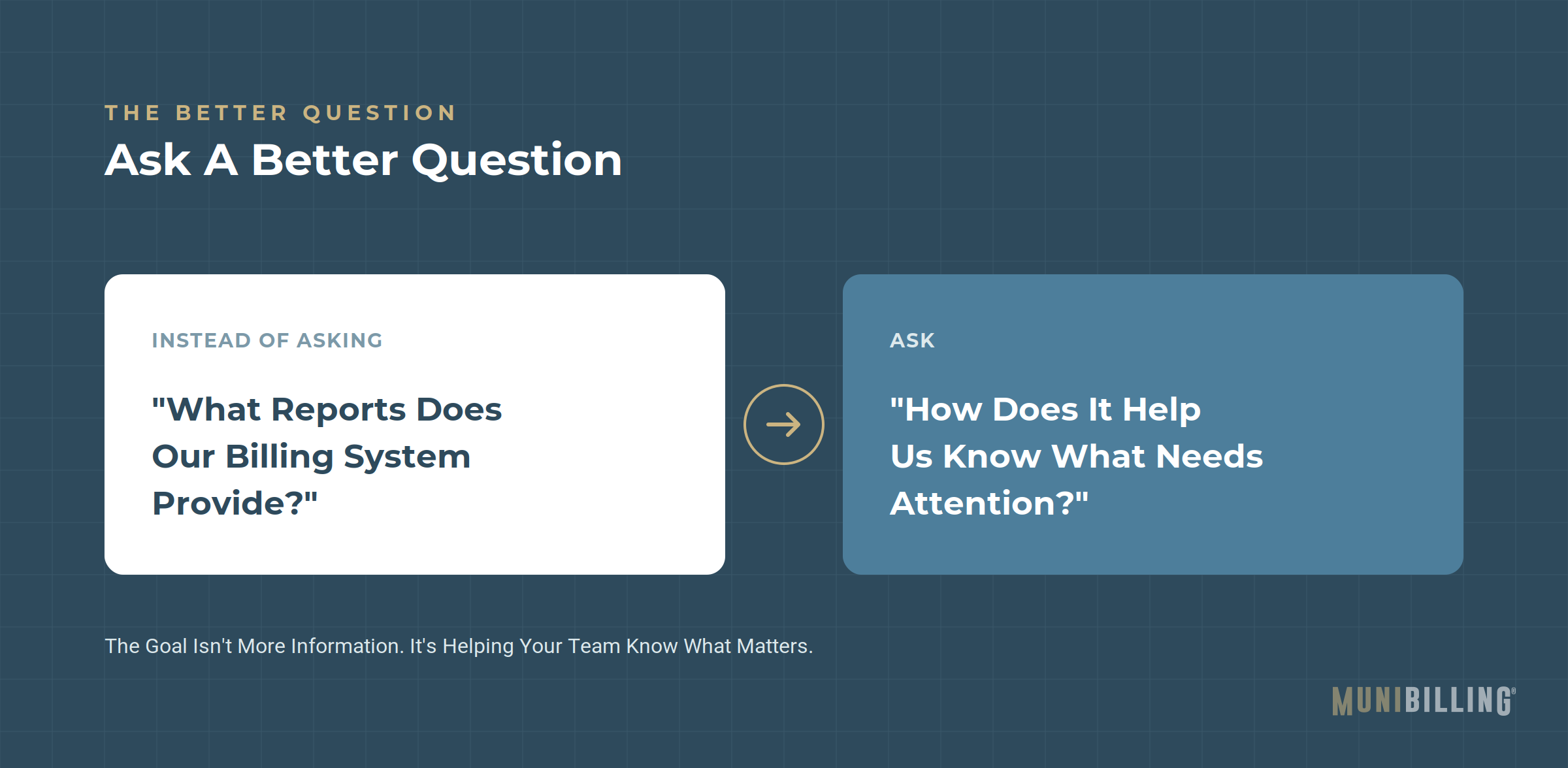
That's a much more useful measure of modern software.
The goal isn't to generate more information.
The goal is to help your team know what matters.
Is Your Billing System Becoming a Liability?
If your employees have to constantly monitor reports, spreadsheets, and multiple systems to identify operational problems, your billing software may be creating unnecessary work.
A modern billing platform should help your team move from reactive management toward proactive operations.
It should help answer:
- What happened?
- Why did it happen?
- Who needs to know?
- What is the potential impact?
- What should happen next?
Your billing system shouldn't wait for someone to find the problem.
It should help your team see problems sooner, understand them faster, and respond more effectively.
How MuniBilling Approaches Modernization
MuniBilling's approach to modern utility billing goes beyond automating individual tasks.
MultiBilling is designed to connect billing operations, data, integrations, workflows, and AI-driven intelligence so your team can spend less time monitoring systems and more time managing the operation.
The goal is a billing platform that doesn't simply tell you what happened.
It helps you understand what is happening—and what deserves your attention.
Explore MultiBilling and see how a modern utility billing platform can help your organization move toward more intelligent billing operations.
Ready to see what that could look like for your team? Schedule a MuniBilling demo.
