
 Daphne Davis
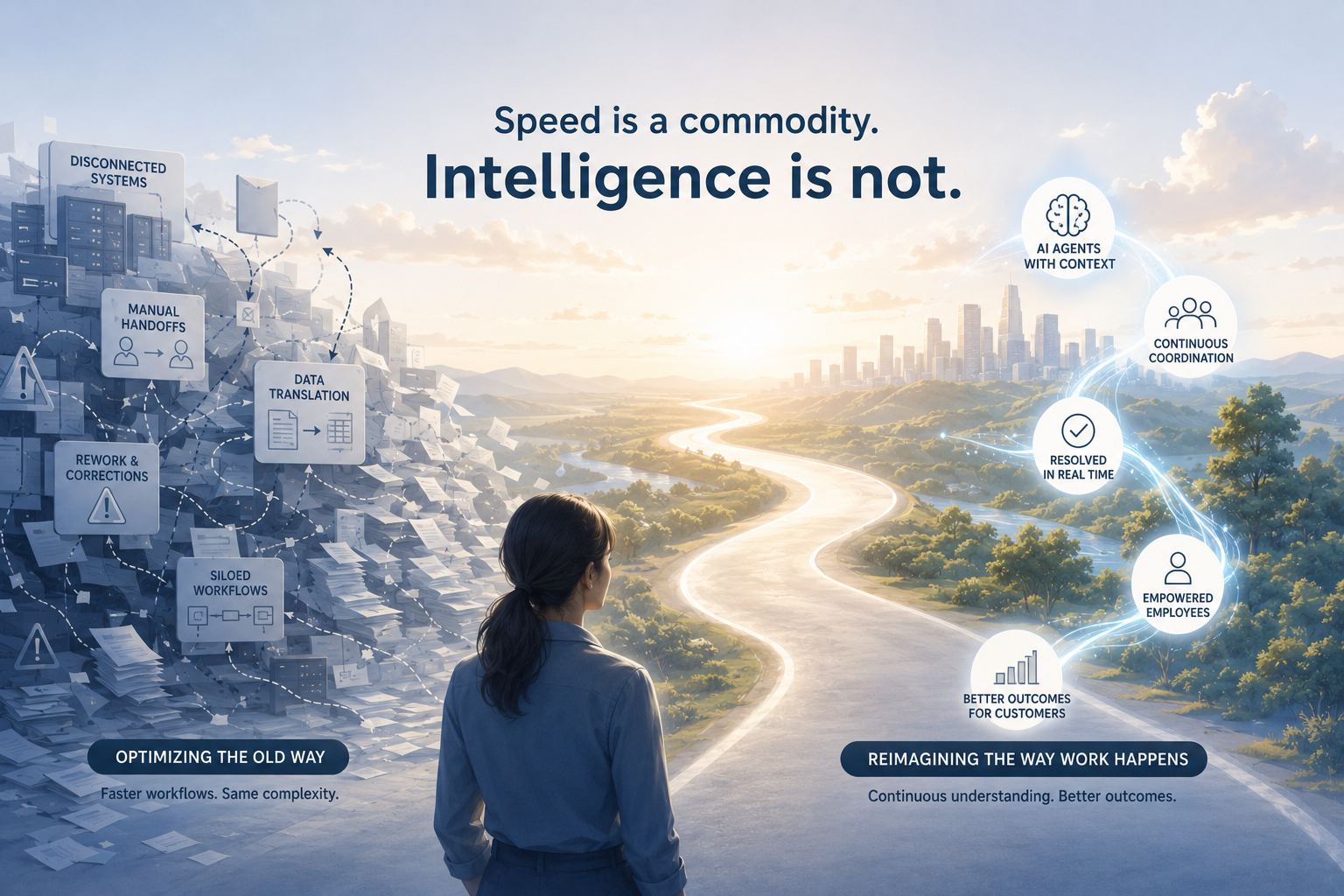
Speed Is a Commodity. Intelligence Is Not.
Here's what you'll learn when you read this story:
• Why "speed" is becoming a commodity while operational intelligence is becoming a competitive advantage.
• How AI Agents differ from traditional software and what that means for utility billing operations.
• How the Fifth Revolution is elevating human judgment, customer relationships, and strategic thinking rather than replacing them.
AI in utility billing is often positioned as a tool for speed for faster billing cycles, quicker exception handling, and fewer manual tasks. While those improvements are valuable, they mainly optimize existing processes rather than changing how work fundamentally happens. The real transformation occurs when AI is designed not just to accelerate workflows, but to rethink them entirely.
Most AI solutions today focus on improving throughput within traditional billing structures. They make existing workflows faster but still preserve the same handoffs, translation layers, and coordination work that create operational complexity. [1] These systems ask, “How can we process this faster?” rather than questioning whether the process itself should work differently.
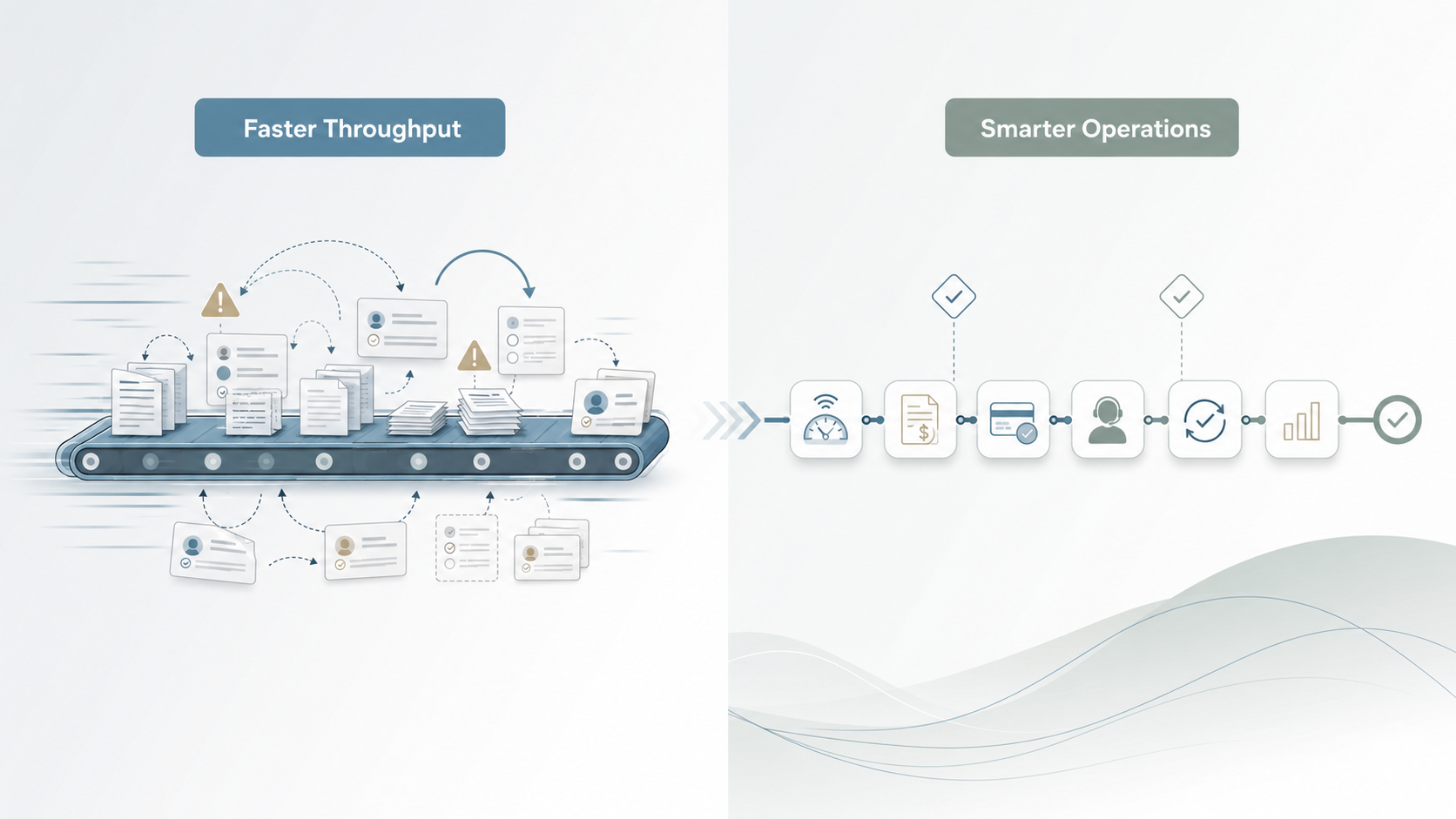
Traditional software behaves like a tool: users input information, the system processes it, and people interpret the results. AI Agents operate differently. Instead of sitting outside the workflow, they function within it, maintaining context across systems, coordinating actions, and resolving inconsistencies continuously. Work stops being a series of disconnected steps and becomes a connected flow of information and decision-making.

The most valuable work in utility billing has never been purely mechanical. It has always involved judgment, context, customer understanding, and pattern recognition. [2] AI-native systems do not replace those human strengths, they elevate them. By handling routine coordination and maintaining operational continuity, AI allows employees to focus on the areas where human expertise creates the most value.
"Speed is a commodity. Intelligence is not."
Some of the most important contributions in utility operations are difficult to measure in workflows or process charts. It is the CSR recognizing concern before a customer says it, the technician noticing a developing issue in the field, or the manager identifying operational patterns over time. These insights are often buried beneath the effort required to keep fragmented systems aligned. As AI reduces that operational burden, employees regain the capacity to focus on meaningful judgment and better outcomes.

When AI is treated as a commodity, it simply shortens the queue. When it becomes an active part of the operational system, it begins eliminating the need for the queue altogether. The shift is not just about faster execution, it is about reducing the need for translation between systems, departments, and workflows. AI-native platforms create environments where meaning and context are maintained continuously rather than reconstructed at every step.
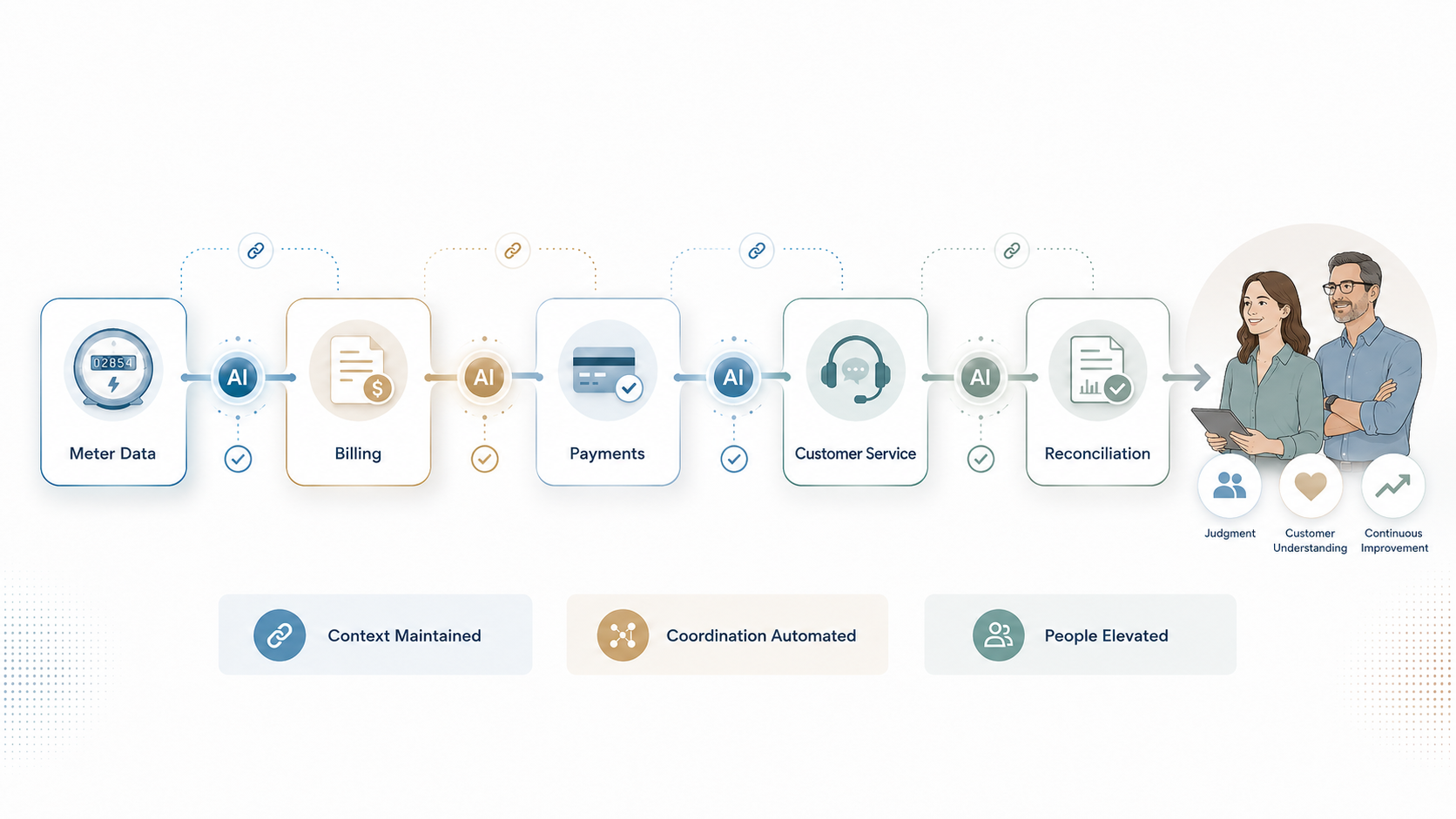
As intelligence becomes embedded directly into workflows, utility billing begins evolving beyond task automation. The future is not simply systems that process work faster, but systems designed around continuous operational understanding. In that environment, employees are no longer defined by the work required to maintain fragmented processes, they are empowered to focus on judgment, relationships, strategy, and improvement.


Schedule a personalized live demo of the new MultiBilling platform today and explore how AI-driven workflow orchestration, operational intelligence, and governed automation can transform your utility billing operations.
Citations:
[1] Chui, Michael, et al. The Social Economy: Unlocking Value and Productivity Through Social Technologies. McKinsey Global Institute, July 2012. https://www.mckinsey.com/industries/technology-media-and-telecommunications/our-insights/the-social-economy
[2] Salesforce. State of the Connected Customer. Salesforce Research, 2024. https://www.salesforce.com/resources/research-reports/state-of-the-connected-customer/