
 Daphne Davis
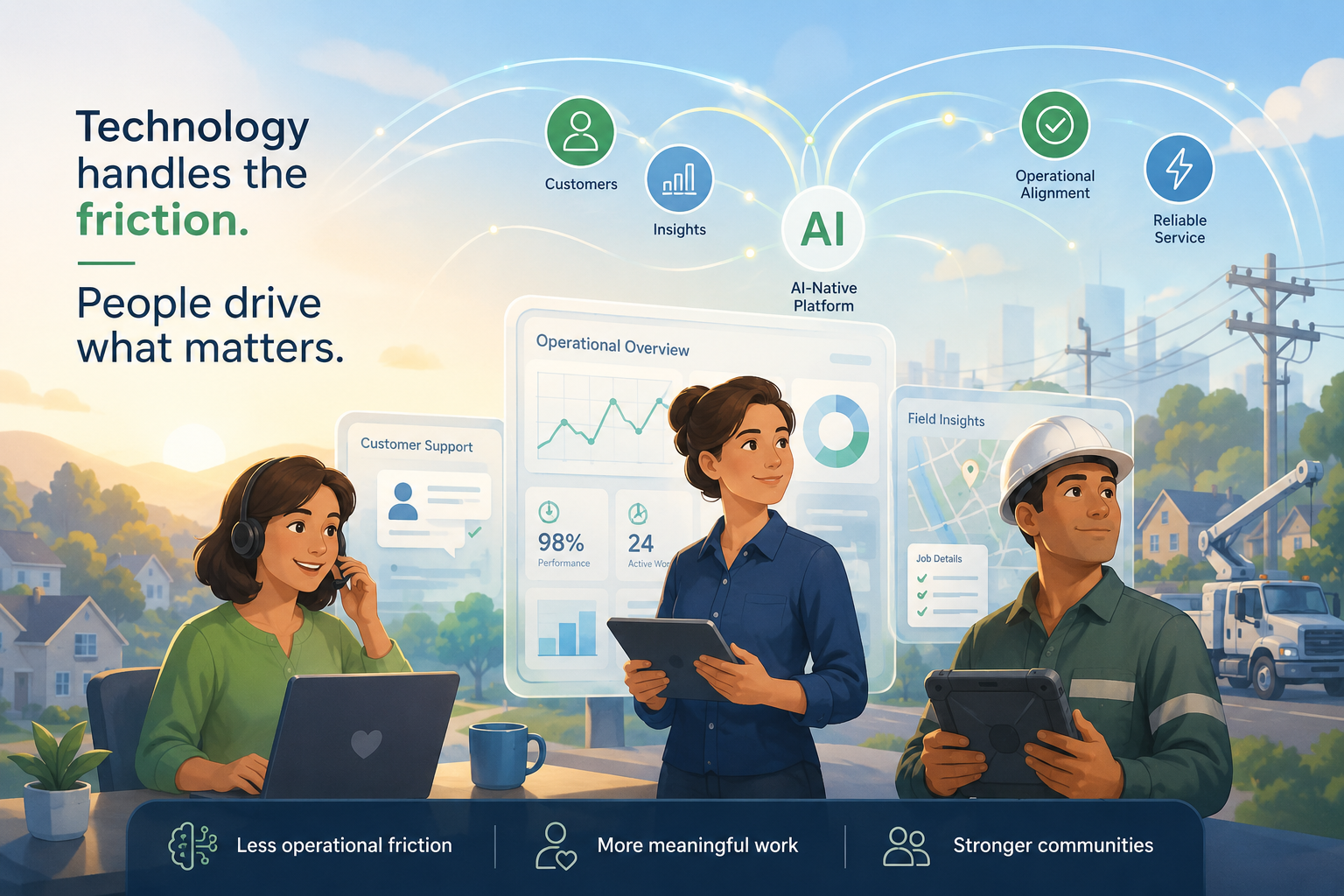
The Career You Were Always Meant to Have
Here's what you'll learn when you read this story:
• How AI is removing operational friction that has limited the value of skilled utility billing teams for decades.
• Why human expertise becomes more important—not less—as AI takes over routine coordination and processing.
• How emerging roles and responsibilities are creating more strategic, meaningful career paths across utility operations.
Many people enter utility billing because they want to help people, solve problems, and support essential services communities rely on every day. But over time, much of the work became dominated by exception queues, manual reconciliations, and repetitive processes. The issue was never a lack of capability from the people doing the work, it was the limitation of the systems supporting them.
For decades, enterprise software was designed to automate workflows rather than support human reasoning. Employees became the “intelligence layer” between disconnected systems, building spreadsheets, creating workarounds, and carrying operational context the software could not maintain on its own. Teams were forced to spend valuable time translating information, resolving inconsistencies, and reconstructing context across fragmented workflows.

As AI-native platforms begin maintaining operational context continuously, much of that translation work starts to disappear. The result is not simply faster work, it is fundamentally different work. [1] Instead of spending time compensating for fragmented systems, employees can focus on higher-value responsibilities such as judgment, analysis, customer interaction, and operational improvement.
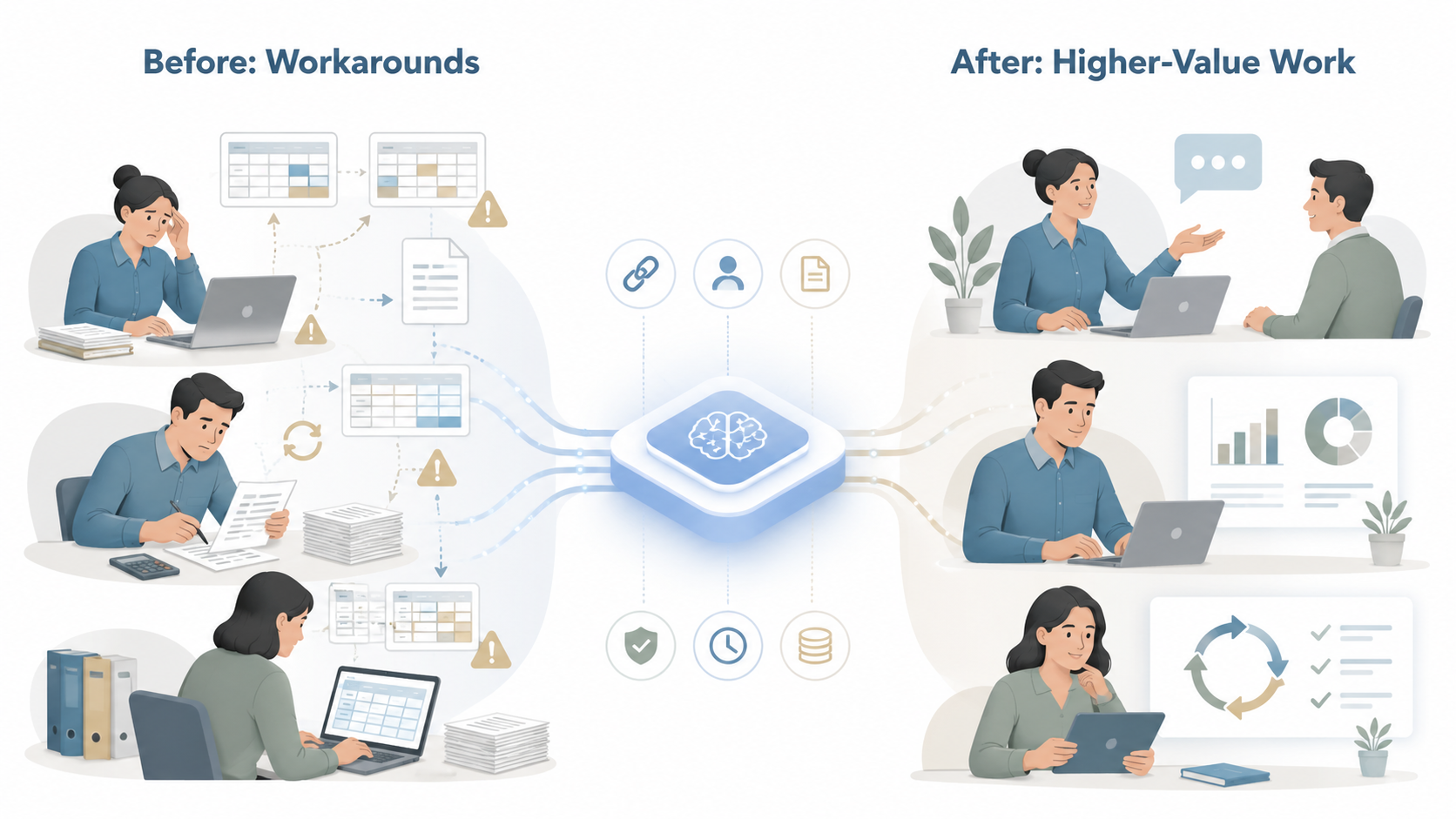
Traditional utility billing roles have largely focused on execution: processing transactions, correcting errors, and managing handoffs between systems. As AI reduces manual coordination, roles begin shifting from reacting to problems toward improving how systems operate in the first place. Employees move from simply doing the work to helping shape workflows, operational logic, and decision-making processes.
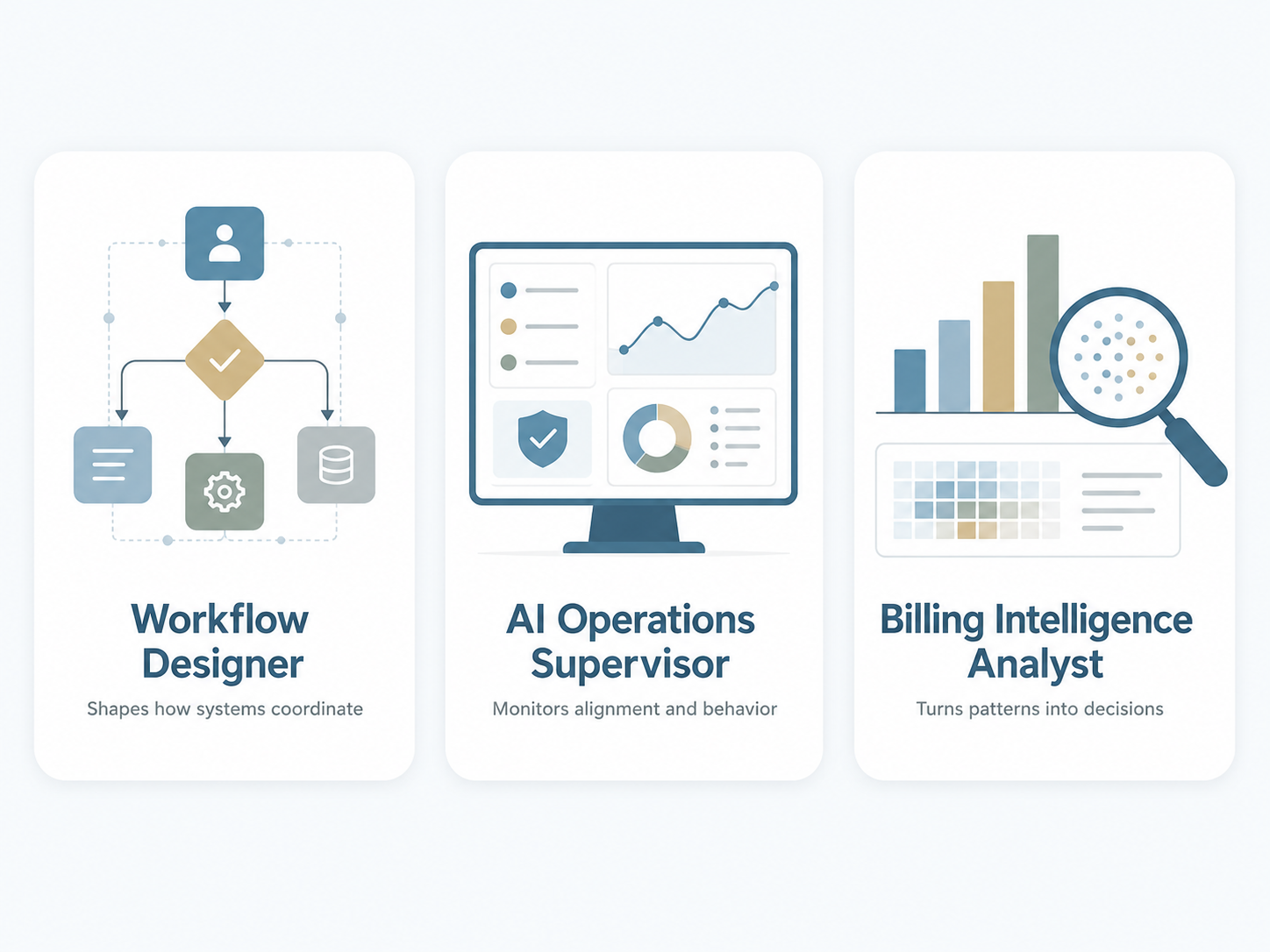
This transformation is creating new opportunities across utility operations. Workflow designers help define how systems coordinate information and automate decisions. AI operations supervisors monitor system behavior and ensure operational alignment. Billing intelligence analysts focus on identifying patterns, improving processes, and translating operational insights into strategic decisions. Across all of these roles, the focus shifts away from moving information through systems and toward improving how systems think and behave.
One of the biggest misconceptions about AI is that it reduces the need for human expertise. In reality, it increases the importance of domain knowledge. As repetitive translation work disappears, the remaining work requires stronger judgment, deeper operational understanding, and better decision-making. Human expertise is not being replaced, it is being repositioned toward more meaningful and strategic contributions. [2]
"The future of utility billing depends on platforms designed to free people from operational friction so they can focus on the work they originally signed up to do."
As organizations evaluate new platforms, they are not simply choosing software. They are choosing the type of work their employees will spend time doing. The most important question is no longer just what a system can automate, but whether it removes complexity or simply preserves it. The future of utility billing depends on platforms designed to free people from operational friction so they can focus on the work they originally signed up to do.

There has always been a version of this career centered on insight, judgment, customer relationships, and continuous improvement rather than reconciliation and correction. AI-native systems are making that version of work possible at scale. The shift is not about removing roles, it is about giving skilled professionals the ability to focus on the meaningful, strategic work that fragmented systems previously prevented. [3]


Schedule a personalized live demo of the new MultiBilling platform today and explore how AI-driven workflow orchestration, operational intelligence, and governed automation can transforming your utility billing operations.
Citations:
[1] Davenport, Thomas H., and Rajeev Ronanki. “Artificial Intelligence for the Real World.” Harvard Business Review, Jan.–Feb. 2018. https://hbr.org/2018/01/artificial-intelligence-for-the-real-world
[2] PwC. Global Workforce Hopes and Fears Survey 2024. PwC, 2024. https://www.pwc.com/gx/en/issues/workforce/hopes-and-fears.html
[3] Salesforce. State of the Connected Customer. Salesforce Research, 2024. https://www.salesforce.com/resources/research-reports/state-of-the-connected-customer/