
 Larry Foster
Every Revolution Felt Gradual Until It Didn't
Here's what you'll learn when you read this story:
• The historical pattern that separates industry leaders from those forced to catch up.
• Why AI represents more than another technology upgrade for utility billing.
• What utility organizations should evaluate today to prepare for the next decade of operations.
Every major industrial revolution followed the same pattern: at first, the change looked optional.
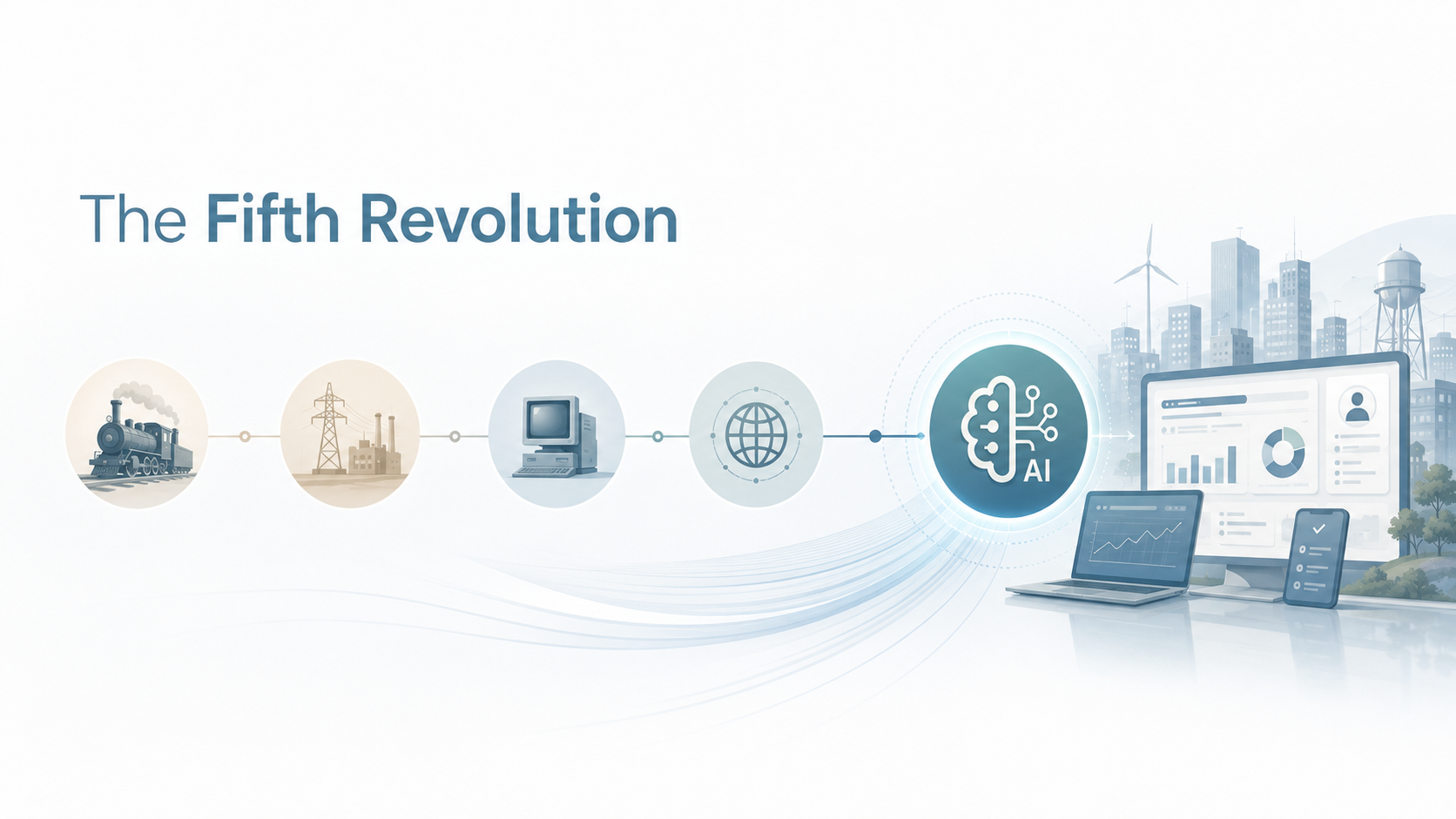
The first industrial revolution introduced the steam engine, transforming transportation and dramatically increasing efficiency across nearly every industry. What began as a mechanical innovation quickly reshaped production, logistics, and economic scale.
The second revolution, electrification, unlocked entirely new levels of industrial capability. It enabled continuous production, modern manufacturing systems, and the foundation of large-scale industrial infrastructure that defined the modern economy.

The third revolution, driven by computers and early digital systems, introduced automation, data processing, and software-based operations. What once required manual effort could now be executed at scale with precision and speed.
The fourth revolution, the internet, connected everything. It reshaped communication, commerce, and information flow, collapsing geographic barriers and creating real-time global systems.
In each case, the pattern was the same: the technology appeared first as an interesting advancement, something organizations believed they could adopt later, after it matured or the disruption settled. But by the time the shift became unavoidable, the organizations that had already redesigned their operations around the new capability had established a structural advantage that others could not easily close.
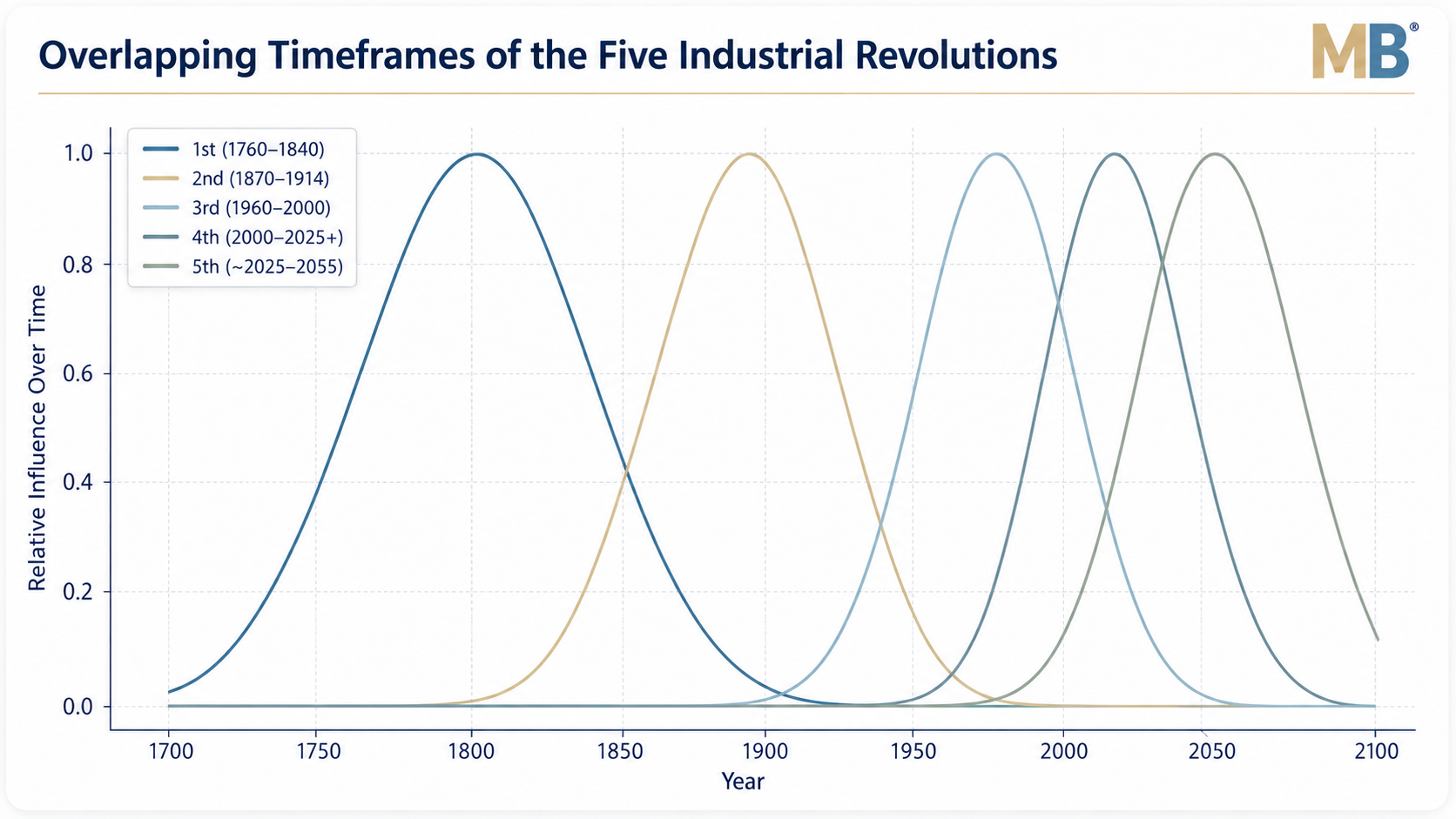
The same pattern is unfolding now with AI with an estimated 300 million full time jobs shifting to full automation. [1]
The utility billing industry is entering a new operational era where AI is no longer just a productivity tool layered onto existing software. It is becoming the intelligence layer that reshapes how billing operations are designed, governed, monitored, and improved. The organizations that recognize this shift early will build operational advantages that are difficult to replicate later.
History shows that the companies that lead during industrial transitions are rarely the ones that simply add new technology to old workflows. They are the ones who redesign their operations around what the new technology actually makes possible.
That distinction matters enormously in utility billing. [2]
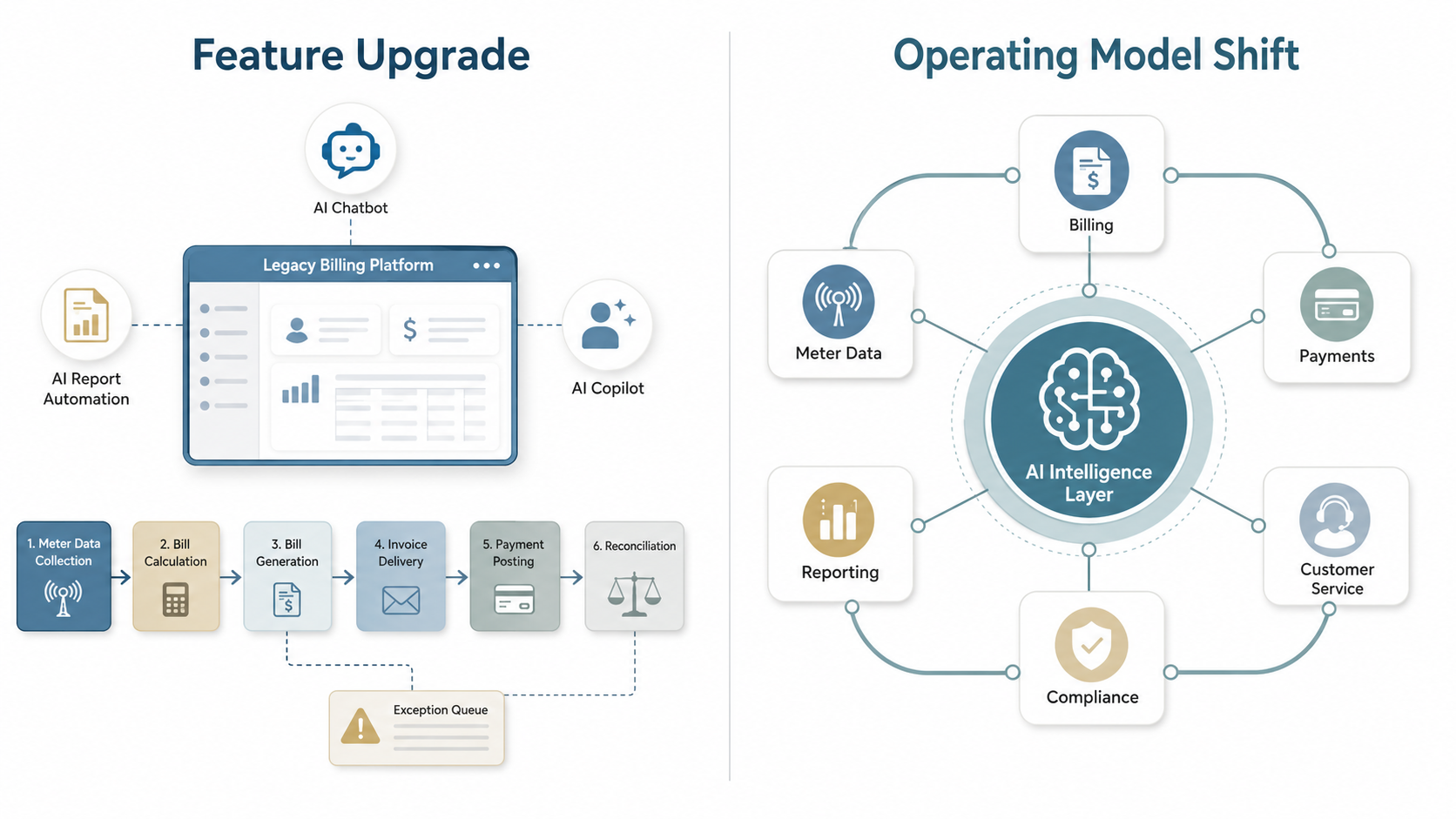
Many platforms are currently approaching AI as an enhancement to legacy workflows: adding copilots, automating reports, or embedding chat functionality into systems originally designed for a pre-AI world. Those capabilities can create incremental efficiencies, but they do not fundamentally change how the operation functions.
AI-native platforms are different.
An AI-native utility billing platform is built around continuous intelligence rather than static workflows. Instead of relying on overnight batches, disconnected systems, and manual exception handling, AI-native operations continuously validate data, classify anomalies in real time, orchestrate workflows automatically, and escalate only the cases that truly require human judgment.
This is the operational model MultiBilling was built to support.
At MuniBilling, we believe the future of utility billing is not about replacing people with automation. It is about redesigning operations so human expertise is focused on governance, customer relationships, strategic decision-making, and operational improvement while AI handles the repetitive, rules-based, and high-volume processes that slow organizations down today.

That shift mirrors every major industrial transformation that came before it. Electrification did not simply improve factories powered by steam engines. It changed how factories were designed. The internet did not simply digitize paperwork. It changed how businesses operated. AI is creating the same kind of architectural shift in utility billing operations right now.
"Early movers will not simply gain efficiency—they will establish the operating models others will be forced to follow."
The organizations that treat AI as a feature upgrade will improve incrementally. The organizations that redesign around AI-native operations will create lasting operational advantages in speed, accuracy, scalability, compliance, and customer experience.
This is the real decision facing utility billing leaders today. Not whether AI matters (the direction of the industry has already answered that question), but whether to adapt legacy operations around AI slowly, or build around a platform designed for the AI era from the beginning.
The Fifth Revolution is already underway. Early movers will not simply gain efficiency, they'll establish the operating models, data structures, and automation frameworks that others will be forced to follow. In utility billing, the gap between adopters and laggards will widen quickly, and it will not close easily.


Schedule a personalized live demo of the new MultiBilling platform today and explore how AI-driven workflow orchestration, operational intelligence, and governed automation can transforming your utility billing operations.
Citations:
[1] Briggs, Joseph, and Devesh Kodnani. The Potentially Large Effects of Artificial Intelligence on Economic Growth. Goldman Sachs Global Investment Research, 26 Mar. 2023.
https://www.goldmansachs.com/insights/articles/generative-ai-could-raise-global-gdp-by-7-percent.html
[2] Capgemini Research Institute. Embracing a Brighter Future: Investment Priorities for 2024. Capgemini, 2024, Capgemini Research Library.