
 Larry Foster
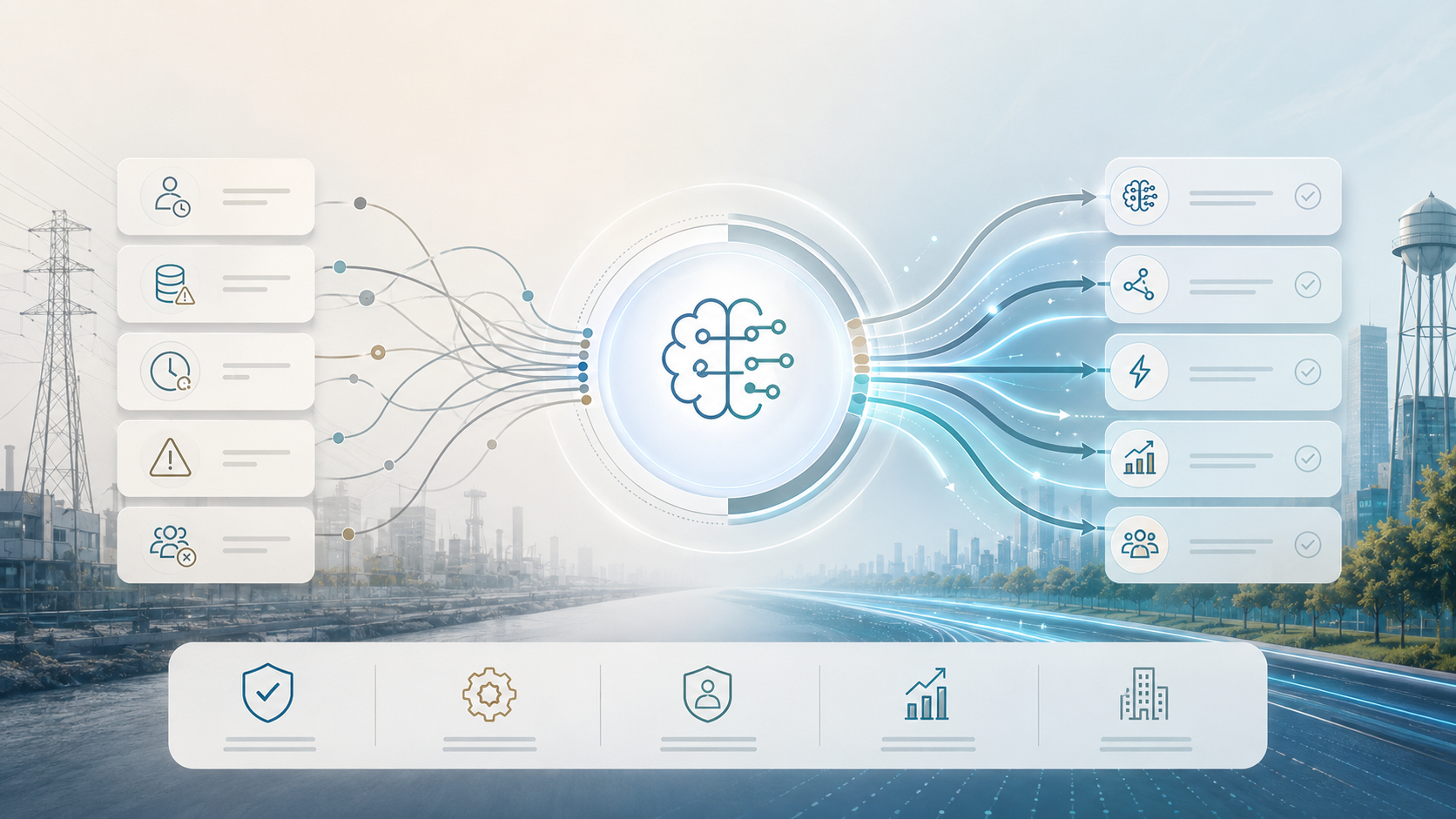
What Era Is Your Organization Actually In?
Here's what you'll learn when you read this story:
• Discover how to identify whether your organization is truly AI-native or simply layering AI onto legacy workflows.
• Learn the difference between translation work and judgment work and why it matters for future performance.
• Explore the operational indicators that separate Fifth Revolution organizations from everyone else.
Most utility billing organizations believe they are operating in a modern digital environment. Many are. But there is a significant difference between using modern software and operating with a truly AI-native architecture. The reality is that many utilities still rely on workflows designed for earlier generations of technology, even when newer interfaces and AI features have been added on top. The question is not whether your organization has adopted technology. The question is whether your operations were designed for the era your industry is entering.
At MuniBilling, we believe the clearest way to evaluate operational maturity is not by looking at software marketing claims or feature lists. It is by examining what your most experienced employees spend their time doing every day. Intelligent automation is estimated to reduce 65% of workloads in transaction intensive industries. [1] If highly skilled billing specialists are still manually gathering account history, reconciling disconnected systems, routing exceptions, or moving information between workflows, then the organization is still operating largely within a Fourth Revolution structure. The technology may look modern, but the operational architecture still depends heavily on human translation work.
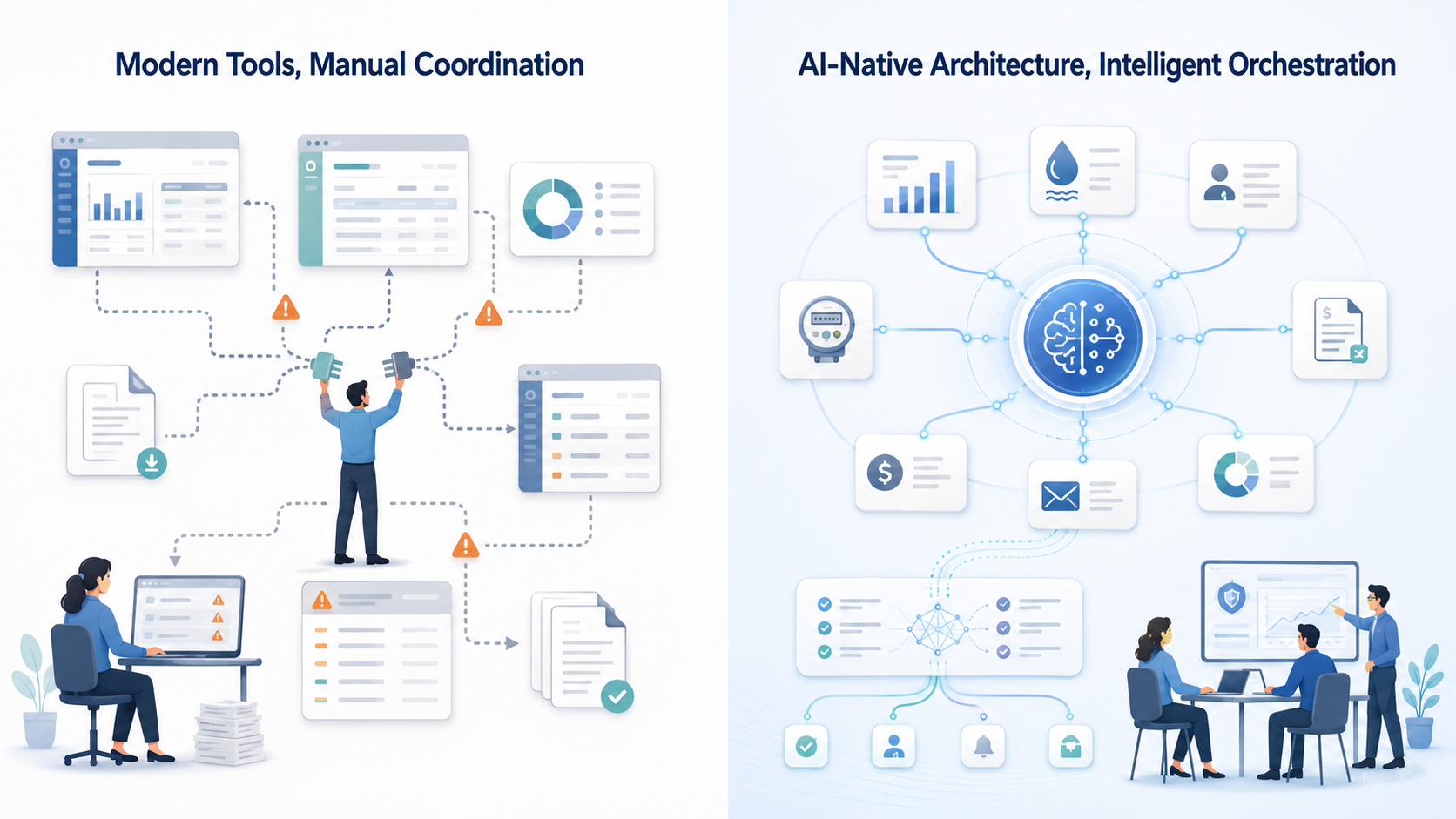
The Fifth Revolution changes that model completely. AI-native operations are designed to reduce operational friction by allowing systems to coordinate workflows, assemble context, classify exceptions, surface insights, and automate routine decisions in real time. Human expertise remains essential, but it is focused on judgment, governance, and strategic oversight rather than repetitive operational coordination.
"The question is not whether your organization has adopted technology. The question is whether your operations were designed for the era your industry is entering."
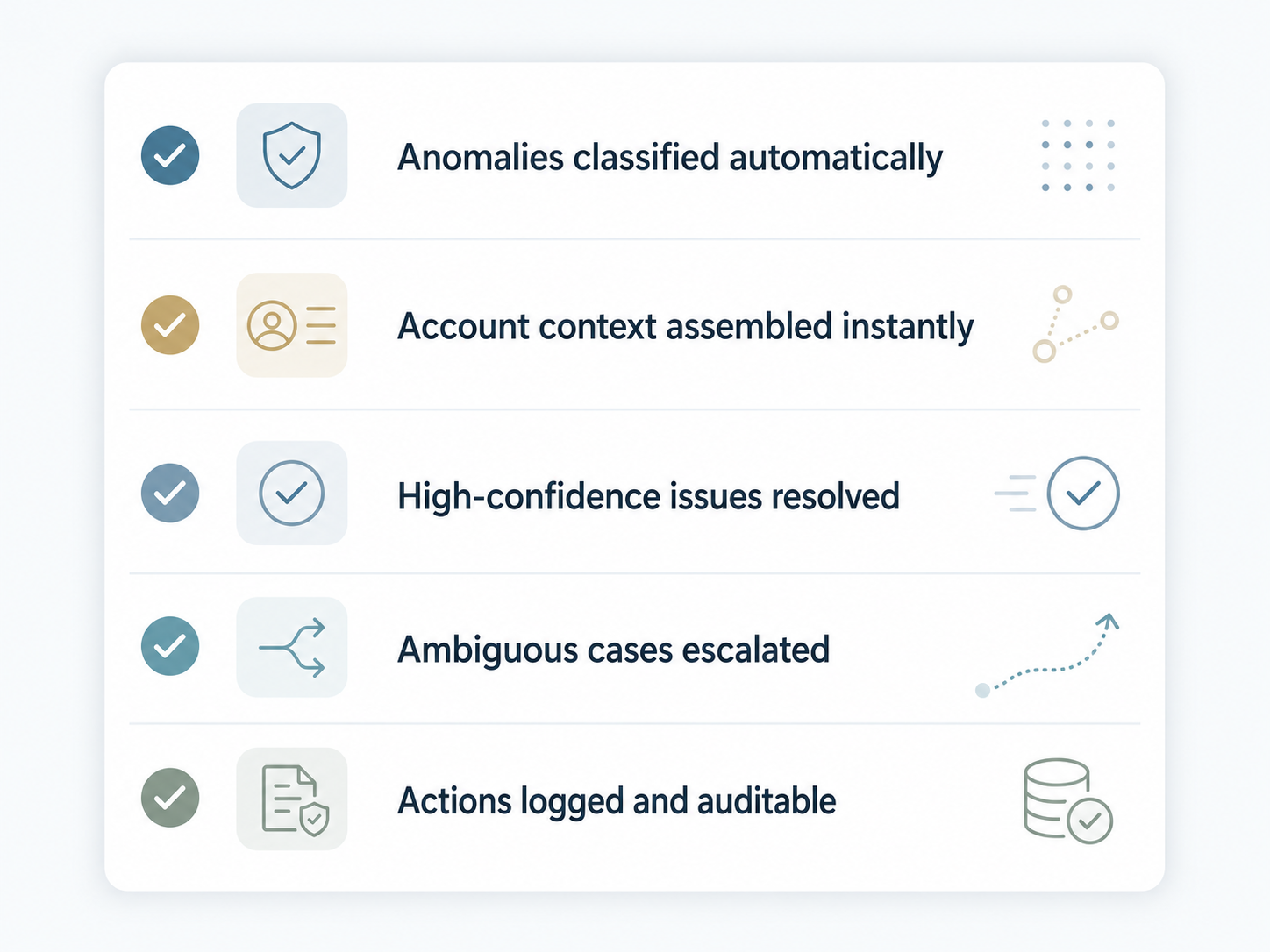
One of the clearest indicators of operational maturity is how billing anomalies are handled. In many organizations, a single exception may pass through multiple employees and systems before resolution. Data is reviewed manually, context is assembled across disconnected applications, approvals are documented separately, and workflows are coordinated through human effort. AI-native operations dramatically reduce this complexity. Intelligent workflows classify anomalies automatically, assemble supporting context instantly, route cases appropriately, and resolve high-confidence issues with full auditability before a specialist even begins their day.
Customer service operations reveal a similar pattern. In legacy environments, representatives often spend much of each interaction searching across systems for billing history, payment information, prior notes, or account activity. AI-native platforms eliminate much of this retrieval work by proactively assembling account context before the interaction begins. Instead of navigating systems, representatives focus on solving problems, building trust, and guiding customers through complex situations with full operational visibility already in front of them.
Another critical distinction is the balance between translation work and judgment work. Translation work includes the manual coordination tasks that exist because systems cannot intelligently communicate with one another: re-entering data, routing workflows, reconciling reports, managing approvals, and assembling operational context manually. Judgment work is different. It involves applying expertise, evaluating unusual situations, interpreting anomalies, resolving disputes, and making decisions that genuinely require human understanding. Organizations where employees spend most of their time on translation work are carrying operational structures designed for a previous era. Organizations where AI handles repetitive coordination allow their teams to focus on the higher-value work humans perform best.

Multi-entity scalability is another major indicator of operational architecture maturity. Many legacy platforms treat each entity or jurisdiction as a largely separate operational environment requiring duplicate configurations, duplicate workflows, and separate management overhead. AI-native platforms are fundamentally different. They are designed around portfolio-level intelligence, centralized workflow orchestration, and operational scalability from the start. Adding a new entity should not create a proportional administrative burden. It should expand operational capability within the same intelligent framework.
Perhaps the most important operational distinction is the speed between insight and action. Traditional reporting environments surface operational information after the fact. Teams review reports, discuss findings, assign follow-up actions, and manually coordinate responses over days or weeks. AI-native operations compress this cycle dramatically. Insights generated by analytics engines can immediately trigger workflows, escalate issues, recommend actions, and initiate operational responses in near real time. The competitive advantage is no longer simply having data. It is acting on it faster and more intelligently than legacy operational models allow.
These distinctions reveal something important about the future of utility billing. The industry is moving beyond software modernization into operational redesign. Infact, organizations embedding AI can achieve nearly double their productivity growth. [2] Adding AI features onto legacy platforms can improve efficiency, but it does not fundamentally remove the operational friction those platforms were originally built around. AI-native systems are different because they assume intelligent automation, continuous orchestration, governance, and real-time operational intelligence as core architectural principles rather than optional add-ons.

This is why platform design matters so much over the next decade. The most important question for utility leaders is no longer which platform has AI features. It is whether the platform itself was architected for AI-native operations from the beginning.
At MuniBilling, that distinction shaped every aspect of our platform design. AI is not layered onto the system after the fact. Workflow orchestration, intelligent automation, auditability, governance, analytics, and multi-entity scalability are embedded directly into the operating model itself. The result is not simply a more efficient billing platform. It is a fundamentally different operational architecture designed for the Fifth Industrial Revolution already reshaping utility billing.
The organizations that recognize this shift early will not just improve operations incrementally. They will redefine what operational efficiency, customer service, scalability, and revenue assurance look like in the modern utility industry.


Schedule a personalized live demo of the new MultiBilling platform today and explore how AI-driven workflow orchestration, operational intelligence, and governed automation can transforming your utility billing operations.
Citations:
[1] Ernst & Young. Intelligent Automation and Operational Efficiency. EY, 2025.
EY Intelligent Automation Insights, https://www.ey.com/en_us/services/consulting/intelligent-operations-solution?utm
[2] Accenture. Technology Vision 2025. Accenture Research, 2025.
Accenture Technology Vision 2025