
 Jai Lewis
What Outdated Utility Billing Software Is Really Costing Your Organization
The check engine light comes on. You're already running late, so you tell yourself you'll deal with it later. Then later never comes until you're on the shoulder of the highway waiting on a tow truck, paying far more to fix the problem than you would have if you'd handled it the first time it appeared.
Utilities using billing software they know isn't quite right tend to make the same trade. It's not broken enough to force the issue. There's always something more urgent. And in the meantime, it's "working," so why rock the boat?
Delaying a software upgrade rarely saves money. It just moves the cost somewhere less visible.
1. The Cost of Inefficiency
Sticking with software that "works for now" feels safe. But the inefficiency it creates missed automation, manual workarounds, slower processes that usually costs more than the upgrade would have.
Without modern automation, your team spends more time manually entering data, which raises labor costs and drags down productivity. Manual entry also means more room for human error: a mistyped meter reading or an overlooked adjustment can turn into a billing discrepancy, a delayed payment, or a frustrated customer.
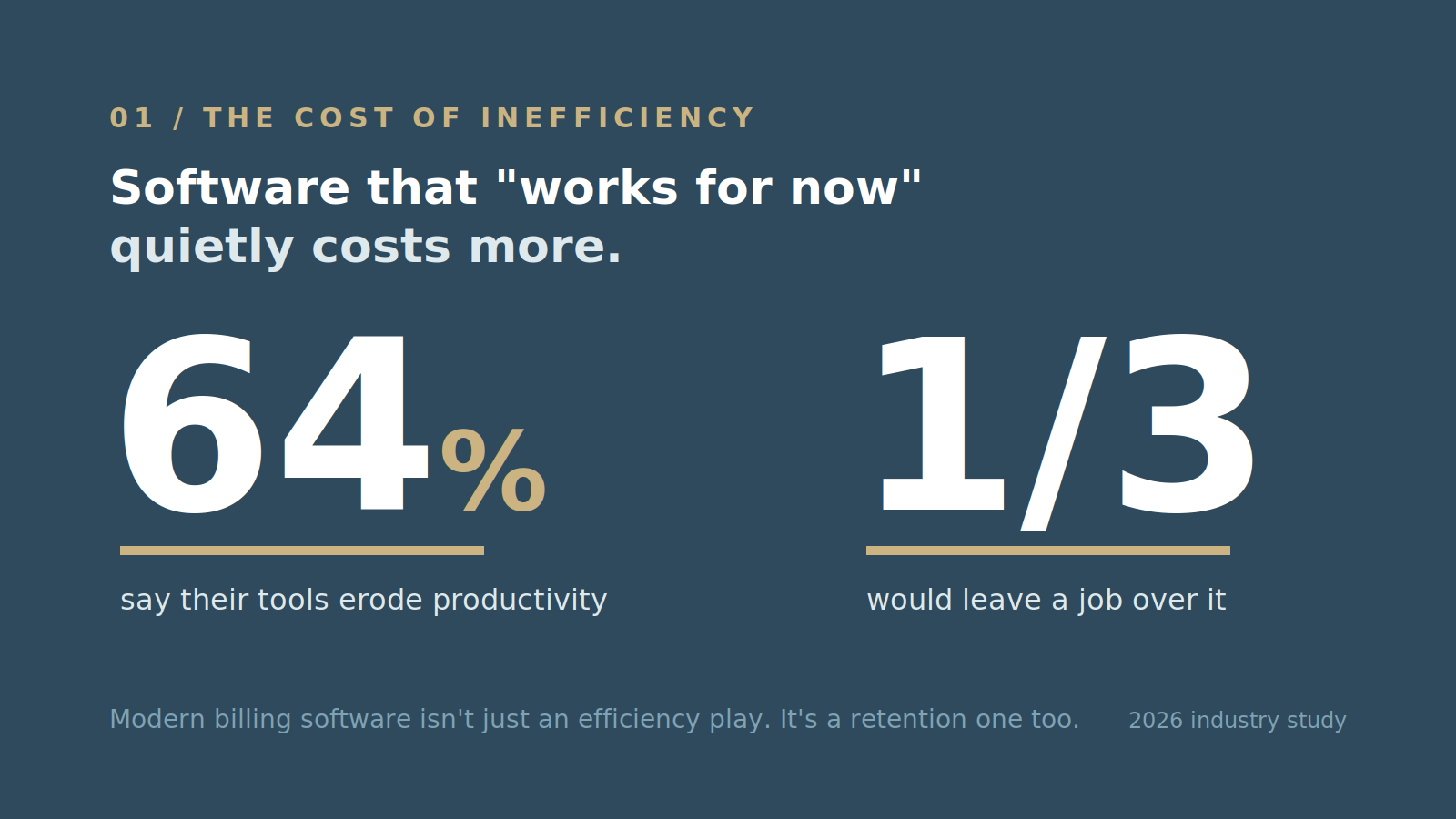
There's also a people cost. A 2026 industry study found that 64% of working adults say their tools or systems erode their productivity to some degree, and more than a third said they'd consider leaving their job over it. Modern billing software isn't just an efficiency play; it's a retention one too.
2. The Cost of Missed Revenue Opportunities
New capabilities roll out constantly, and utilities that delay upgrading aren't just falling behind competitors, they're leaving revenue on the table.
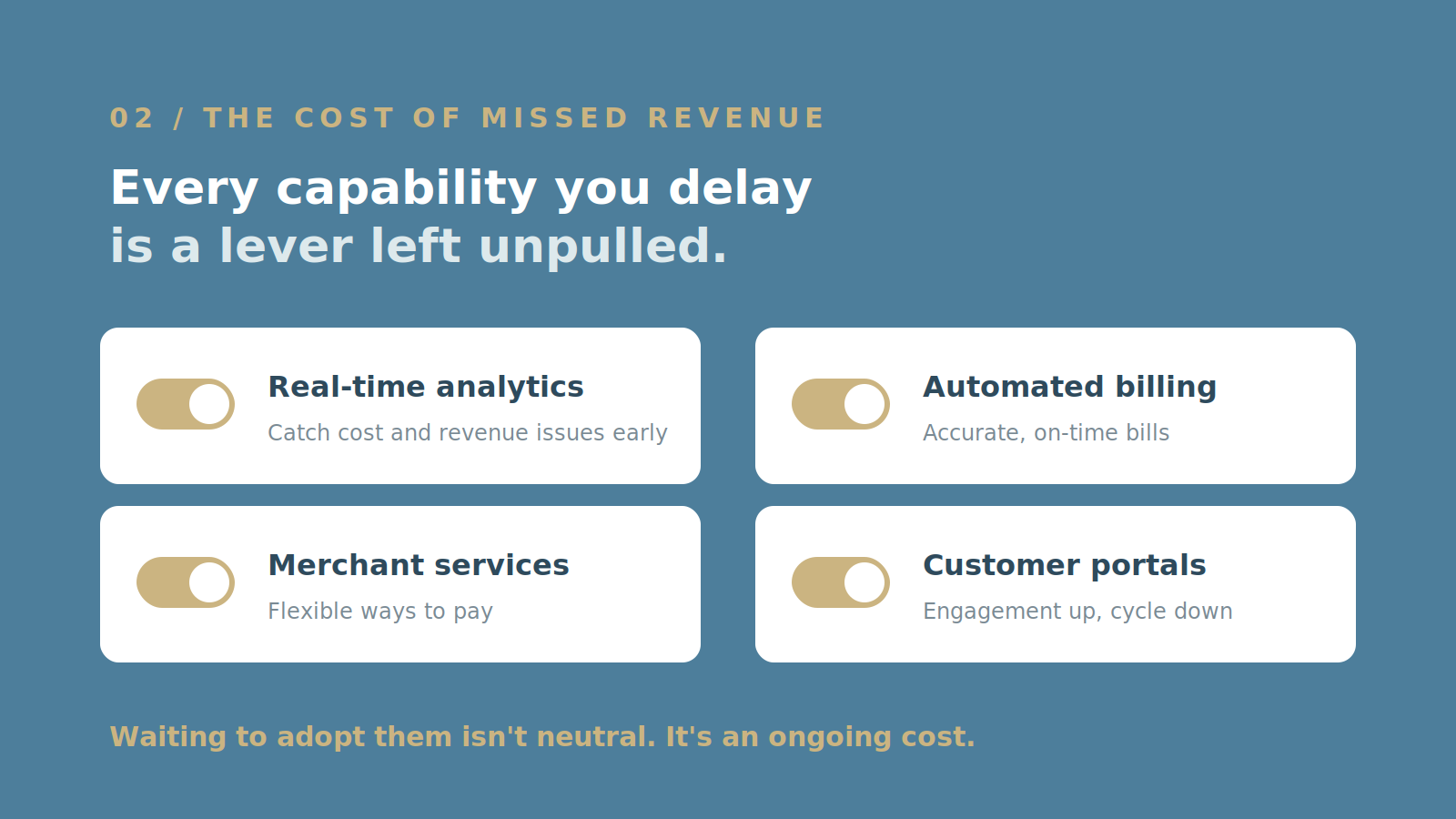
Real-time data analytics is one of the clearest examples. Modern billing platforms can surface usage patterns and trends as they happen, giving your team the information to optimize operations and catch cost or revenue issues early instead of months later.
Automated billing removes manual input from the equation entirely, cutting errors and ensuring bills go out accurately and on time, which improves the customer experience and reduces the risk of late or missed payments. Modern merchant services make this even more seamless by giving customers flexible ways to pay.

Customer portals let people view their account, pay bills, and manage their own information without calling in. Beyond convenience, a good portal increases engagement and shortens the payment cycle.
Each of these is a lever for either saving money or making more of it. Waiting to adopt them isn't neutral - it's an ongoing cost.
3. The Cost of Security Risk
Data security isn't optional anymore, and outdated software is one of the more common ways organizations end up exposed. A breach involving customer billing data can mean real financial loss, legal exposure, and reputational damage that outlasts the incident itself.
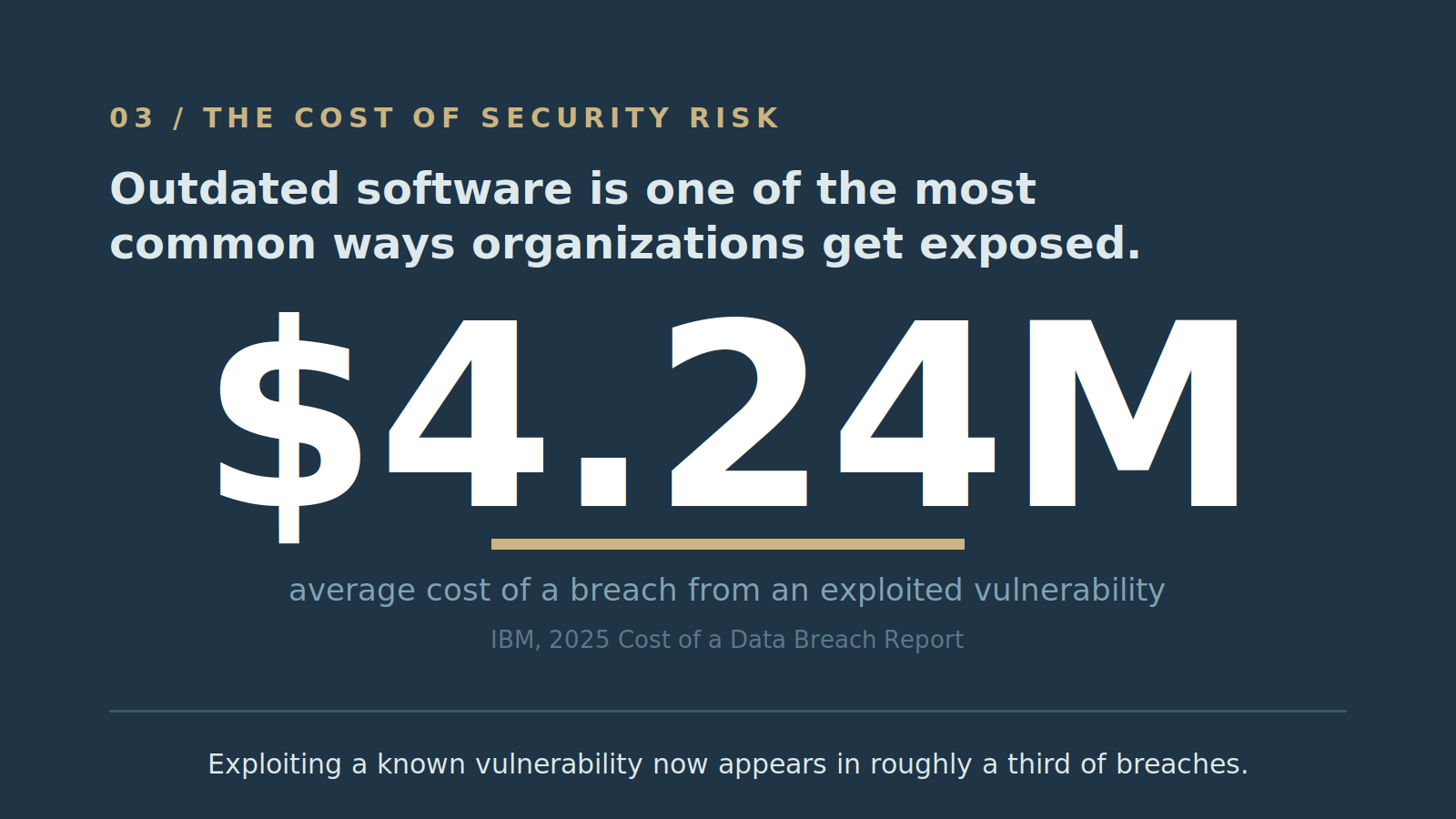
Recent industry research backs this up directly. Verizon's 2026 Data Breach Investigations Report found that exploiting a known vulnerability is now the single most common way attackers get in, present in roughly a third of breaches. And IBM's 2025 Cost of a Data Breach Report found that breaches caused by exploited vulnerabilities average $4.24 million, often the costliest category of breach to resolve.

Modern billing platforms are built with current security practices baked in, not bolted on after the fact. If maintaining that internally isn't realistic for your team, managed services can shift that responsibility to a partner built for it - a meaningful difference when the alternative is inheriting whatever security assumptions were reasonable a decade ago.
4. The Cost of Compliance Risk
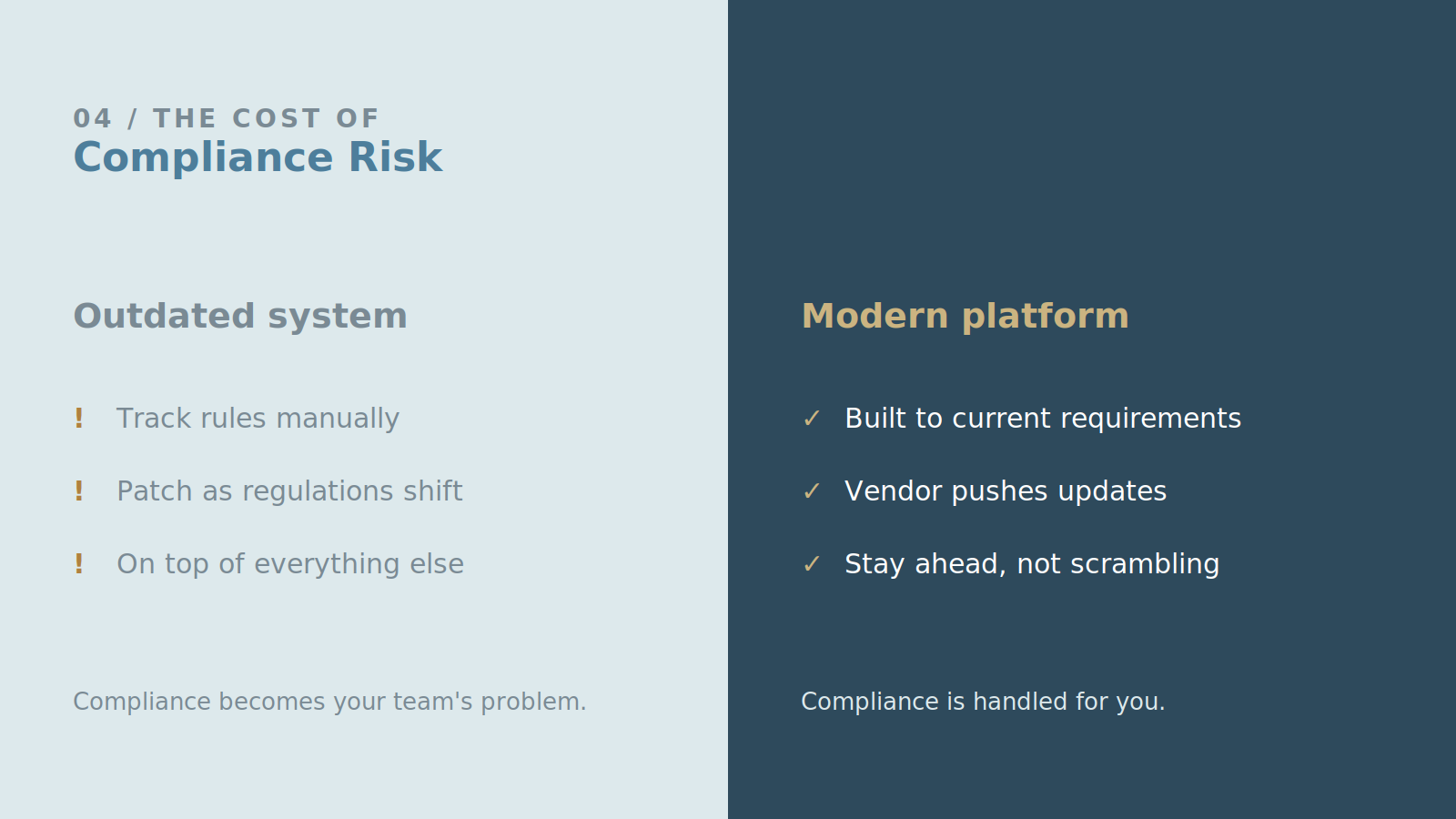
Utility billing regulation isn't getting simpler. As oversight increases, falling out of compliance carries real consequences - fines, legal complications, and reputational damage that's hard to undo.
Modern software is generally built and maintained with current compliance requirements in mind, and vendors typically push updates as regulations shift. Outdated systems don't get that benefit. Compliance becomes something your team has to track and patch manually, on top of everything else already on their plate. Our client success team works specifically to keep clients ahead of that curve rather than scrambling to catch up.
None of this is the most exciting reason to think about a software upgrade. But the financial impact of waiting is real, even when it's not immediately visible. Weigh the hidden costs, inefficiencies, missed revenue, security exposure, compliance risk - against the cost of upgrading, and the math usually points the same direction.
If you're trying to figure out where your organization actually stands, "Is It Time to Replace Your Utility Billing Software?" is a good next step. And if cost is the sticking point, "How to Compare Utility Billing System Costs" breaks down how to weigh the upgrade against what you're already paying - visibly or not - to stay where you are. Once you're ready to look ahead, "What Will Utility Billing Software Look Like in 10 Years?" covers what's worth building toward next.
