Signs it's time to Update: Sign #1 - Every Upgrade Is a Major Project
Your billing software still works. Bills go out, payments come in, and your staff knows how to operate it.
But then an upgrade comes around.
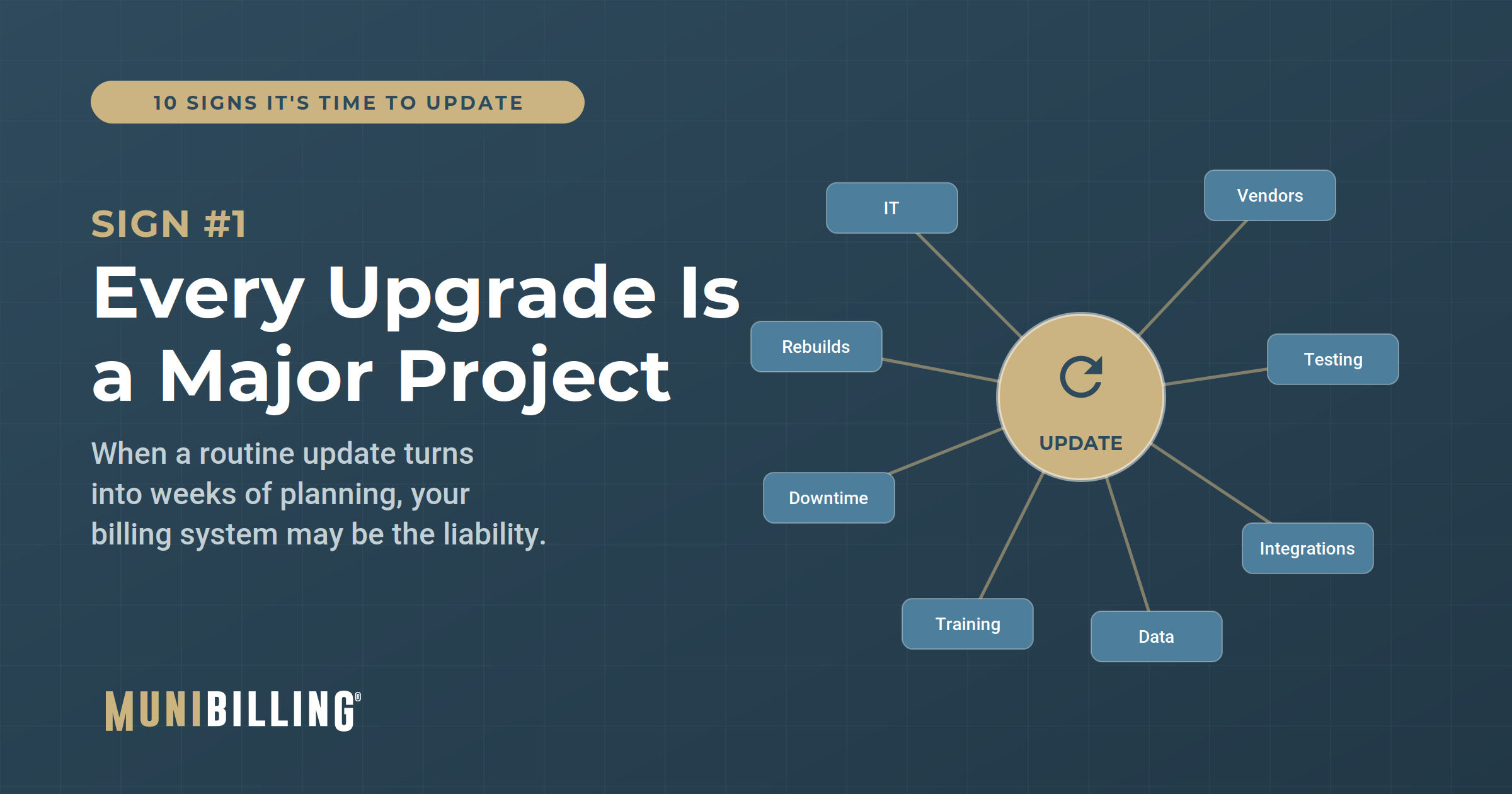
Suddenly, what should be a routine software update becomes a major project involving IT, vendors, testing, integrations, data, training, and weeks of planning.
That is a warning sign.
When an Upgrade Becomes an Operational Event
Modern cloud software should make improvements easier to adopt. With an aging utility billing system, upgrades can become increasingly complicated because of customizations, legacy architecture, integrations, and dependencies built up over years.
A seemingly simple update can require your team to ask:
- What will this break?
- Will our integrations still work?
- Will our customizations have to be rebuilt?
- How much testing will we need?
- Will employees need retraining?
- How much downtime should we expect?
The upgrade itself may not be the biggest problem.
The uncertainty surrounding it is.
Why Utilities Delay Upgrades
When upgrades are difficult, organizations naturally begin postponing them.
The cycle looks something like this:
Difficult upgrade → delayed upgrade → older technology → more customization → even more difficult upgrade.
Eventually, the utility can fall several generations behind, not because it doesn't want to modernize, but because modernization has become too disruptive.
The Hidden Cost of Difficult Upgrades
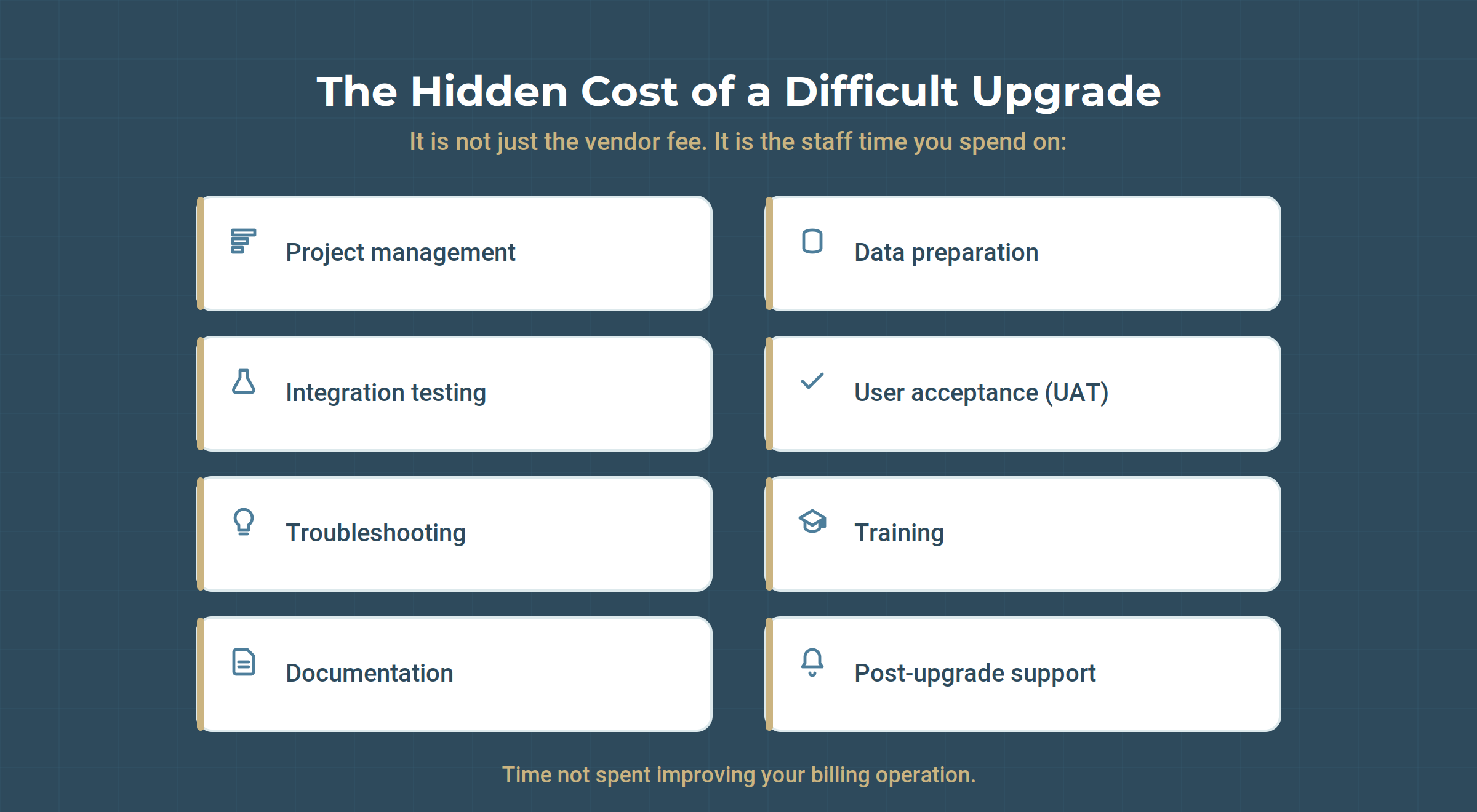
The cost isn't limited to what the vendor charges for the upgrade.
Your organization may also spend staff time on:
- Project management
- Data preparation
- Integration testing
- User acceptance testing
- Troubleshooting
- Training
- Documentation
- Post-upgrade support
And while your team is focused on the upgrade, they're not focused on improving the billing operation.
The Better Question
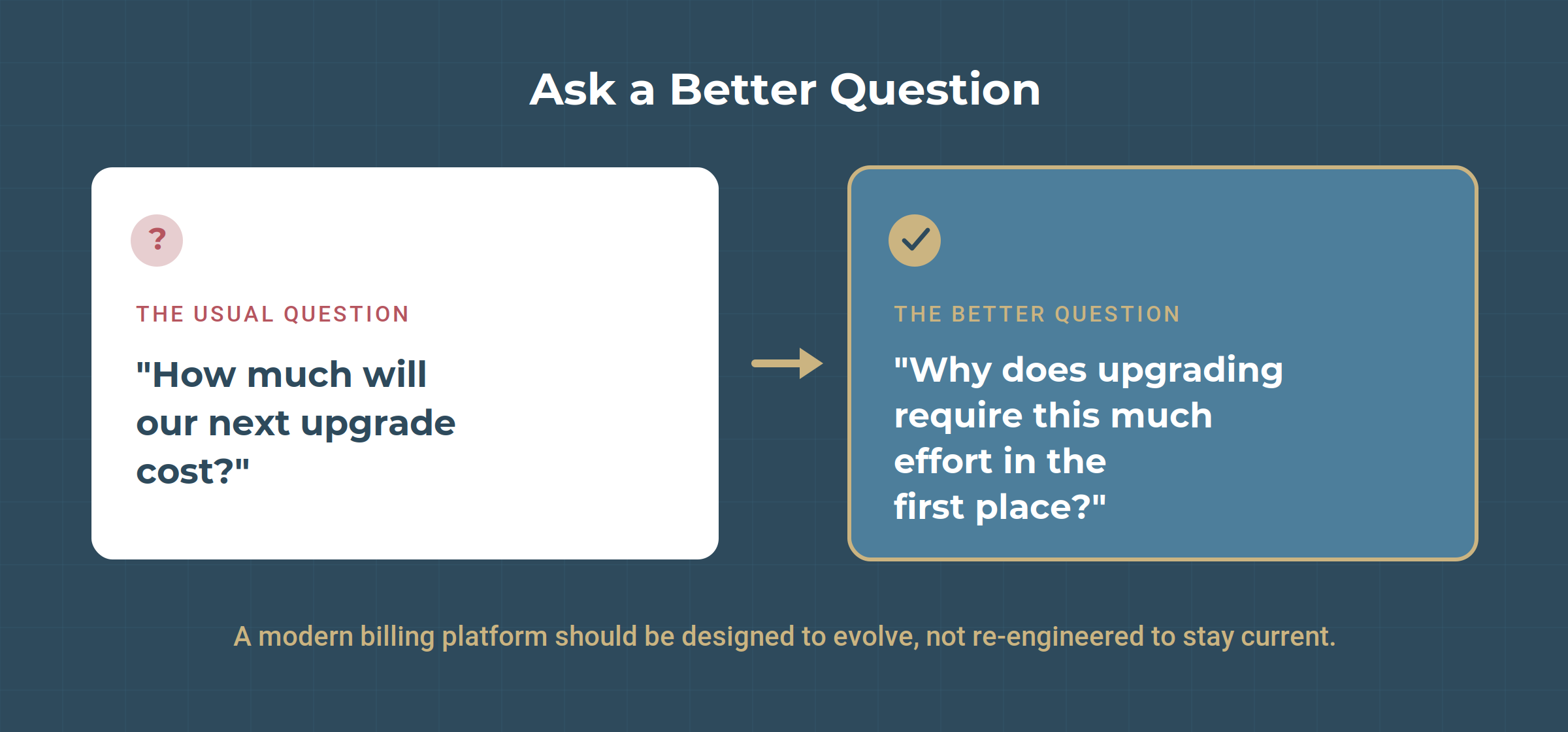
Don't ask only: “How much will our next upgrade cost?”
Ask: “Why does upgrading our billing software require this much effort in the first place?”
That question gets to the heart of modernization.
A modern utility billing platform should be designed to evolve. Updates should improve the system without forcing utilities to repeatedly undertake major technology projects just to stay current.
Is Your Billing System Becoming a Liability?
If every upgrade requires months of planning, extensive testing, custom development, or significant disruption, your software may be creating more operational risk than value.


 Jai Lewis