
 Jordon Davis
How Mobile Apps Are Making Utility Billing More Efficient
Utility billing doesn't happen entirely behind a desk.
Meter readings happen in the field. Service requests come from customers. Technicians need access to account information. Customers want to make payments and manage their accounts from their phones.
Yet many utility operations still rely on paper forms, phone calls, manual data entry, and disconnected systems to connect these activities.
Mobile apps are changing that.
By bringing utility workflows onto mobile devices, utilities can reduce manual work, improve data accuracy, accelerate communication, and give both employees and customers a more convenient way to interact with their utility.
What Can a Mobile Utility App Do?
A mobile app can extend utility billing software beyond the office and into the hands of the people who need it most.
Depending on the application, mobile tools can support:
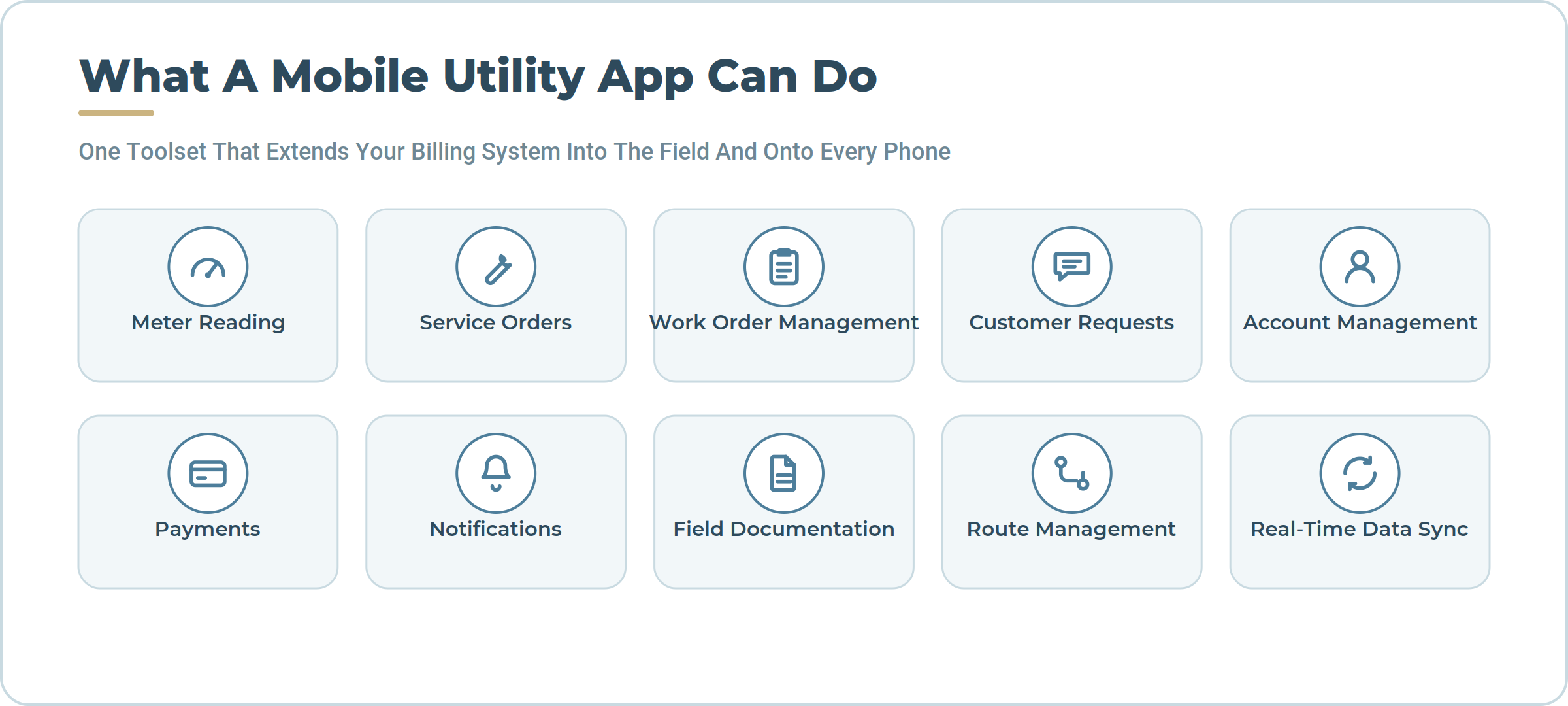
- Meter reading
- Service orders
- Work order management
- Customer requests
- Account management
- Payments
- Notifications
- Field documentation
- Route management
- Real-time data synchronization
Instead of requiring employees or customers to work around the limitations of a traditional billing system, mobile apps bring the system closer to them.
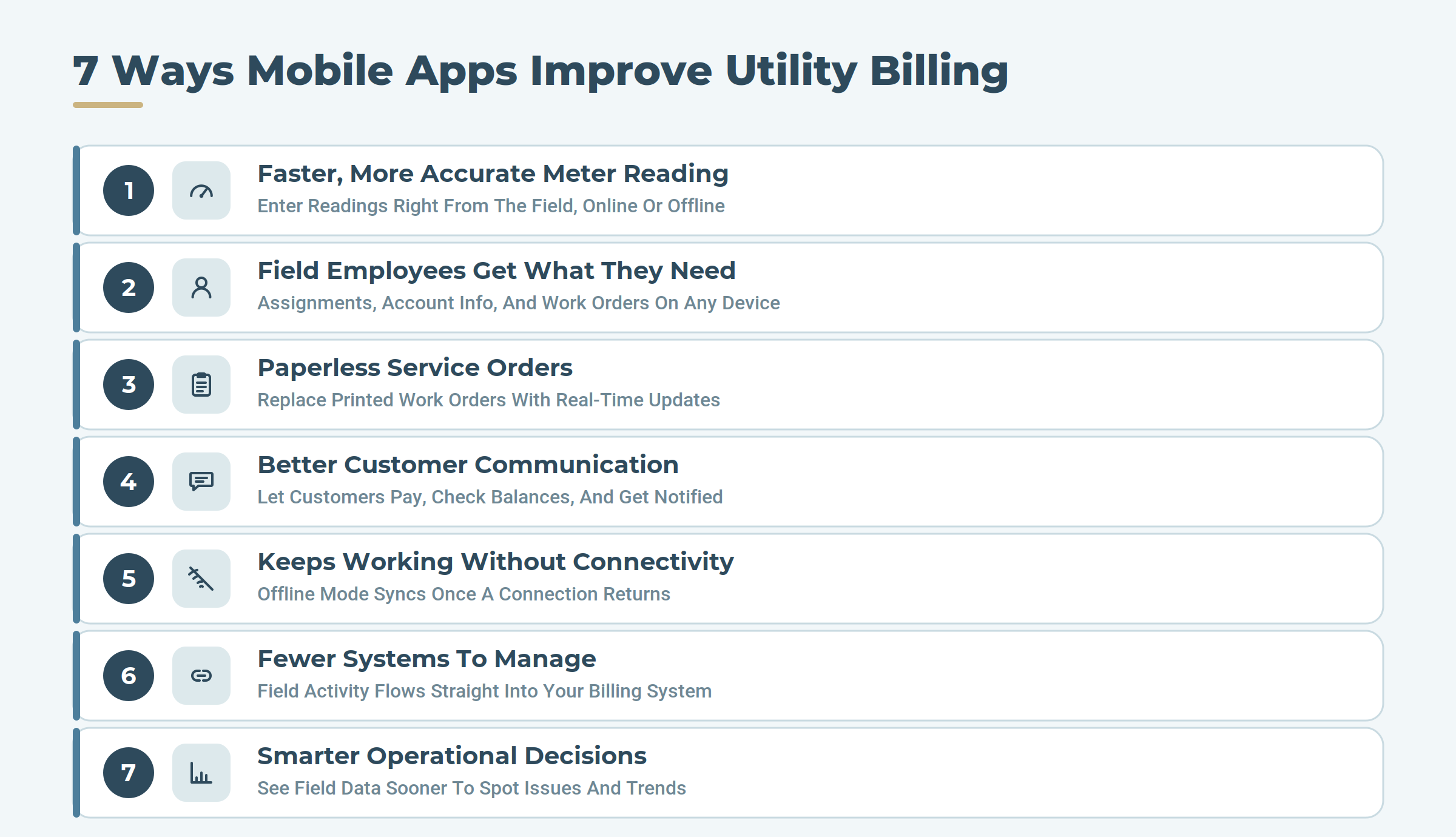
1. Make Meter Reading Faster and More Accurate
Manual meter reading can create unnecessary opportunities for errors.
A technician may record a reading on paper, return to the office, and then enter that information into another system. Every additional step creates another opportunity for incorrect data entry or lost information.
A mobile meter reading app can streamline the process by allowing technicians to enter readings directly from their mobile device.
MuniBilling's MuniReadPro, for example, is designed to support both online and offline meter reading, making it useful in areas where connectivity may be limited.
That can help utilities:
- Reduce paper-based processes
- Minimize manual data entry
- Validate readings closer to the source
- Synchronize information with the billing system
- Continue working when connectivity is unavailable
The result is a more efficient path from meter reading to billing.
2. Give Field Employees the Information They Need
Utility technicians shouldn't have to constantly return to the office or call the billing team to find out what needs to happen next.
Mobile applications can put the information they need directly in their hands.
Technicians can receive assignments, access relevant information, update work orders, document completed work, and communicate changes while they are in the field.
That creates a more connected workflow between field employees and office staff.
3. Replace Paper-Based Service Orders
Paper work orders create friction.
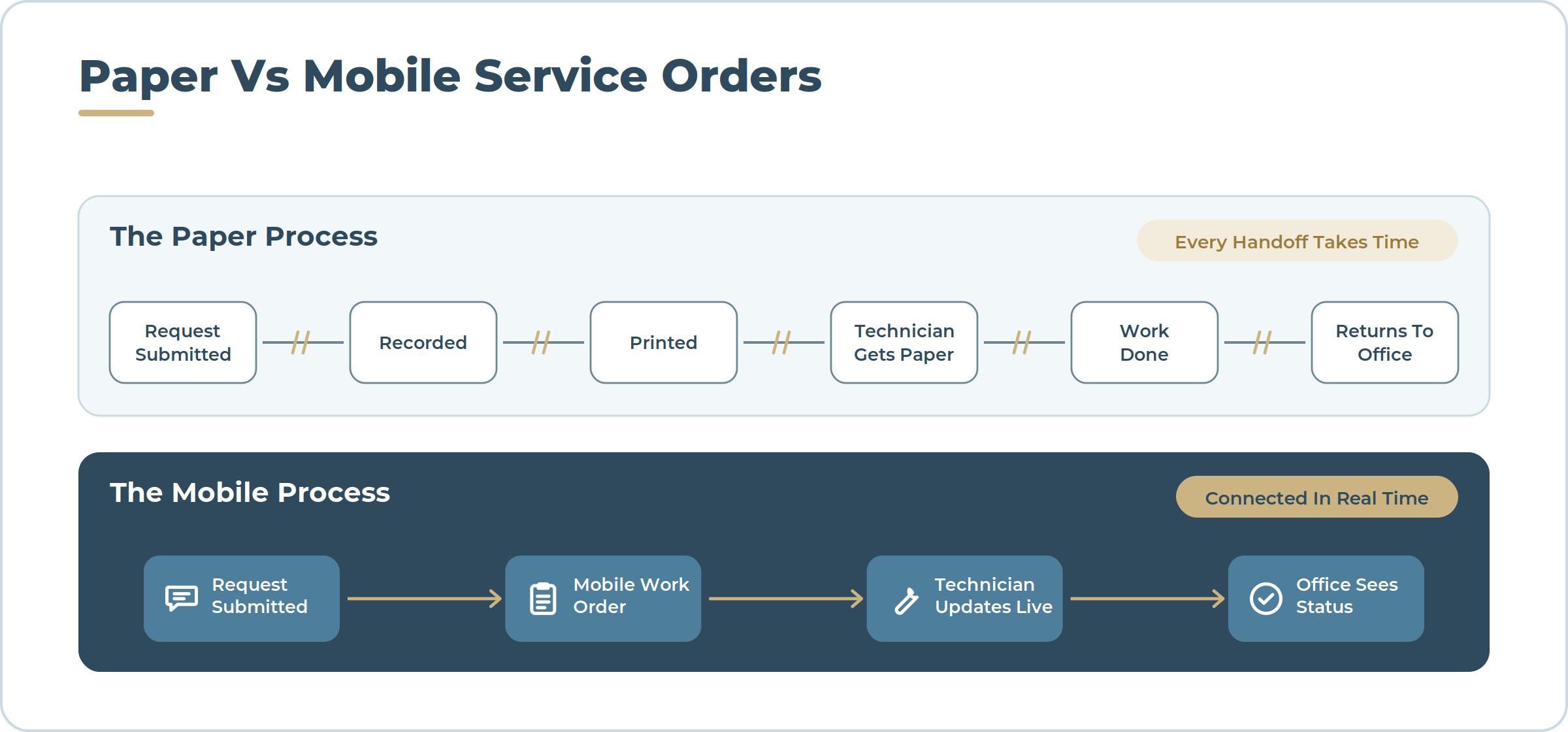
A customer submits a request. Someone records it. The request is printed. A technician receives the paperwork. The technician completes the work. The paperwork eventually makes its way back to the office.
Every handoff takes time.
A mobile service order application can connect those steps.
MuniServicePro, MuniBilling's mobile service order application, is designed to provide real-time work order updates, mobile documentation, GIS-based route management, and communication between field and office teams.
Instead of asking, "Where is that work order?", utility teams can have a much clearer view of its status.

4. Improve Communication With Customers
Mobile technology isn't only valuable for employees.
Customers increasingly expect to manage everyday services from their phones. Utility billing is no different.
A mobile customer experience can allow customers to:
- View account information
- Check balances
- Make payments
- Receive notifications
- Submit requests
- Access billing information
- Communicate with the utility
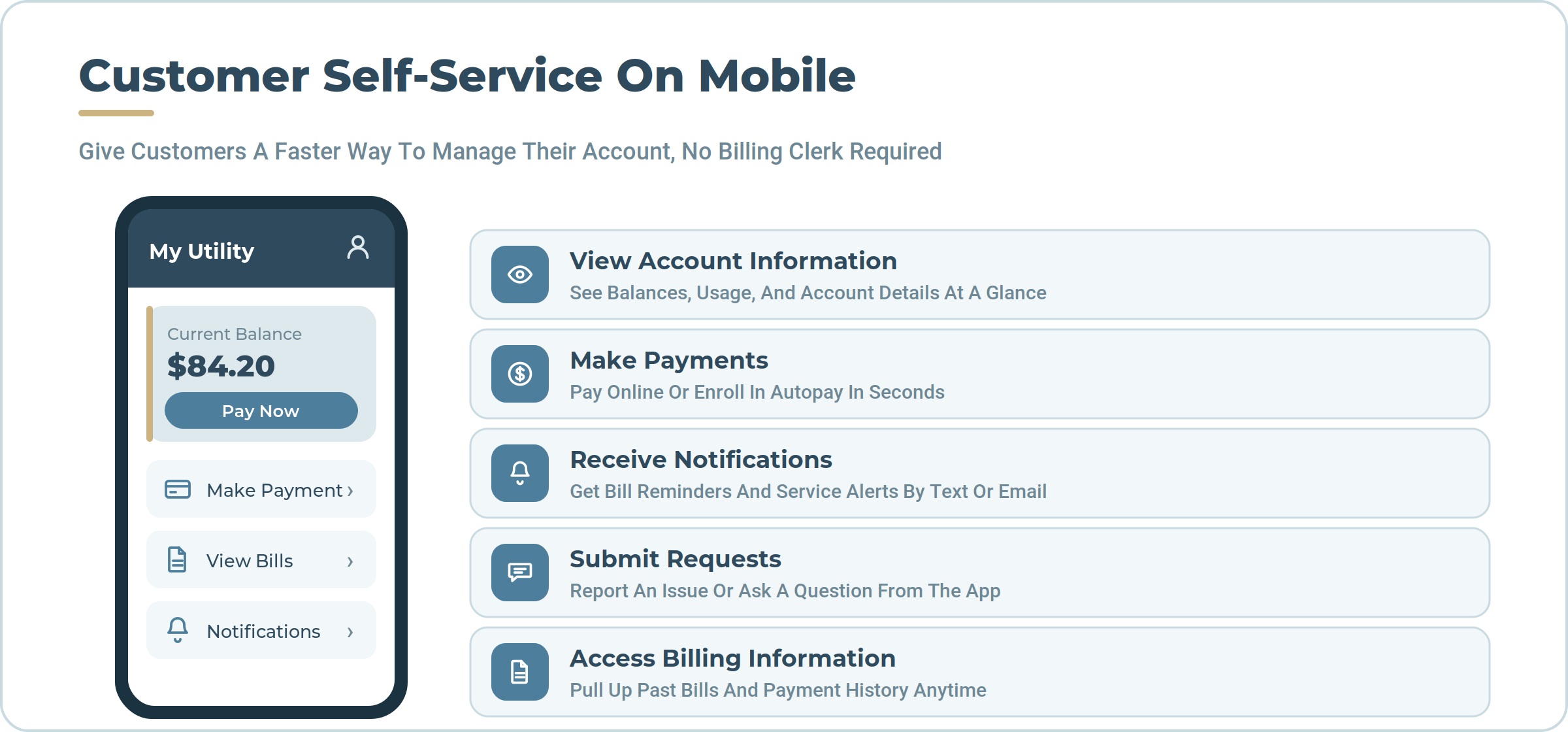
This extends self-service beyond the traditional desktop customer portal.
MuniBilling's broader customer self-service capabilities are designed to give customers access to billing and payment information without requiring every interaction to go through a billing clerk.
5. Keep Operations Moving When Connectivity Is Limited
Not every meter, property, or service location has a reliable internet connection.
For field employees working in remote areas, an app that requires constant connectivity can become a liability.
Offline functionality allows employees to continue completing important tasks even when they temporarily lose access to a network.
Once connectivity is restored, information can synchronize back to the appropriate system.
For utilities with remote service areas, this can make mobile technology significantly more practical.

6. Reduce the Number of Systems Employees Have to Manage
One of the biggest advantages of mobile utility applications isn't simply that they work on a phone.
It's that they can connect field activity with the utility's broader billing operation.
When information flows between mobile applications and utility billing software, employees spend less time transferring information between systems.
That matters because disconnected workflows create more than inconvenience. They can lead to duplicate data entry, delays, inconsistent information, and additional administrative work.
Integrated utility billing software can bring billing, payments, account information, and other utility functions together so employees have access to more consistent information.
7. Turn Mobile Data Into Better Operational Decisions
Mobile applications can also create better visibility into what's happening in the field.
Instead of waiting for paper forms or manually entered updates, utility leaders can have access to information closer to when the work actually happens.
That can help identify:
- Repeated service issues
- Unusual meter readings
- Delayed work orders
- Route inefficiencies
- Field productivity trends
- Data quality problems
The value isn't just collecting information faster.
It's getting useful information to the right people sooner.
Mobile Apps Aren't Just About Convenience
It's easy to think of a utility mobile app as a convenience feature.
But the bigger opportunity is operational.
A well-designed mobile application can remove unnecessary steps from everyday processes, reduce manual coordination, improve data quality, and connect employees and customers directly to the utility's systems.
That makes mobile technology an important part of modern utility management—not simply another digital feature.
The Future of Utility Operations Is More Connected
Utility customers and employees already use mobile devices every day. The opportunity for utilities is to make those devices part of the operational workflow.
From meter reading to service orders to customer self-service, mobile applications can help utilities move work out of disconnected processes and into connected, digital workflows.
The goal isn't simply to put utility software on a phone.
It's to make utility operations more accessible, responsive, and efficient—wherever the work happens.
Ready to modernize your utility billing operation?
MuniBilling combines cloud-based utility billing with connected tools designed to help utilities improve efficiency, streamline workflows, and provide better customer self-service.
See how MuniBilling can help modernize your utility operation. Schedule a personalized demo today.
Frequently Asked Questions
What is a utility billing mobile app?
A utility billing mobile app extends utility billing and management capabilities to mobile devices. Depending on the application, it can support meter reading, service orders, field operations, customer self-service, payments, and account management.
How can mobile apps improve utility operations?
Mobile apps can reduce manual data entry, eliminate paper-based processes, improve communication between field and office staff, and provide faster access to important utility information.
Can utility meter reading apps work without an internet connection?
Some utility meter reading apps offer offline functionality, allowing field employees to record readings and complete tasks when connectivity is unavailable. Data can then synchronize when a connection is restored.
What can utility employees do with a mobile app?
Depending on the app, employees can read meters, manage service orders, update work orders, access account information, document field activity, and communicate updates with office staff.
How do mobile apps work with utility billing software?
Integrated mobile apps can exchange information directly with utility billing software, reducing duplicate data entry and helping ensure that field information, customer accounts, and billing data stay synchronized.
Are mobile apps useful for utility customers?
Yes. Customer-facing mobile tools can make it easier for customers to view account information, check balances, make payments, receive notifications, and access self-service options without contacting utility staff.

Schedule a personalized live demo of the new MultiBilling platform today and explore how AI-driven workflow orchestration, operational intelligence, and governed automation can transform your utility billing operations.