
 Ryan Duvall
What Is Composable ERP? Why Utilities Are Moving Beyond the All-in-One Suite
Composable ERP is a modular approach to enterprise software. Instead of buying one all-in-one suite from a single vendor, an organization assembles a set of specialized, best-in-class components that connect systems and exchange data dynamically, securely, and at scale through a flexible API architecture. Each component can be added, upgraded, or swapped as needs change, without ripping out the whole system.
If you have seen the term in an analyst report or a vendor pitch and wondered whether it is more than a buzzword, this post is for you. Here is what composable ERP means, why it is taking off, and what it looks like in utility billing specifically.
The Problem It Solves
Traditional ERP follows a monolithic model: finance, billing, asset management, customer service, and reporting all bundled into one tightly integrated application. The appeal is obvious. One vendor, one contract, one system to learn.
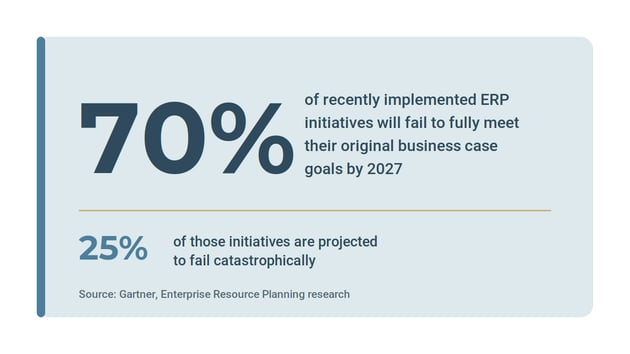
The track record is less appealing. Gartner projects that by 2027, more than 70 percent of recently implemented ERP initiatives will fail to fully meet their original business case goals, and as many as a quarter will fail catastrophically. The root cause usually is not vendor selection or project management. It is the assumption underneath the model itself:
|
"No single ERP suite vendor has best-in-class capabilities in all areas." Gartner, Enterprise Resource Planning research |
Every all-in-one suite is excellent at some things and mediocre at others. When you buy the bundle, you buy the mediocre parts too, and you customize around them until the system is expensive to maintain and painful to upgrade.
How Composable ERP Works
Composable architecture replaces the bundle with two layers:
- A core system. The purpose-built platform that owns the data and business logic for your most critical operation. The core provides stability, governance, and a single source of truth.
- A composition layer. Best-of-breed applications for everything else, connected to the core through stable, governed APIs rather than custom one-off integrations.
The design question every organization must answer is where to draw the boundary: what belongs at the core, and what composes around it? Gartner’s predictions are typically one to two years ahead of the market on trends like this, and the market has caught up. Analysts across the industry now describe the same shift, from systems built to last toward systems built to change.
What This Looks Like in Utility Billing
The traditional monolithic ERP model was designed for the on-premises realities of the 1990s, with accounting—not utility operations—as its center of gravity. As a result, municipal utilities and commercial billing providers are often forced to conform to rigid user interfaces, constrained workflows, and functional limitations that reflect the priorities of the broader ERP platform rather than the specialized needs of utility billing.
In many cases, utility billing capabilities were acquired or added primarily to satisfy procurement and RFP requirements, not developed as strategic products. Enhancements are prioritized to ensure competitive parity across the entire ERP platform. This leaves utilities dependent on vendors whose investment decisions are driven by enterprise-wide priorities, limiting innovation, slowing responsiveness, and constraining the ability to modernize customer service, operations, analytics, and automation.
A utility billing operation can manage the billing lifecycle effectively only through a purpose-built, authoritative system that unifies customer and account records, service locations, meters, rate structures, billing cycles, payments, and regulatory audit history. Secure dynamic APIs, rather than hard-coded integrations, must then enable the timely, controlled exchange of trusted data with surrounding financial, property management, metering, payment, and customer service systems.
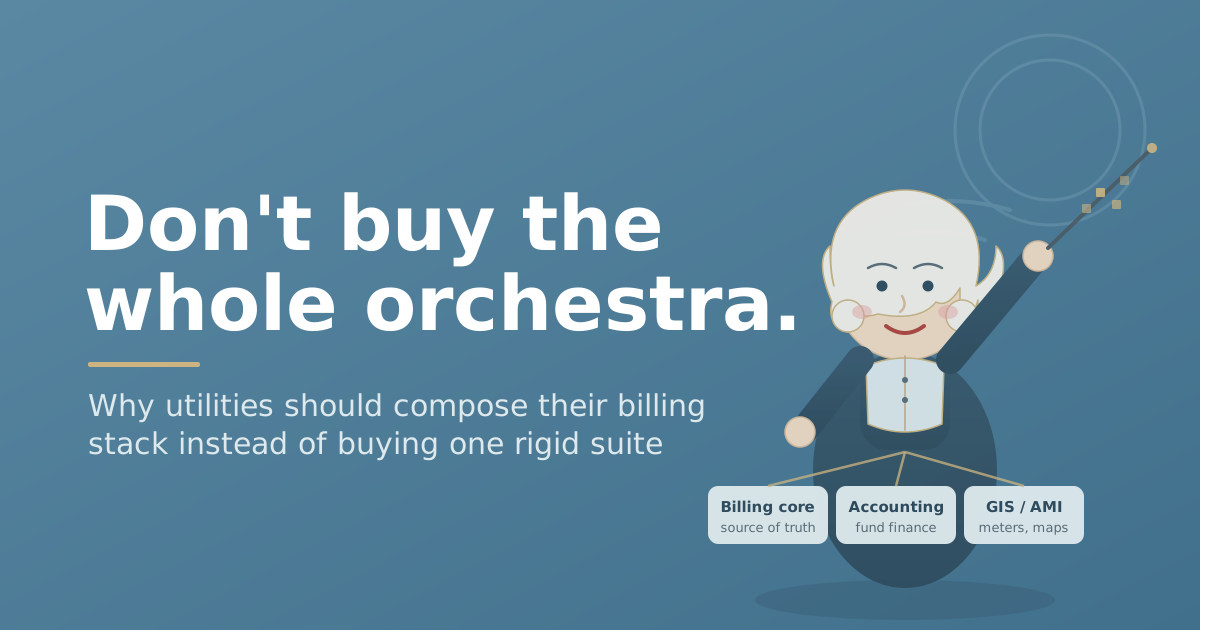
| Much like a composer, organizations should compose their information infrastructure by arranging their best-of-breed technology solutions into a symphony that works best for them. |
The extendable composable ERP framework enables utility billing to become the core for its related ecosystem of composable solutions, such as:
- Property management. The Rent Role API synchronizes move-in and move-out events, while the accounting API manages the flow of billed transactions.
- GIS – The API synchronizes information to ensure the field service personnel have a complete perspective of ownership, contact information, and service history
- AMI – The suite of billing-to-meter platform APIs manages the integrity of meter transactions, statuses, and updates.
- Accounting - The API maintains the integrity of billing and payment financial transactions.
MuniBilling®’s partnership with Aclarian demonstrates the strategic value of a composable ERP model: each platform remains focused on the capabilities it is purpose-built to perform. Engineering new capabilities is not competing for a portion of the same budget. MuniBilling® governs the utility billing lifecycle, while Aclarian manages accounting—giving each department an experience tailored to its workflows, controls, and priorities.
Together, the two platforms deliver greater capability, flexibility, and long-term adaptability than a single monolithic suite. The result is an integrated operating environment that enables organizations to use the best system for each function, evolve as requirements change, and avoid being constrained by a single vendor’s architecture or roadmap.

The Takeaway
Composable ERP is not a product you buy. It is a strategy: define the core your operation truly depends on, choose the purpose-built system for it, and connect everything else through open APIs.
MuniBilling® was built on that strategy from the start, with a purpose-built utility billing core, an open API architecture, and a growing ecosystem of partners like Aclarian. If you are evaluating billing software and want to see what a composable approach looks like for your operation, we would love to show you.

Schedule a personalized live demo of the new MultiBilling platform today and explore how AI-driven workflow orchestration, operational intelligence, and governed automation can transforming your utility billing operations.