
 Ryan Duvall
Key Things to Know About Utility Billing Software
Managing water, sewer, electricity, gas, and trash across multiple properties can create significant administrative work for property managers. The right utility billing software can automate billing, simplify payments, improve reporting, and connect utility data with property management systems.
For multifamily property managers, the most important capabilities to look for include multi-utility billing, automated billing, eBilling, online payments, reporting and analytics, and system integrations.
What Is Utility Billing Software?
Utility billing software automates the calculation, management, and collection of utility charges. Modern platforms can manage multiple utilities, billing rules, resident accounts, payments, reporting, and integrations from one system.
Key features include:
- Multi-utility billing
- Automated billing
- eBilling and online payments
- Reporting and analytics
- Property management integrations
- Meter data integrations
- Customer self-service
- Exception management

Why Do Property Managers Struggle Without Utility Billing Software?
Utility billing becomes difficult when information is spread across spreadsheets, property management software, meter systems, payment platforms, and accounting systems.
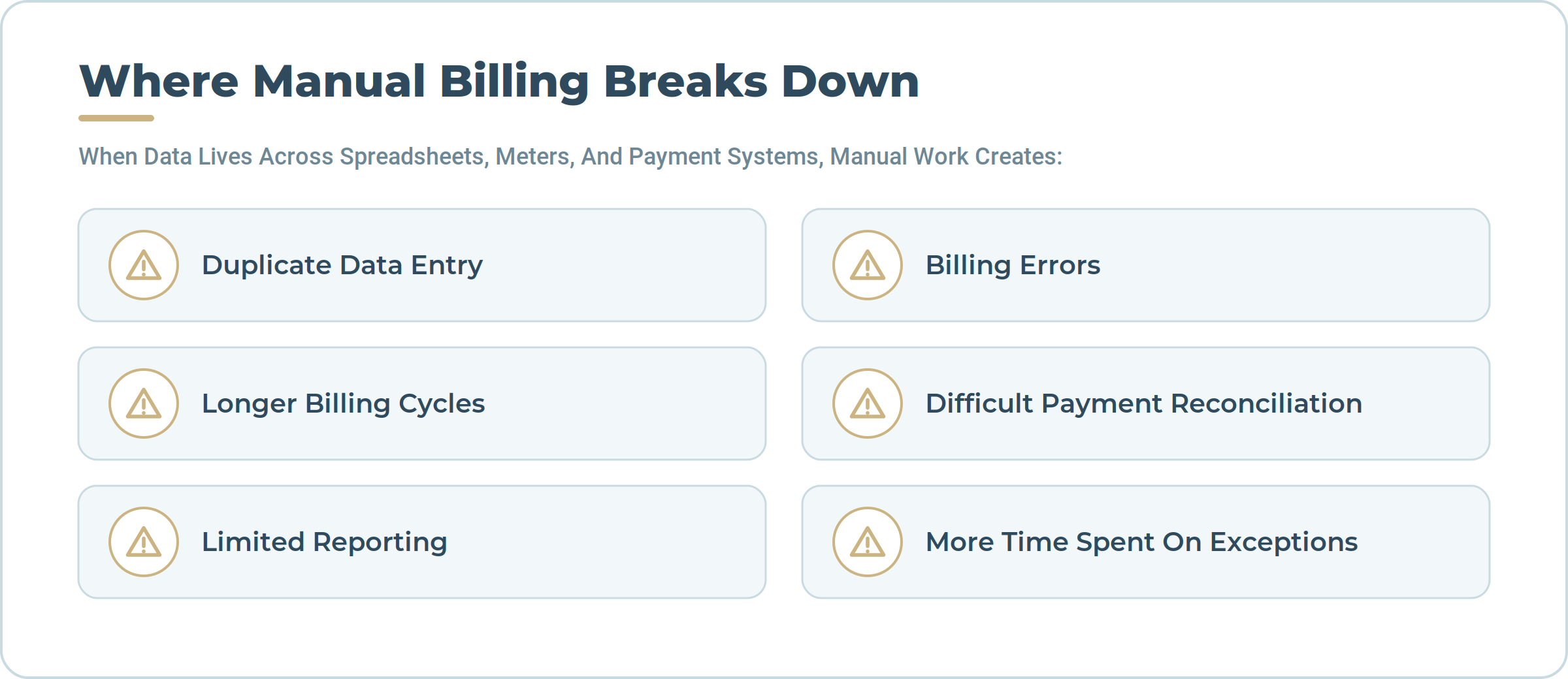
Manual processes can result in:
- Duplicate data entry
- Billing errors
- Longer billing cycles
- Difficult payment reconciliation
- Limited reporting
- More time spent resolving exceptions
Utility bill management software brings these processes into a centralized system and can reduce repetitive administrative work.
What Should Property Managers Look for in Utility Billing Software?
1. Multi-Utility Billing
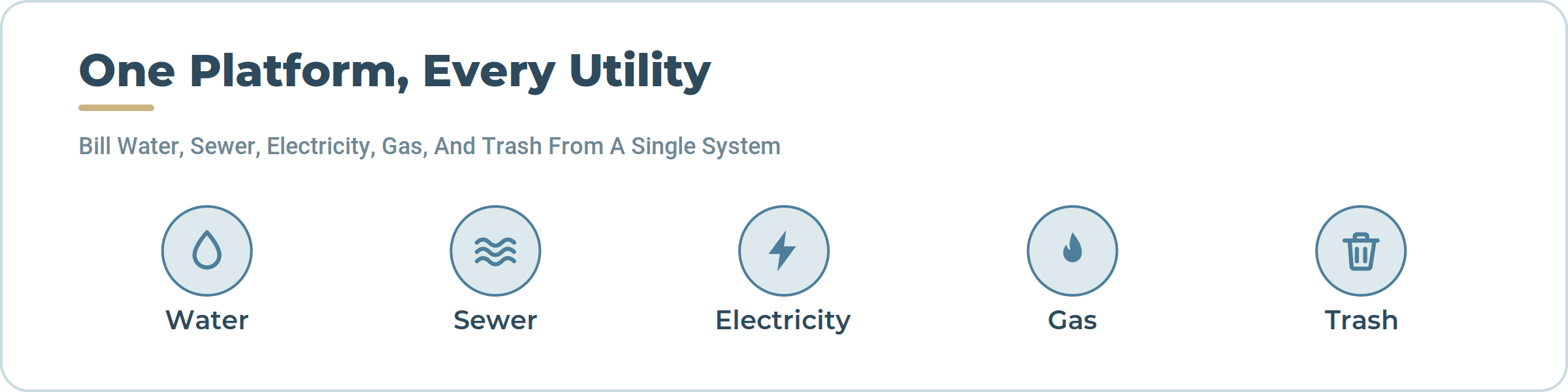
Look for software that can manage water, sewer, electricity, gas, trash, and other utilities within one platform.
Multi-utility billing can help property managers consolidate utility charges, manage different billing rules, and simplify portfolio-wide billing.
2. Automated Billing
Automation can handle recurring billing activities such as data imports, calculations, bill generation, and exception identification.
This reduces manual work and helps create a more consistent billing process.
3. eBilling and Online Payments
Residents expect convenient digital payment options. Look for platforms that allow residents to view balances, receive electronic bills, make online payments, and enroll in AutoPay.
Learn more about online payments and eBilling.
4. Reporting and Analytics
Strong reporting and analytics should help managers monitor:
- Billing and revenue
- Usage trends
- Delinquent accounts
- Payment activity
- Property performance
- Billing exceptions
The goal is to turn billing data into information managers can actually use.
5. Property Management Integrations
Integrated utility billing can connect resident, unit, move-in, move-out, and billing information with property management software.
This reduces duplicate data entry and helps keep information synchronized.
Explore utility billing integrations.
6. Scalability
Choose a platform that can support your portfolio as it grows. Consider the number of properties, residents, utilities, users, billing rules, and transactions the system can handle.

What Utility Billing Software Supports Multiple Utilities?
Property managers should look for multi-utility billing software that can manage services such as water, sewer, electricity, gas, and trash through one platform.
The key consideration is whether the system can support different utility types, billing rules, rates, and allocation methods without requiring separate processes.

What Makes Integrated Utility Billing Important?
Without integration, a billing process may look like:
Property management system → spreadsheet → meter data → billing calculations → payment system → reporting
Every manual handoff can create opportunities for errors and delays.
Integrated utility billing connects these processes, helping reduce duplicate data entry, improve data consistency, and provide better visibility.
Learn more about integrated utility billing.
How Do eBilling and Online Payments Improve Utility Billing?
eBilling and online payments allow residents to receive and pay utility bills digitally.
A modern customer experience can include:
- Electronic bills
- Online account access
- Balance and billing history
- One-time payments
- AutoPay
- Payment history
For property managers, digital payments can also simplify payment tracking and reconciliation.
How Much Does Utility Billing Software Cost?
Pricing depends on factors such as:
- Number of properties and units
- Utility types
- Billing complexity
- Integrations
- Payment processing
- Reporting requirements
- Implementation and support
When comparing solutions, consider the total cost of utility billing, including the staff time and manual work required to maintain your current process.
How to Choose Utility Billing Software
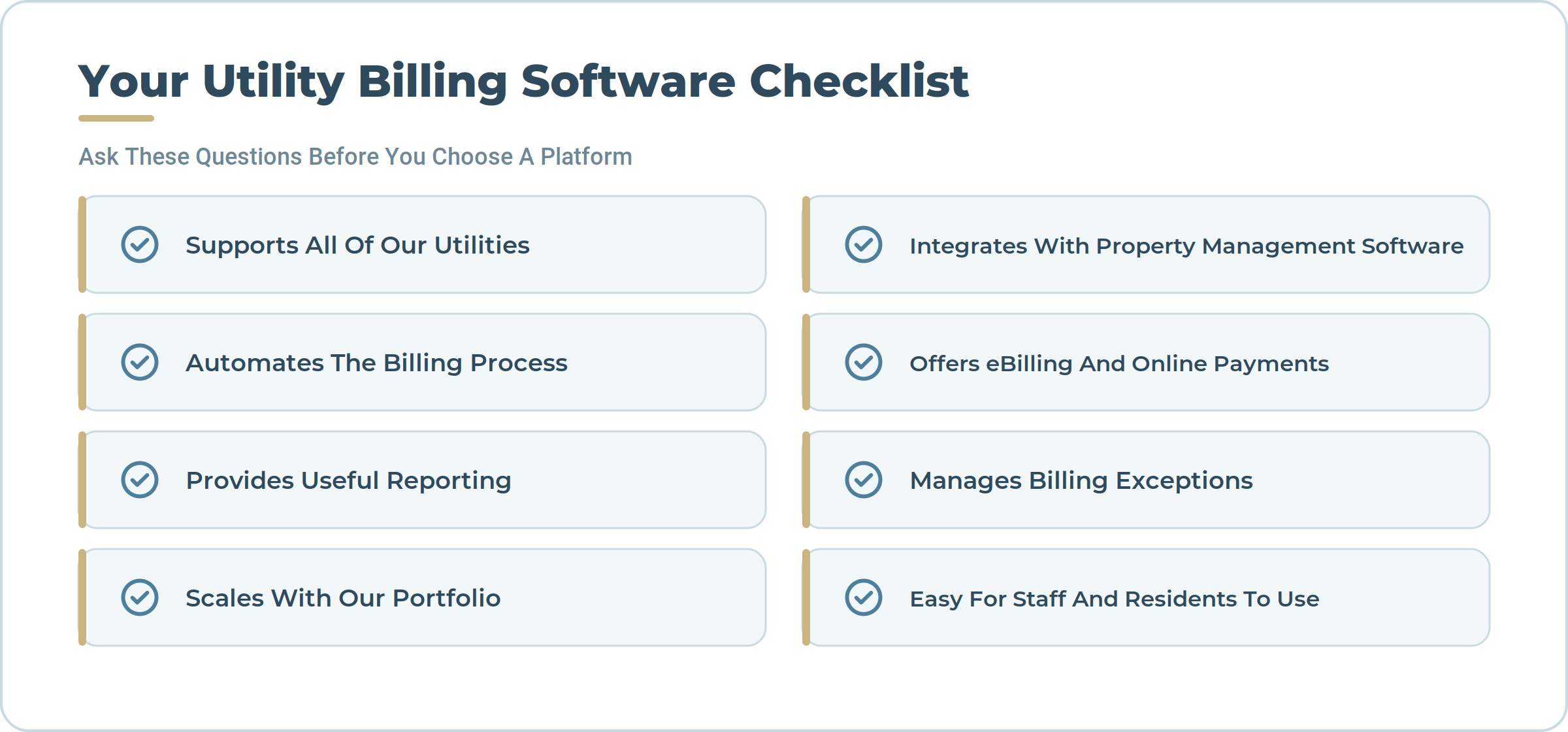
Before selecting a platform, ask:
- Does it support all of our utilities?
- Does it integrate with our property management software?
- Does it automate billing?
- Does it offer eBilling and online payments?
- Does it provide useful reporting?
- Can it manage exceptions?
- Can it scale with our portfolio?
- Is it easy for employees and residents to use?
A platform that addresses these areas can help create a more efficient and scalable utility billing operation.
Modern Utility Billing for Property Managers
MuniBilling provides utility billing technology designed to simplify complex billing operations for property managers.
The platform supports multi-utility billing, automated billing workflows, reporting and analytics, eBilling, online payments, and integrations.
Explore MuniBilling's utility billing software or utility billing solutions for property managers.
Ready to modernize your utility billing process? Request a MuniBilling demo.
Frequently Asked Questions
What is utility billing software?
Utility billing software automates the calculation, management, and collection of utility charges for properties and residents.
What utilities can utility billing software manage?
Depending on the platform, it can manage water, sewer, electricity, gas, trash, stormwater, and other utility services.
What is multi-utility billing?
Multi-utility billing allows property managers to manage multiple utility services through one billing platform.
Can utility billing software integrate with property management software?
Yes. Integrations can synchronize resident, unit, move-in, move-out, and billing information between systems.
Does utility billing software support online payments?
Many platforms offer online payments, eBilling, AutoPay, payment history, and resident self-service.
What reporting should utility billing software provide?
Property managers should look for reporting on billing, revenue, usage, payments, delinquencies, and exceptions.
Can utility billing software reduce manual work?
Yes. Automation can reduce repetitive data entry, billing calculations, payment processing, reporting, and exception management.
What should property managers consider when choosing utility billing software?
Consider multi-utility support, automation, integrations, reporting, eBilling, online payments, scalability, usability, and total cost.

Schedule a personalized live demo of the new MultiBilling platform today and explore how AI-driven workflow orchestration, operational intelligence, and governed automation can transform your utility billing operations.