
 Kimberly Wrenn
5 Ways to Get Customers to Actually Use Their Utility Billing Portal
Most customers already prefer self-service. Industry research consistently shows a majority of people try to resolve an issue on their own before ever calling support - and utility bills are no exception.
That's the case for a customer portal. Give people a way to check their account, pay a bill, and report a problem without picking up the phone, and most of them will take it.
But building the portal is only half the job. Plenty of utilities have a perfectly capable portal that customers simply aren't using. Here's how to close that gap.
1. Make It Impossible To Miss
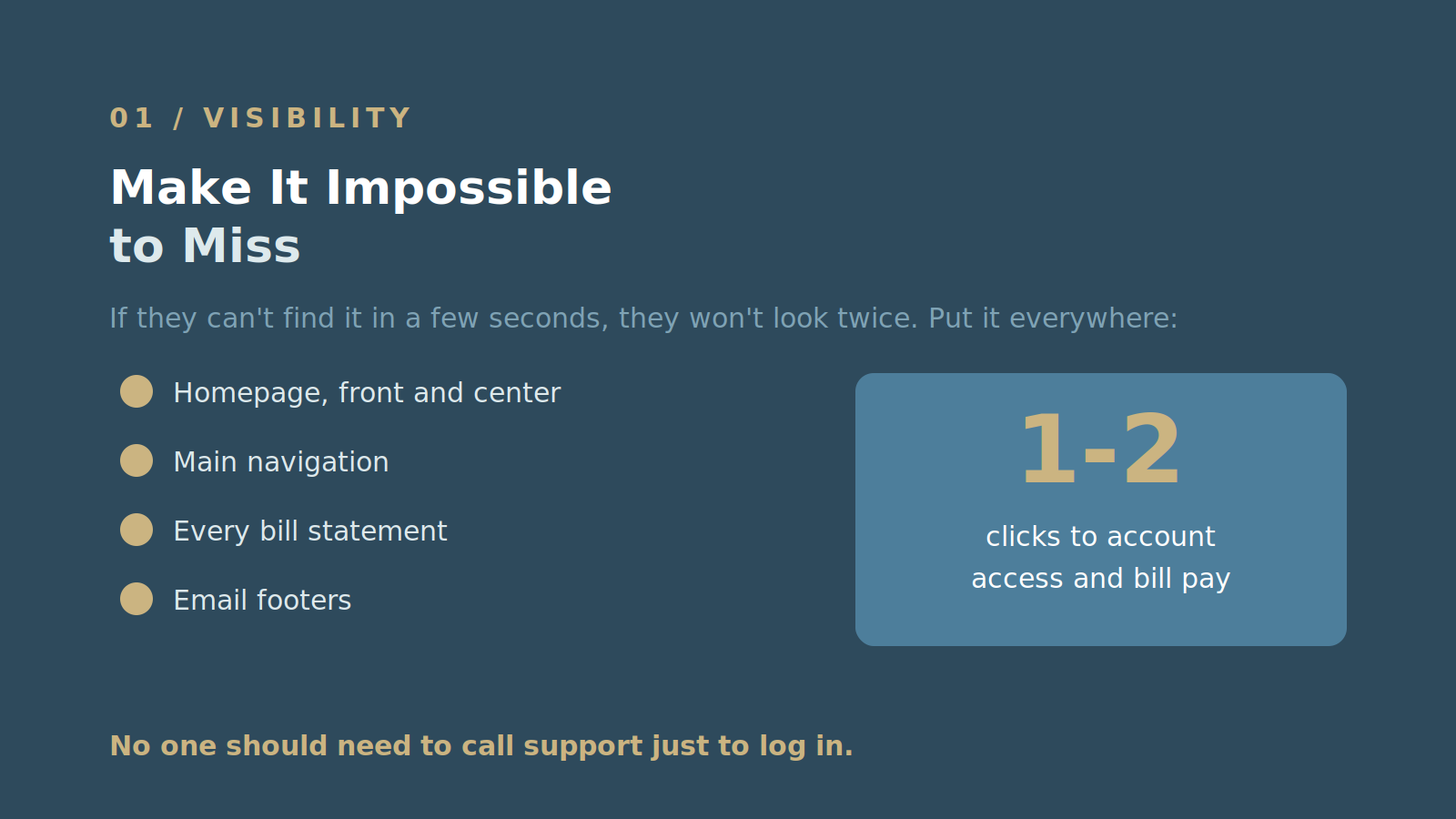
If customers can't find the portal in under a few seconds on your website, they won't look for it twice. Put it front and center: homepage, main navigation, bill statements, email footers. Once they're in, account access and bill pay should take one or two clicks, with instructions clear enough that no one needs to call support just to log in.
2. Give Them A Reason To Switch
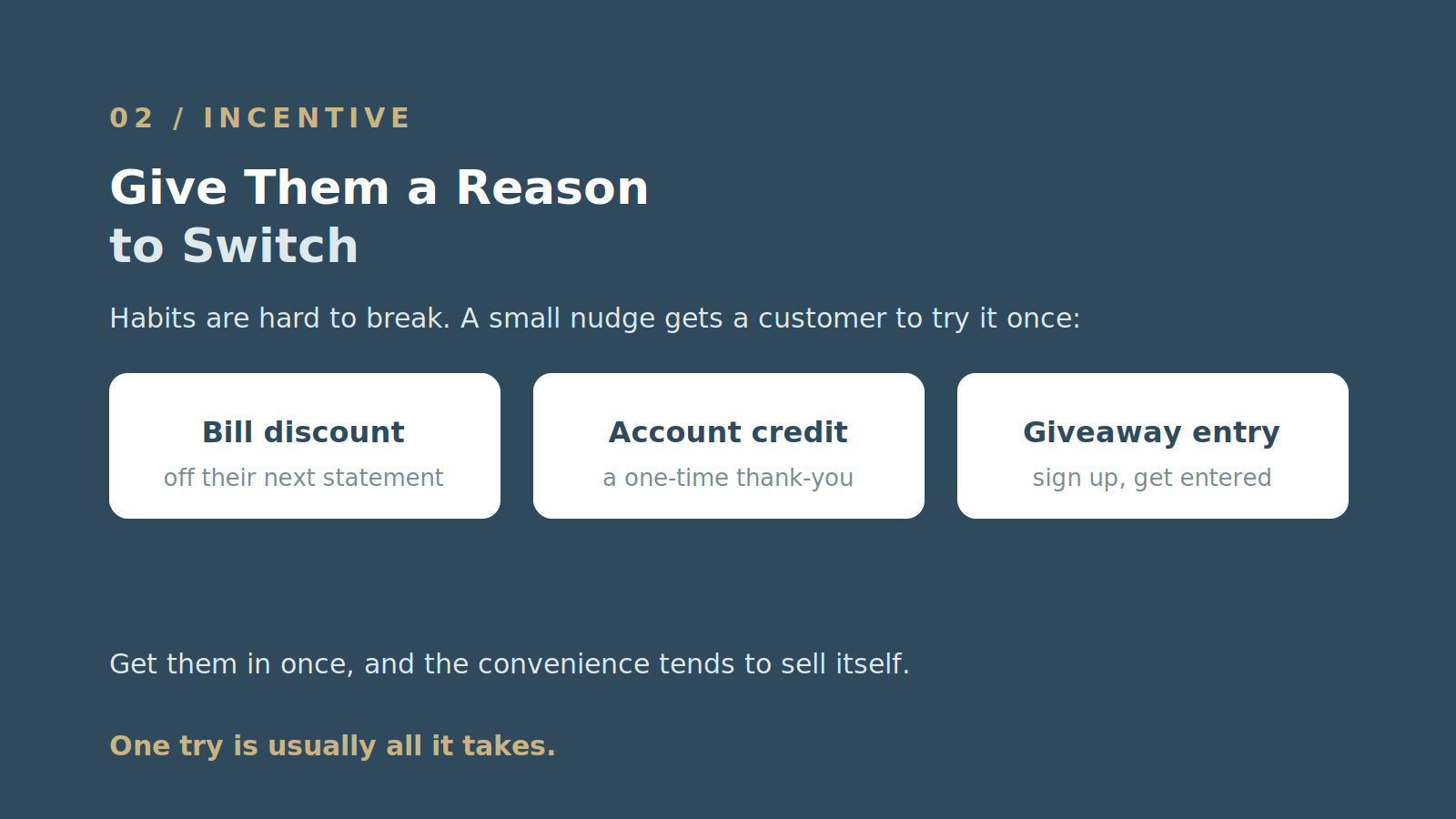
Habits are hard to break, even convenient ones. A small incentive, such as a discount on their next bill, an account credit, an entry into a giveaway, etc. is often enough to get a customer to try the portal once. After that, the convenience tends to sell itself.
3. Meet Them At Bill Time
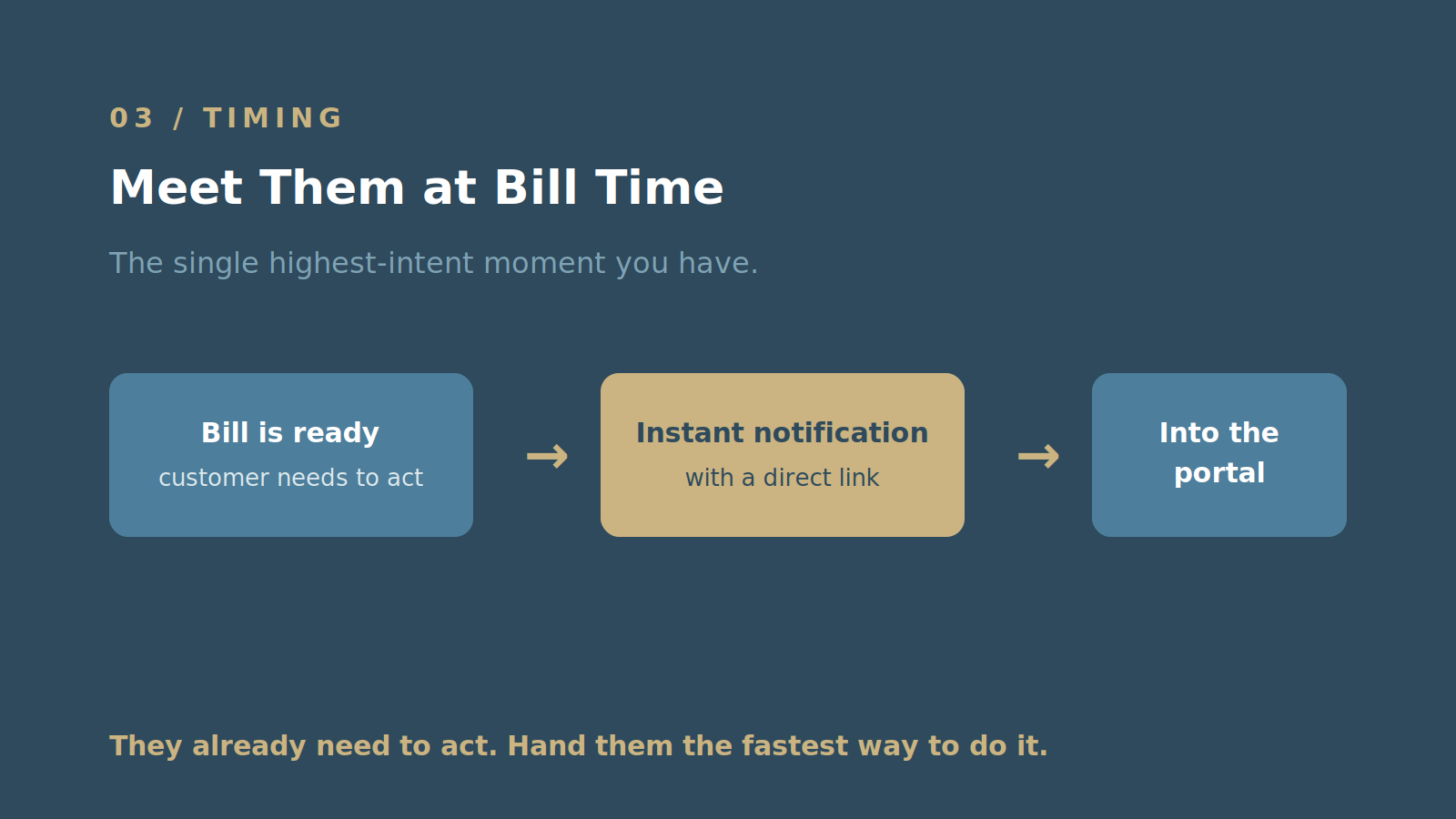
Send a notification the moment a bill is ready, with a direct link straight into the portal. This is the single highest-intent moment you have: the customer already needs to act, and you're handing them the fastest way to do it.
4. Make problems Easy To Report, Not Just Bills Easy To Pay
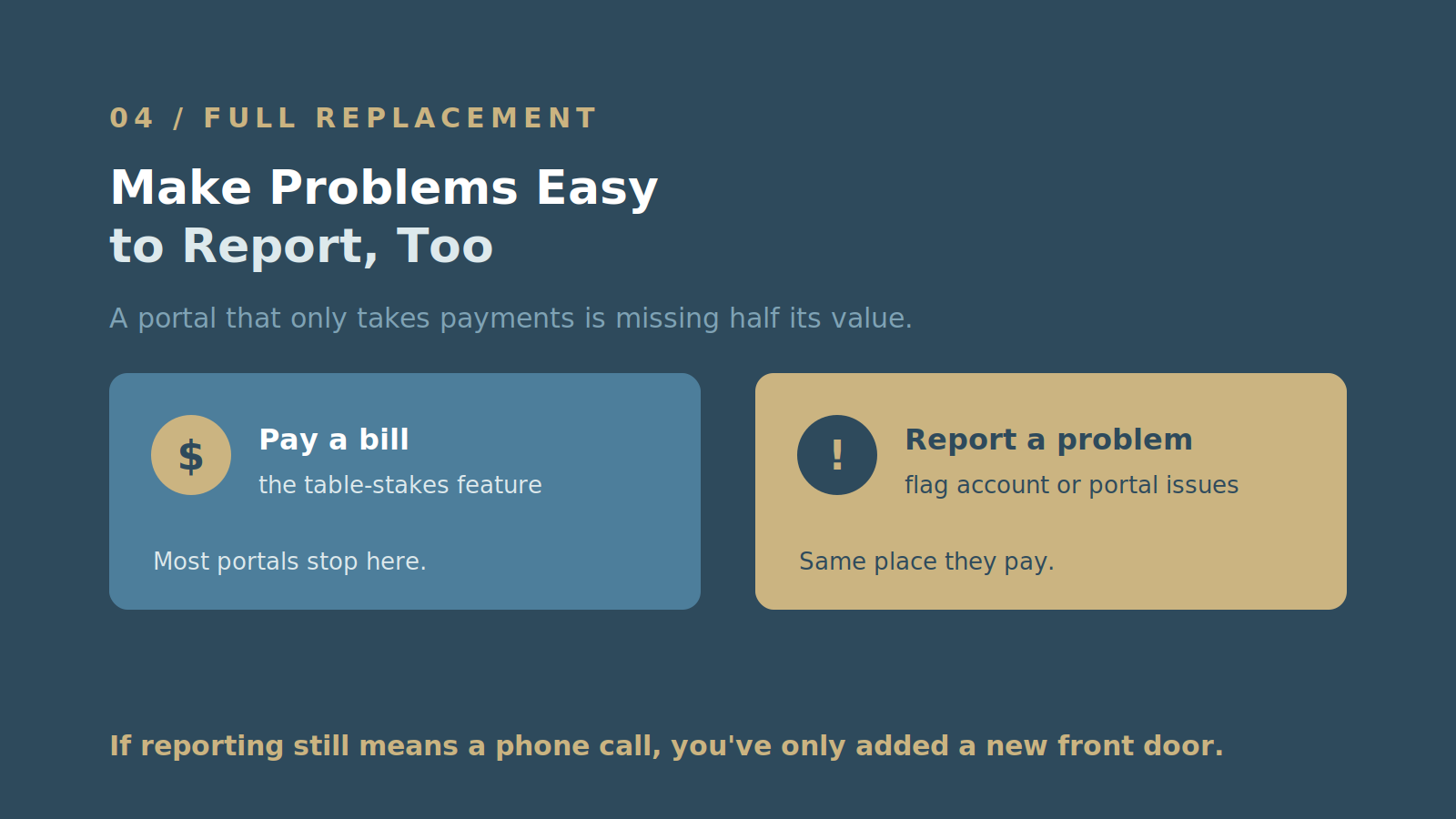
A portal that only handles payments is missing half its value. Customers should be able to flag account issues or report portal bugs from the same place they pay their bill. If reporting a problem still means a phone call, you haven't fully replaced the old process, you've just added a new front door to it.
5. Keep Building On It
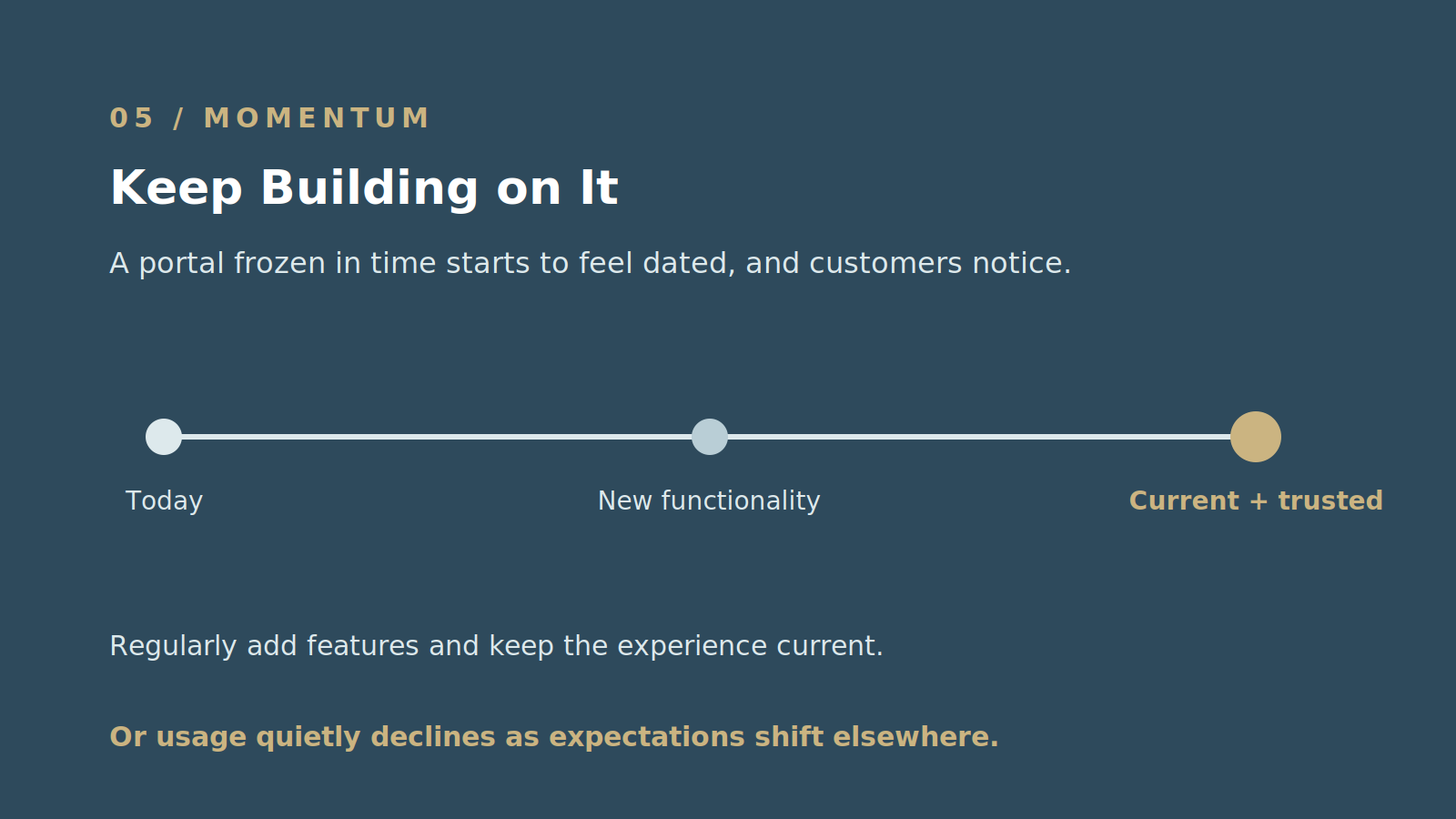
A portal that looks the same in three years as it does today will start to feel dated, and customers notice. Regularly add functionality and keep the experience current, or usage will quietly decline as expectations shift elsewhere.

Building awareness not just access
Availability isn't the same as adoption. To get customers actually using what you've built:
- Explain the benefits everywhere you already communicate — your website, email, newsletters.
- Record a short walkthrough video or host a webinar showing exactly how it works.
- Make the portal your primary channel for outage updates and other time-sensitive news, so customers have a reason to check it regularly.
- Promote it on social media, not just billing channels.

Turning usage into savings
Once customers are logged in regularly, the portal becomes more than a payment tool. It's a way to help them spend less and trust you more:
- Show usage history alongside the current bill so patterns are visible at a glance.
- Compare their current rate plan against other options that might fit their usage better.
- Auto-generate monthly usage and spending reports.
- Surface simple, personalized energy-saving tips.
A customer portal only pays off when people actually use it. Utilities can build the best tool on the market, but adoption depends on making it visible, worth trying, and worth returning to. Get those three right, and the portal stops being a feature you offer and starts being the way your customers expect to do business with you.
