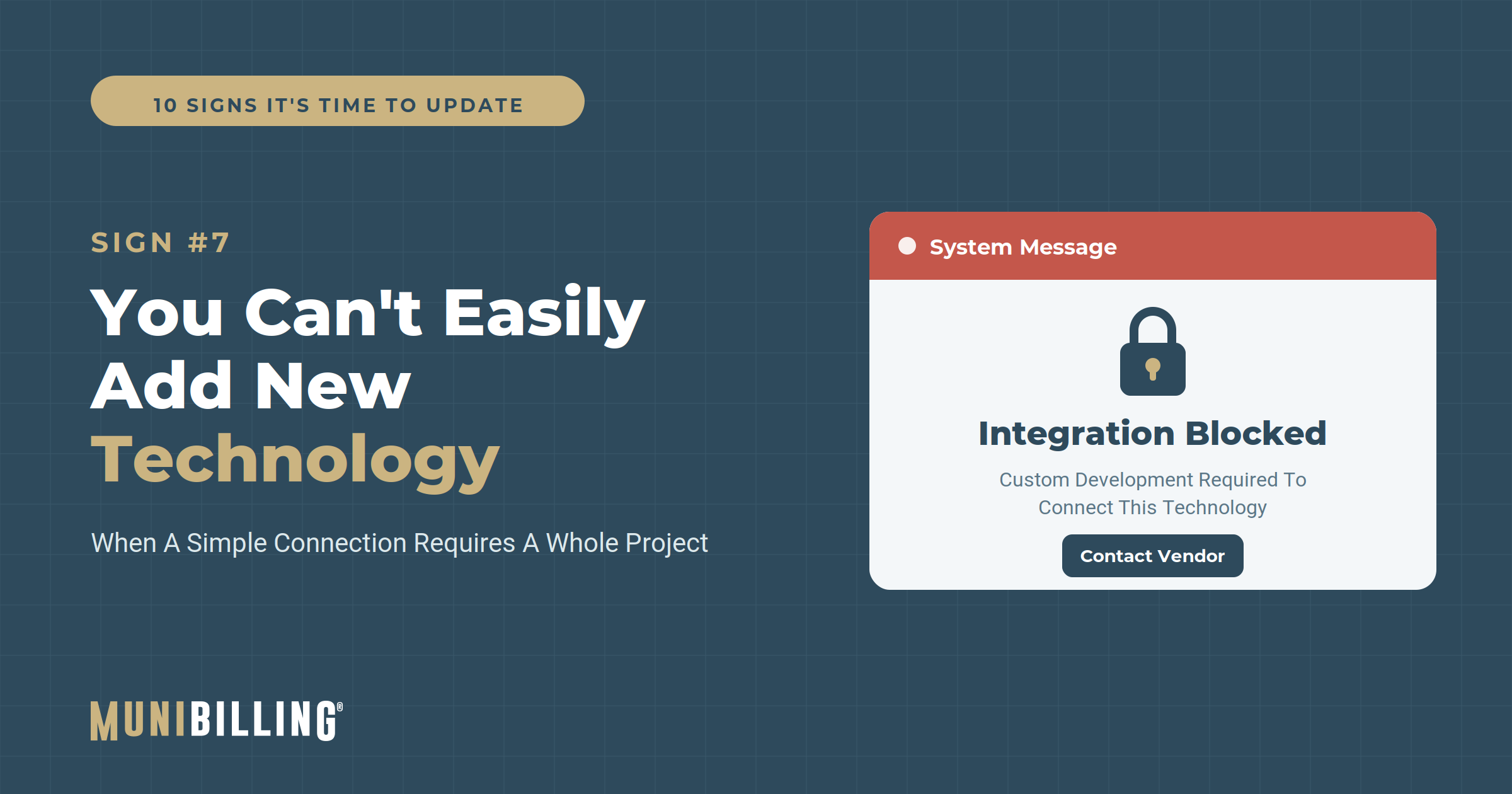
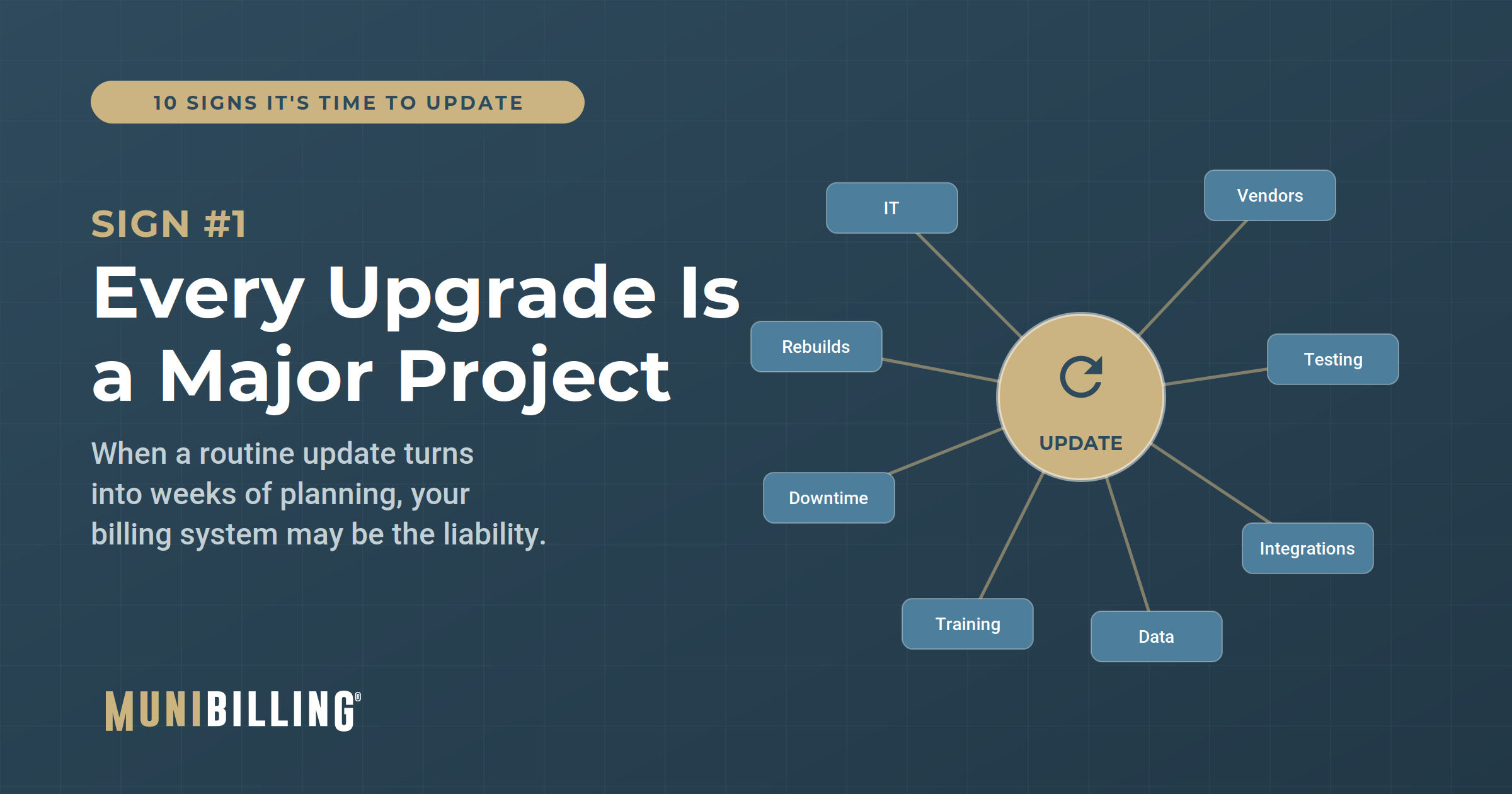
Sign #7 - You Can't Easily Add New Technology
Technology is changing quickly.
Your utility may want to add advanced metering, a new payment provider, a customer portal, mobile services, better analytics, or AI-powered automation.
But there's a problem.
Your billing system makes adding new technology difficult.
What should be a straightforward integration becomes a development project. A new capability requires custom work. A vendor has to get involved. Your IT team has to coordinate multiple systems.
Eventually, the question isn't "What technology would help our operation?"
It's:
"Can our billing system support it?"
That's a warning sign.
When "Can We Add That?" Becomes "It Depends"
A modern billing platform should make it easier to connect the technology your organization needs.
But legacy systems often weren't designed that way.
They may rely on:
- Custom integrations
- Proprietary interfaces
- Manual data transfers
- Outdated APIs
- Batch files
- Vendor-specific tools
- Point-to-point connections
- Specialized technical knowledge
That can make even relatively simple technology changes surprisingly complicated.
And every custom connection creates another piece of technology your organization eventually has to maintain.
This is one of the reasons utility billing integrations can become a major source of complexity.
Your Billing System Shouldn't Be the Technology Bottleneck
Your billing platform sits at the center of your utility's operations.
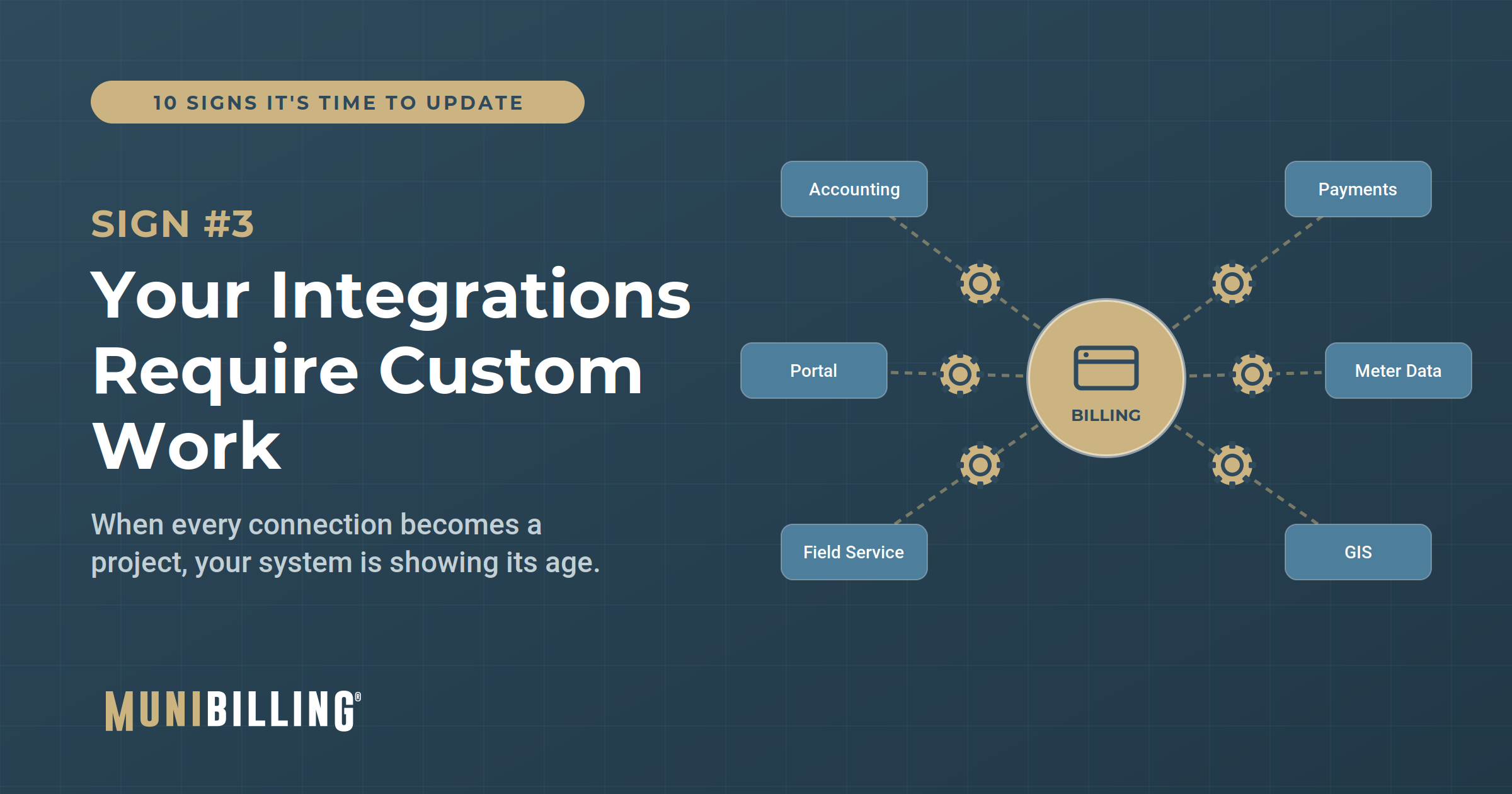
It interacts with customer information, meter data, payments, accounting, service orders, reporting, and other systems.
That makes integration capability particularly important.
If the billing platform doesn't connect easily with the rest of your technology ecosystem, it can become the bottleneck that slows everything else down.
Consider a utility that wants to implement a new payment processor.
In a flexible environment, the process might look something like:
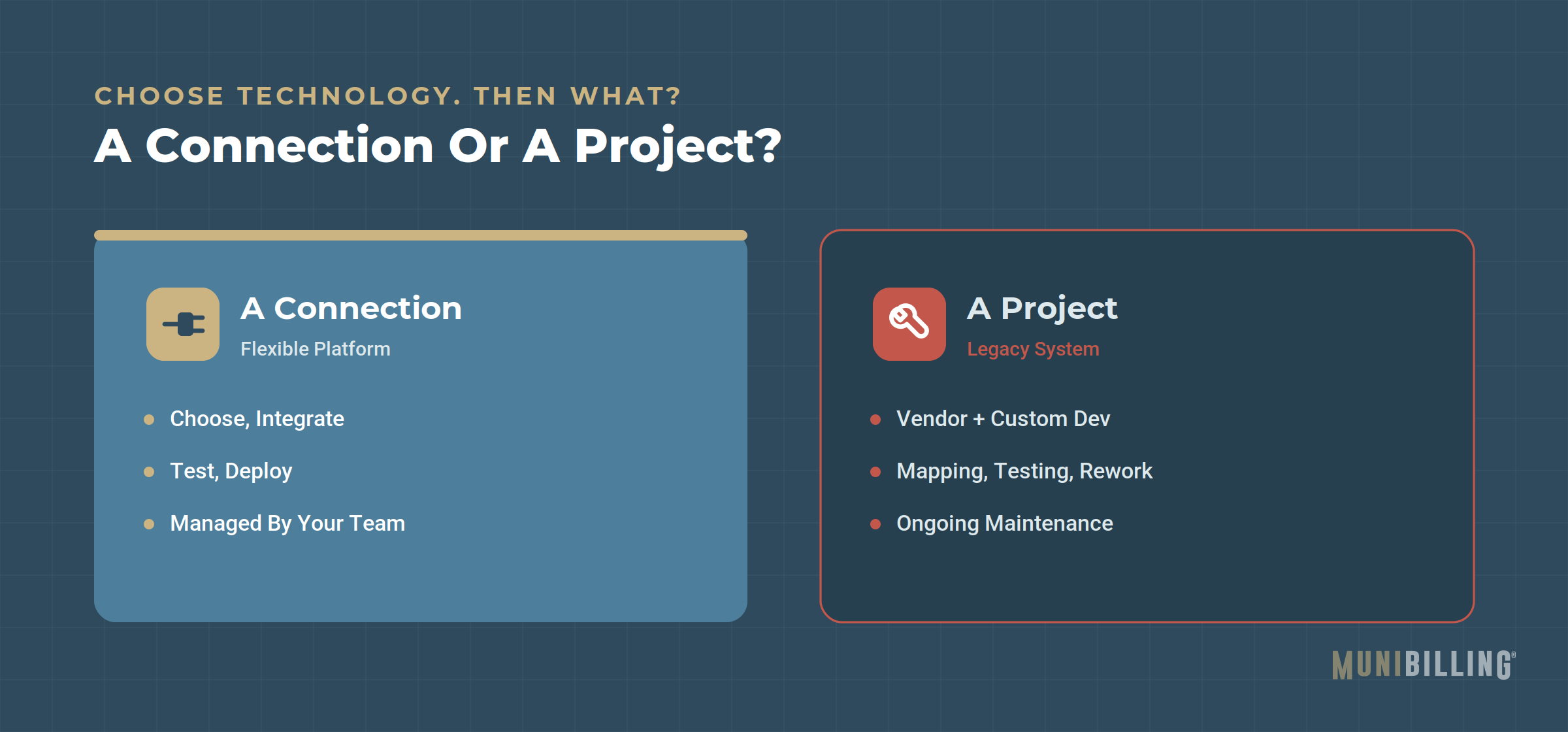
Choose Technology → Integrate → Test → Deploy
In a legacy environment, it could become:
Choose Technology → Vendor Discussion → Custom Development → Data Mapping → Testing → Troubleshooting → Rework → Deployment
The difference isn't just technical.
It's time, money, and staff capacity.
Custom Integrations Create Long-Term Costs
A custom integration may solve today's problem.
But what happens when the system on either side changes?
Now someone has to maintain it.
That can mean additional:
- Development costs
- Vendor fees
- Testing
- Documentation
- Troubleshooting
- IT support
- Upgrade work
- Data mapping
- Coordination between vendors
Over time, these connections can become technical debt.
The integration still works, but only because someone continues spending time keeping it working.
As discussed in Why Aging Utility Billing Systems Become More Expensive to Maintain, these hidden maintenance costs can accumulate long before an organization decides its software needs to be replaced.
Point Solutions Can Create Another Problem
When your billing system can't provide a capability, the natural response is often to find another system that can.
Need better reporting?
Buy an analytics tool.
Need better customer communication?
Add another platform.
Need a new payment capability?
Add another integration.
Need automation?
Find another application.
Individually, each solution may make sense.
But eventually, your organization can end up managing a collection of disconnected systems that all depend on the billing platform in some way.
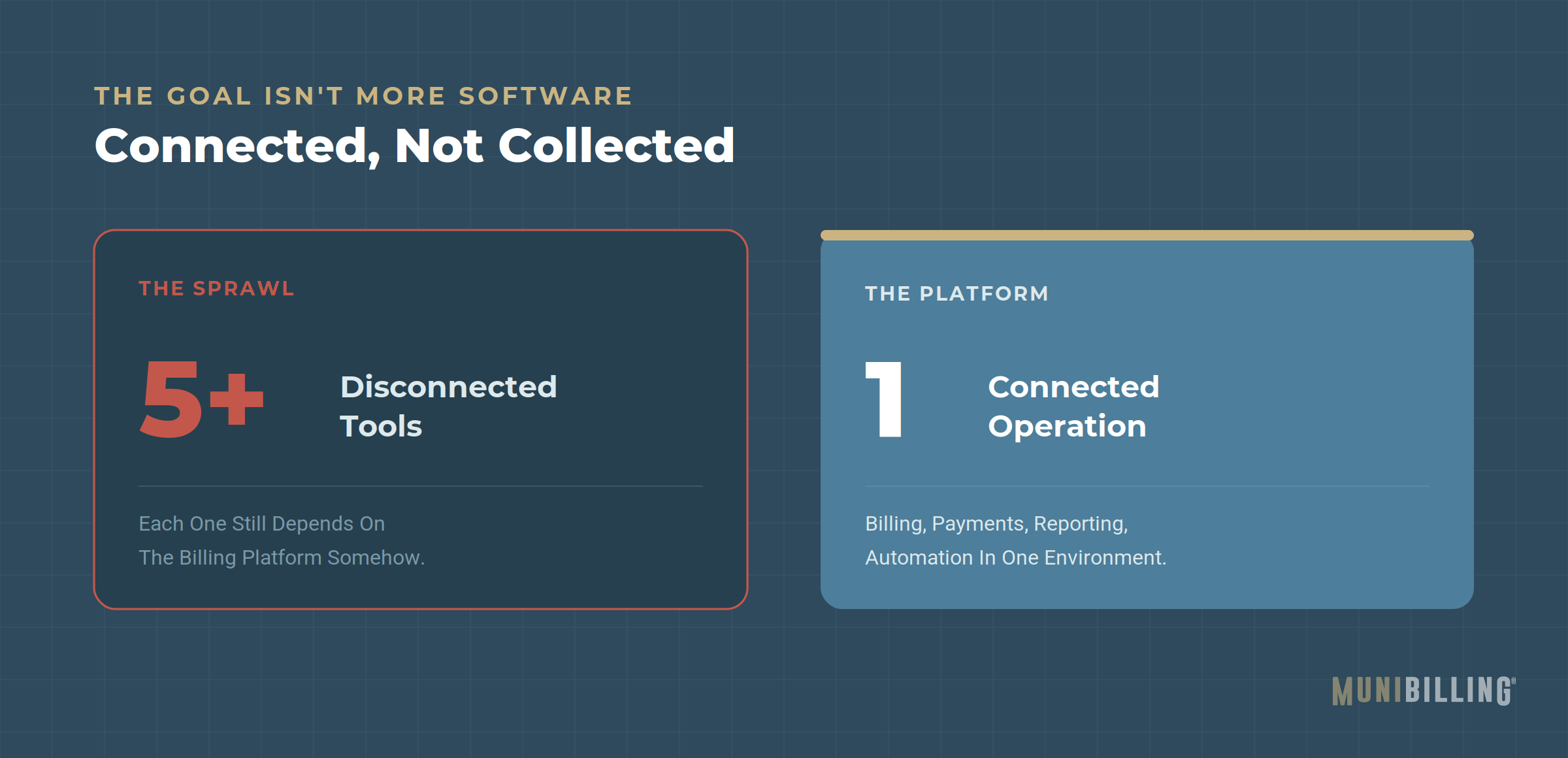
Instead of simplifying operations, technology starts creating more work.
The goal of modernization shouldn't be to add more software. It should be to create a more connected operation.
Integration Should Be Part of the Platform
Modern utility billing software should be designed to operate as part of a broader technology ecosystem.
That means supporting connections to systems such as:
- AMI and AMR
- Meter data management systems
- Accounting platforms
- Payment processors
- Property management software
- GIS
- Customer portals
- Mobile applications
- Customer communication tools
- Reporting and analytics platforms
MuniBilling's approach to integrated utility billing software is designed around connecting the systems utilities already depend on rather than forcing every process to operate independently.
Technology Should Create Options, Not Limit Them
Your technology strategy will change.
The tools your organization needs five years from now may not even exist today.
That's why flexibility matters.
A billing system shouldn't be built around a fixed list of technologies. It should provide an architecture that allows the organization to adopt new capabilities as they become valuable.
This is especially important as utilities begin evaluating AI.
AI-driven workflows may eventually change how billing exceptions, payment reconciliation, meter data, customer service, and operational processes are handled.
If your billing platform can't easily connect to new technology, adopting those capabilities becomes harder.
MuniBilling's AI-native approach to utility billing looks at this distinction more closely: AI works differently when it is considered part of the platform's architecture rather than simply added as another feature.
Ask How Difficult the Next Integration Will Be
When evaluating your billing software, don't only ask what integrations exist today.
Ask how difficult it will be to add the next one.
Questions worth asking include:
- How long does a typical integration take?
- Does every integration require custom development?
- Who maintains the integration?
- What happens when the connected system is upgraded?
- Does the platform have modern APIs?
- Can our IT team manage integrations without specialized vendor support?
- Can we add new technology without replacing our billing system?
- How does the platform support future technologies?
These questions reveal something a feature list can't:
How adaptable is the platform?
The Better Question
Instead of asking:
"Does our billing system integrate with the technology we use today?"
Ask:
"How easily can our billing system adapt when our technology needs change?"
That's the real test of flexibility.
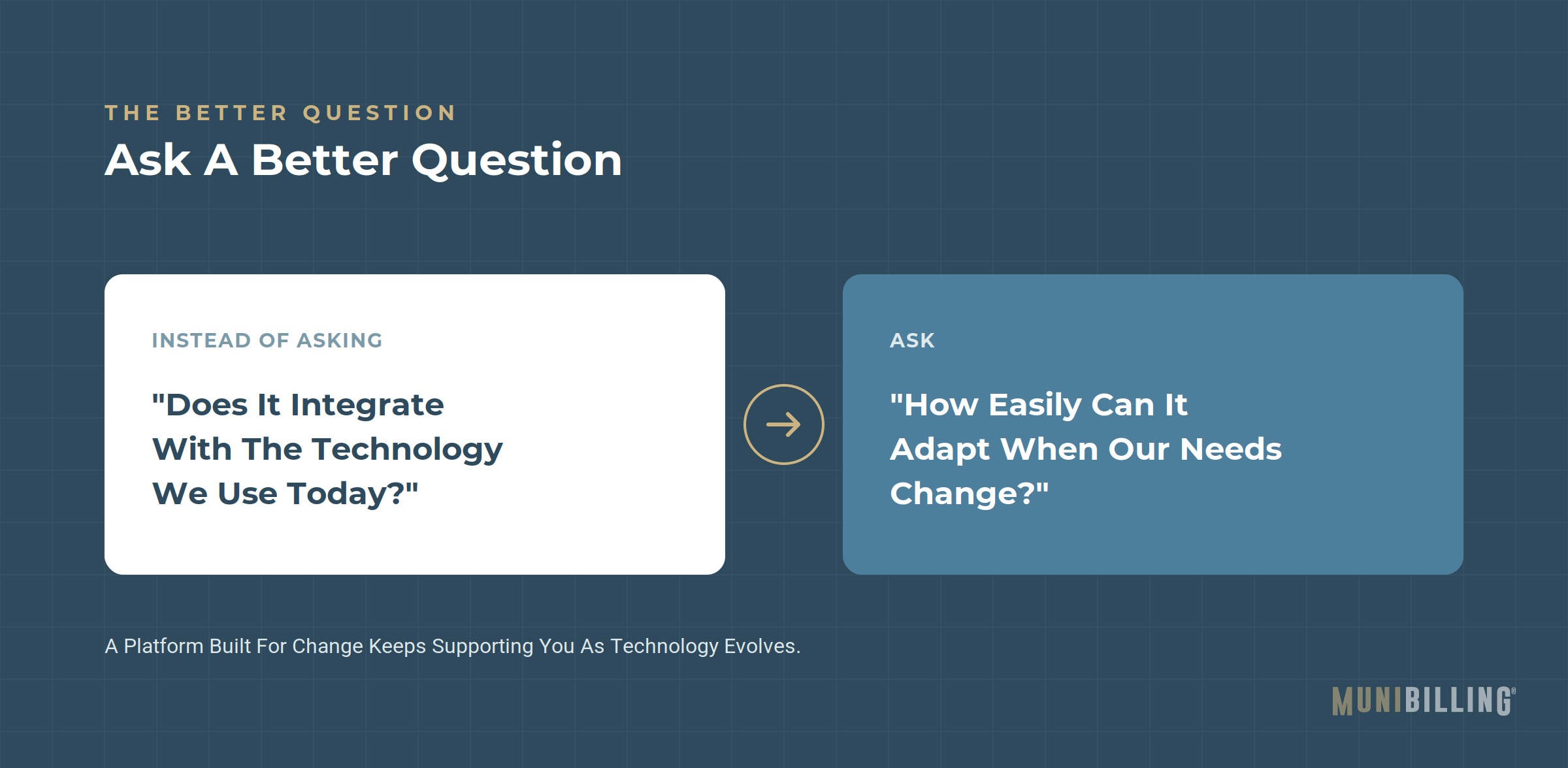
A billing platform that only supports today's technology may work perfectly well today.
But a platform designed for change can continue supporting your organization as technology evolves.
Is Your Billing System Becoming a Liability?
If adding new technology consistently requires custom development, lengthy projects, or significant vendor involvement, your billing system may be limiting your organization's ability to modernize.
And the problem compounds over time.
Every difficult integration can create more technical debt. Every workaround adds another process to maintain. Every disconnected system creates another opportunity for data to fall through the cracks.
Your billing platform should make technology easier to connect—not harder.
The right platform gives your organization the flexibility to adopt new capabilities without rebuilding the foundation every time.
How MuniBilling Approaches Modernization
MuniBilling believes a modern utility billing platform should be connected, adaptable, and built to evolve.
MultiBilling brings billing, customer management, meter data, payments, reporting, integrations, automation, and AI-driven intelligence together within a modern platform.
Rather than forcing utilities to build their operations around the limitations of legacy technology, MuniBilling is designed to provide a foundation that can evolve as the organization does.
See how MuniBilling approaches modern utility billing.
Ready to see how a more flexible billing platform could fit into your technology strategy? Schedule a MuniBilling demo.


 Jai Lewis