Sign #2: Your Staff Uses Spreadsheets to Fill the Gaps
Spreadsheets aren't inherently bad. Utility teams use them every day for analysis, planning, and tracking.
The problem starts when spreadsheets become a necessary part of your billing process.
If your staff regularly exports billing data, manipulates it in Excel, tracks exceptions in spreadsheets, or maintains separate files because the billing system can't do what they need, your software may be showing its age.
When Spreadsheets Become a Workaround
A spreadsheet often starts innocently.
Someone needs a report the system can't produce. A billing specialist creates a spreadsheet.
A process requires information from two systems. Someone exports both files and combines them.
A recurring exception needs to be tracked. Someone creates a spreadsheet.
Over time, these workarounds become part of the billing operation.
The result is a process that looks something like:
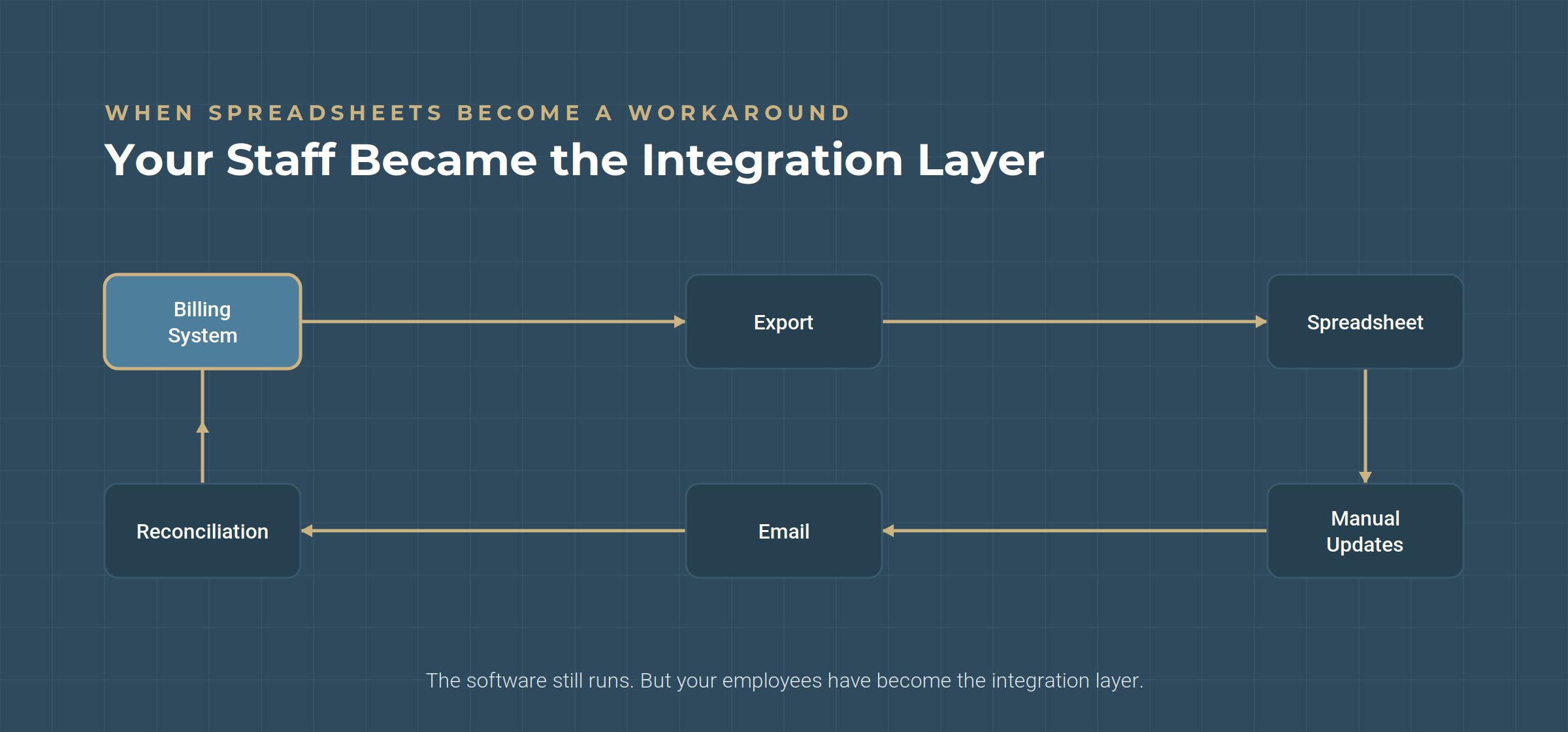
Billing System → Export → Spreadsheet → Manual Updates → Email → Reconciliation → Billing System
The software may still be running. But your employees have become the integration layer.
The Hidden Cost of Manual Work
Every manual step introduces additional work and another opportunity for error.
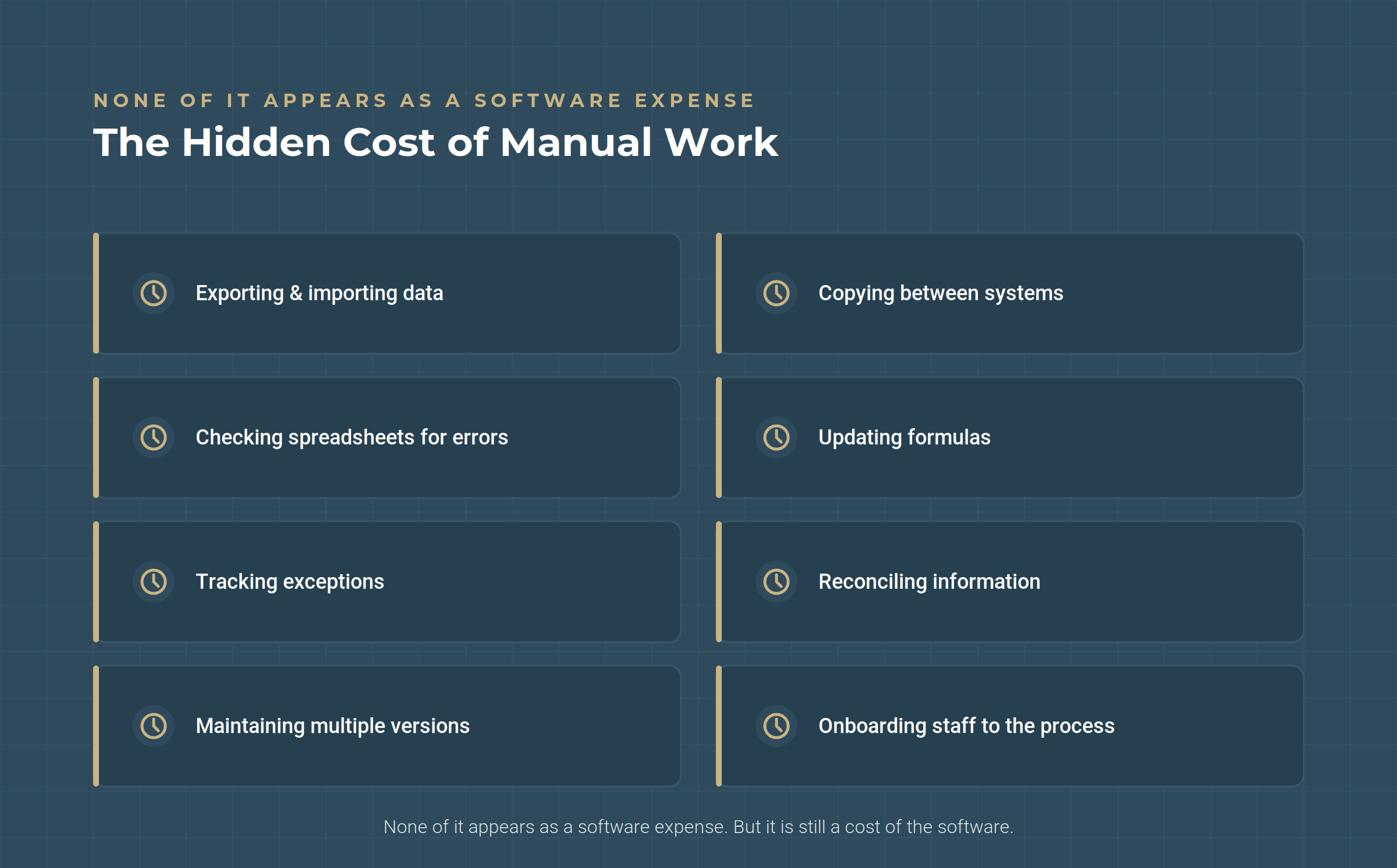
Your team may spend time:
- Exporting and importing data
- Copying information between systems
- Checking spreadsheets for errors
- Updating formulas
- Tracking exceptions
- Reconciling information
- Maintaining multiple versions of the same data
- Explaining spreadsheet-based processes to new employees
None of that may appear as a software expense.
But it is still a cost of the software.
Spreadsheets Create Knowledge Risk
There's another problem with spreadsheet-based processes: they often depend on individual knowledge.
One employee knows which file to use. Another knows how the formulas work. Someone else knows which columns need to be updated before billing.
When those employees leave, the process can leave with them.
A modern billing platform should make important workflows visible, repeatable, and easier to understand not dependent on someone's personal spreadsheet.
Why This Gets Worse Over Time
The more an organization relies on workarounds, the harder it becomes to change the underlying process.
A spreadsheet becomes essential.
Then another spreadsheet is created to support it.
Then someone builds a report from that spreadsheet.
Eventually, the organization has created an unofficial system around the official system.
That's a sign your billing platform may no longer be keeping up with the operation.
The Better Question
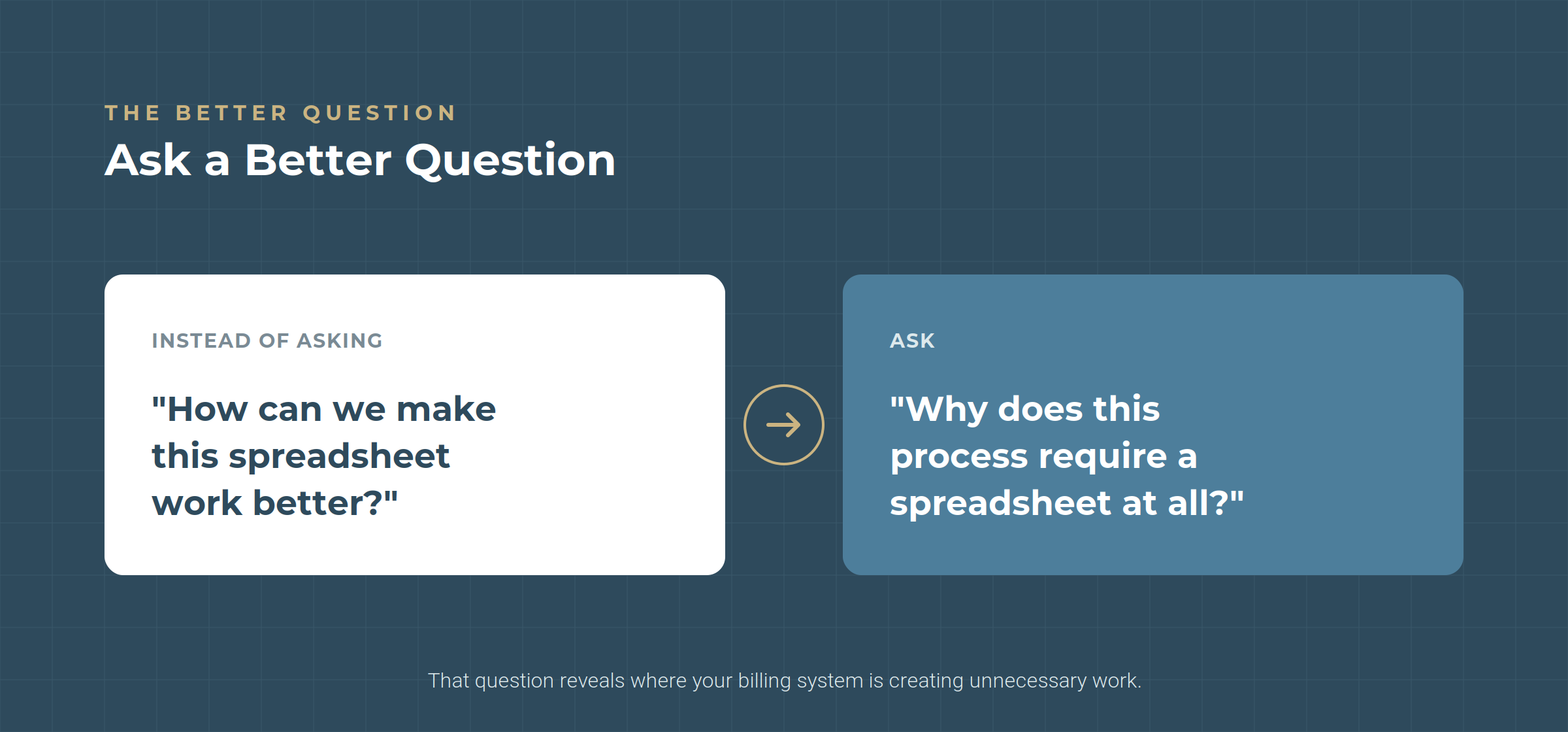
Instead of asking:
“How can we make this spreadsheet work better?”
Ask:
“Why does this process require a spreadsheet in the first place?”
That question can reveal where your billing system is creating unnecessary work.
Is Your Billing System Becoming a Liability?
If your team relies on spreadsheets to complete routine billing tasks, connect systems, create essential reports, or track exceptions, it's worth looking at the bigger picture.
The issue isn't that your employees use Excel.
The issue is when they have to use Excel because their billing software can't do the job.


 Jai Lewis