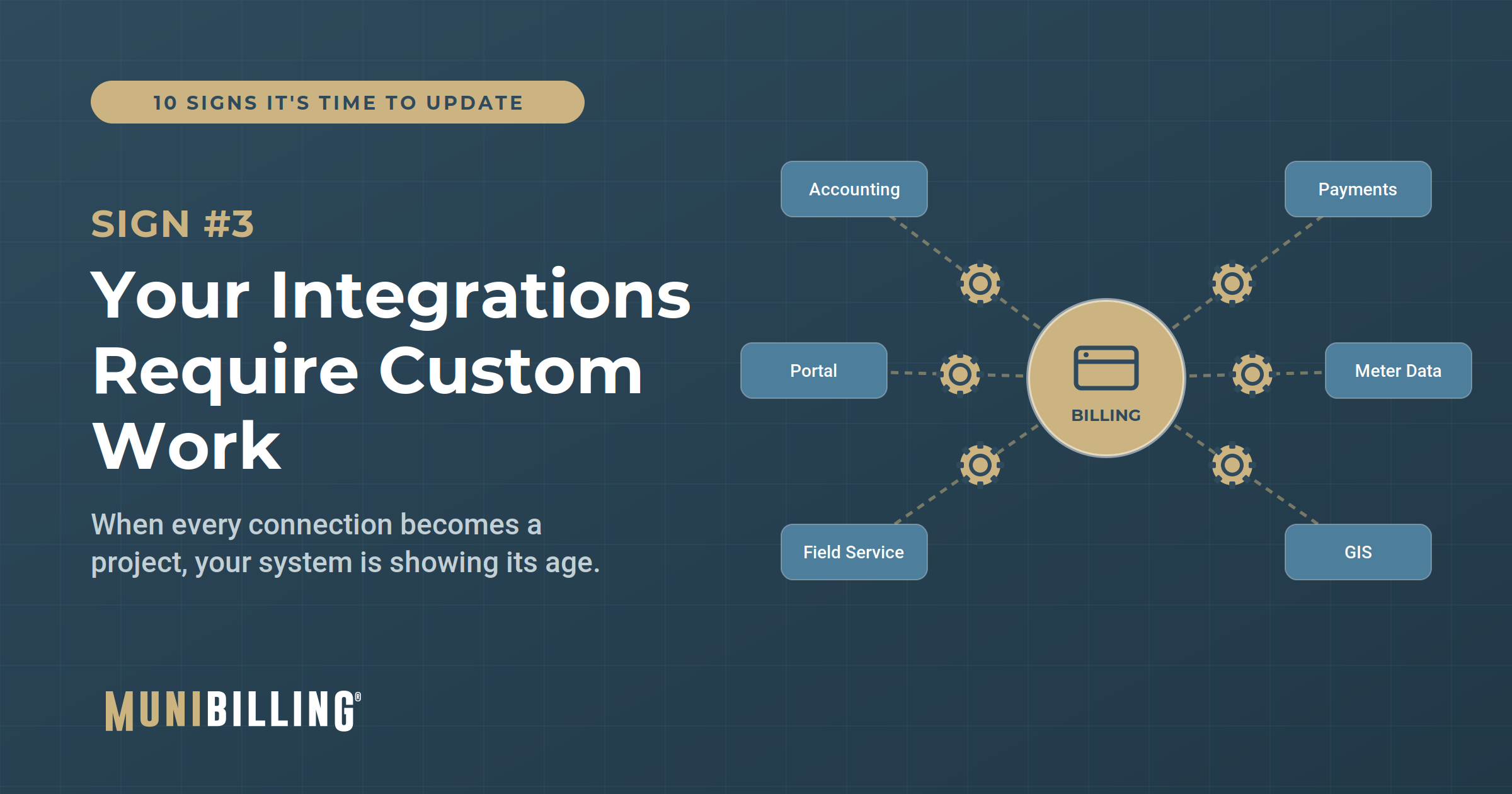
Sign #3 - Your Integrations Require Custom Work
Your utility billing system probably doesn't operate alone.
It needs to exchange information with accounting, payment processing, meter reading, GIS, customer portals, field service, property management systems, and other technology.
When those connections require custom development every time something changes, your billing system may be showing its age.
When Integration Becomes a Project
In a modern technology environment, systems need to communicate.
But aging billing platforms often weren't designed for today's connected utility operation. Connecting a new system—or changing an existing one—can require custom interfaces, middleware, vendor involvement, and extensive testing.
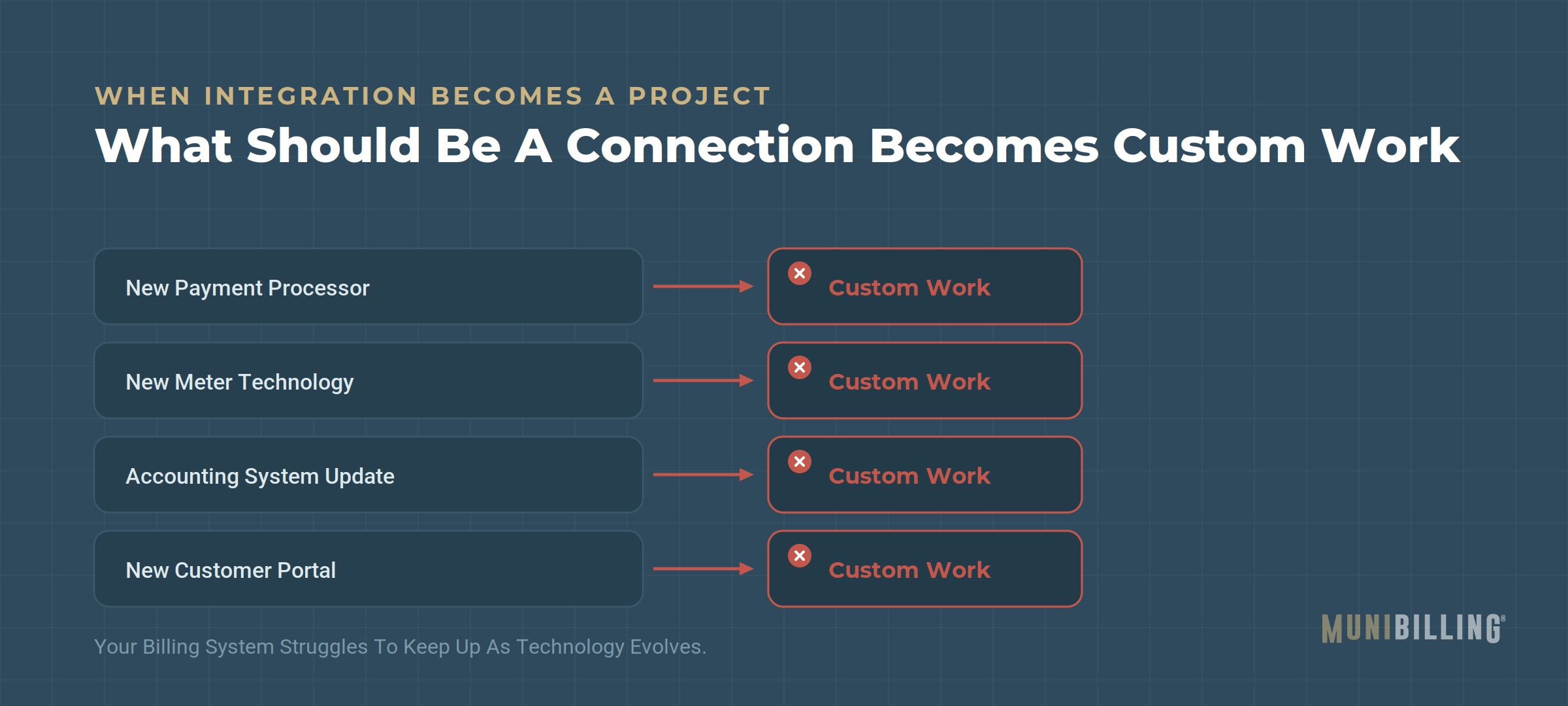
What should be a connection becomes a project.
New payment processor? Custom work.
New meter technology? Custom work.
Accounting system update? Custom work.
New customer portal? Custom work.
The technology surrounding your billing system evolves, but your billing system struggles to keep up.
Your Employees Become the Connection
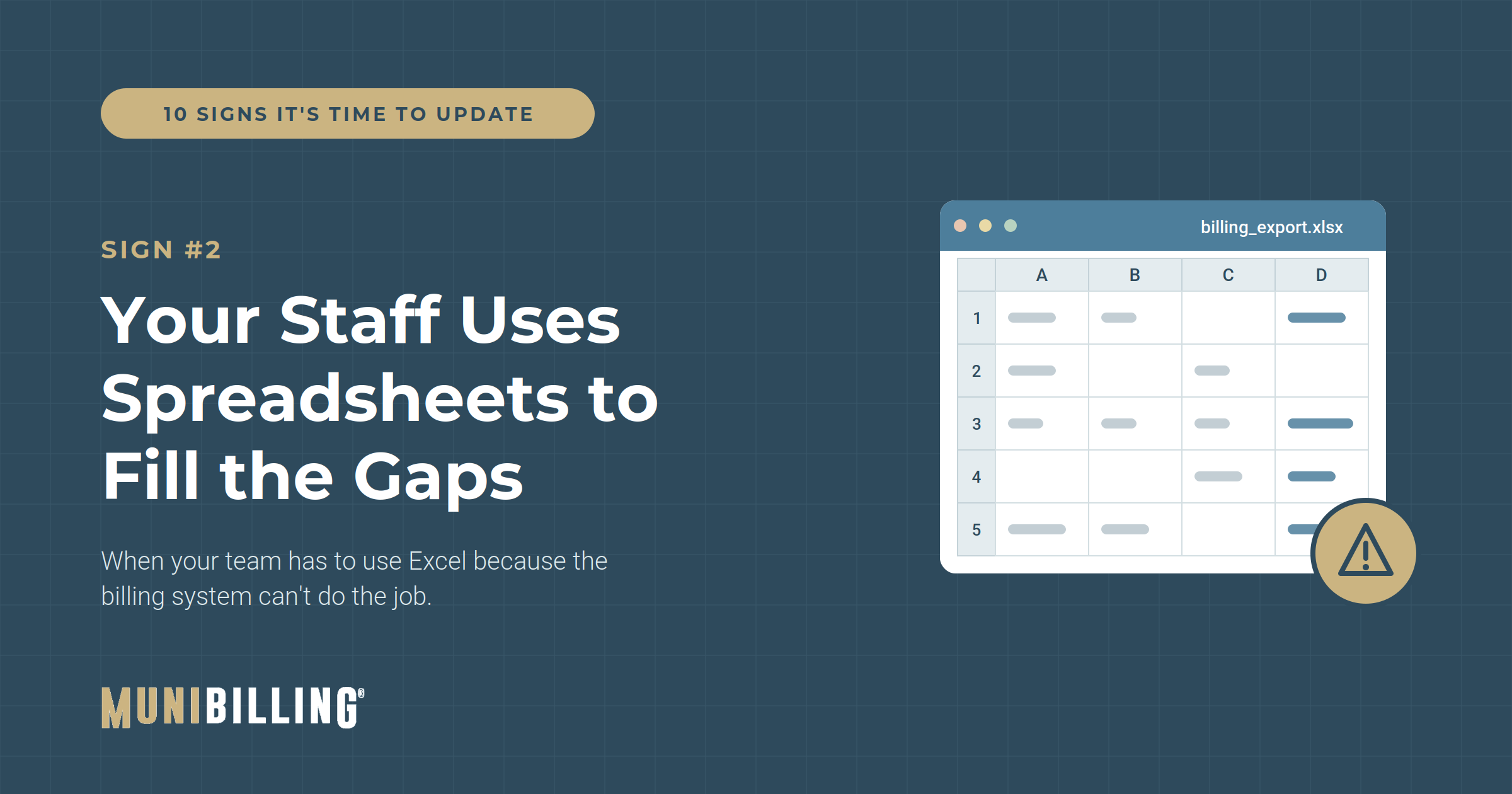
When systems don't communicate easily, staff often step in.
They download files, upload information, reconcile records, check for errors, and move data between systems.
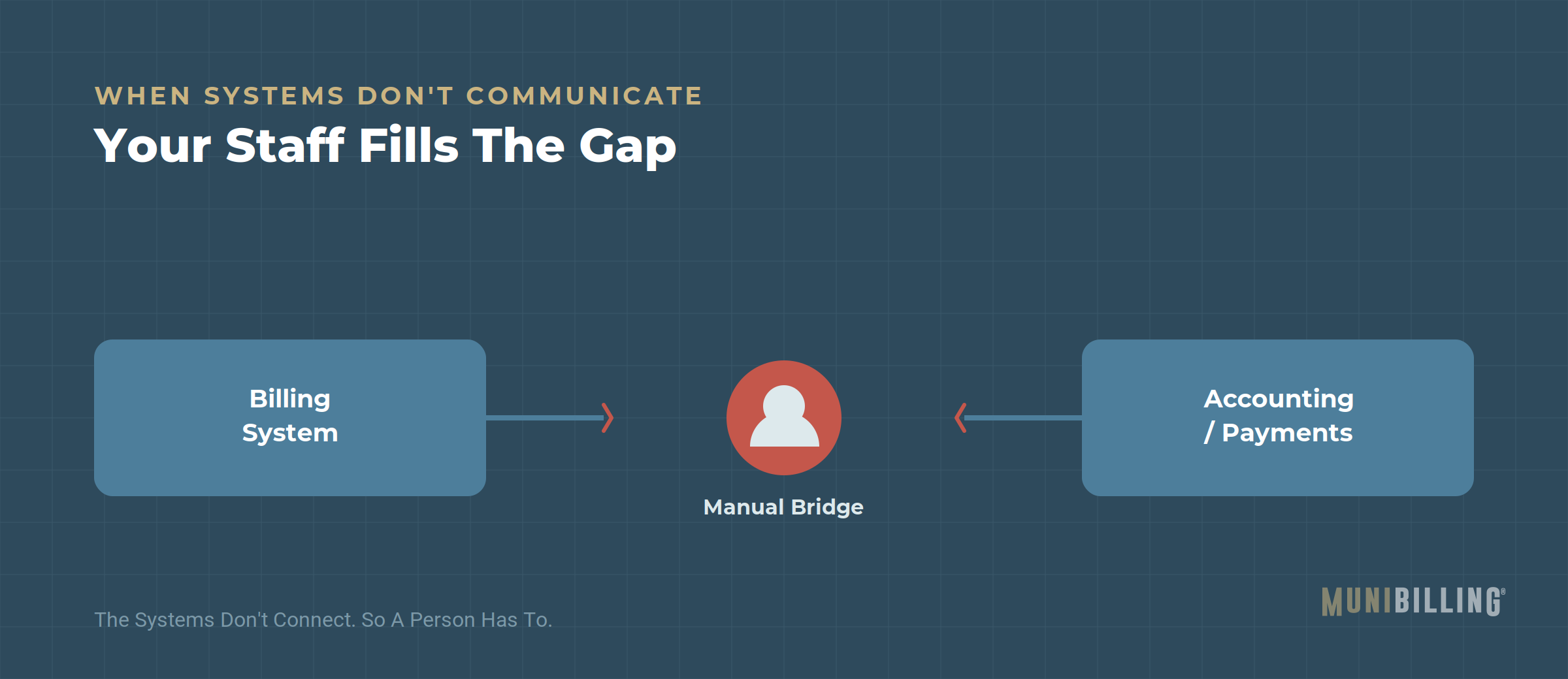
Now the process depends on people instead of technology.
That creates more manual work and more opportunities for something to go wrong.
The Hidden Cost of Custom Integrations
Custom integrations aren't necessarily bad. Sometimes they're necessary.
The problem is when every integration becomes a custom project.
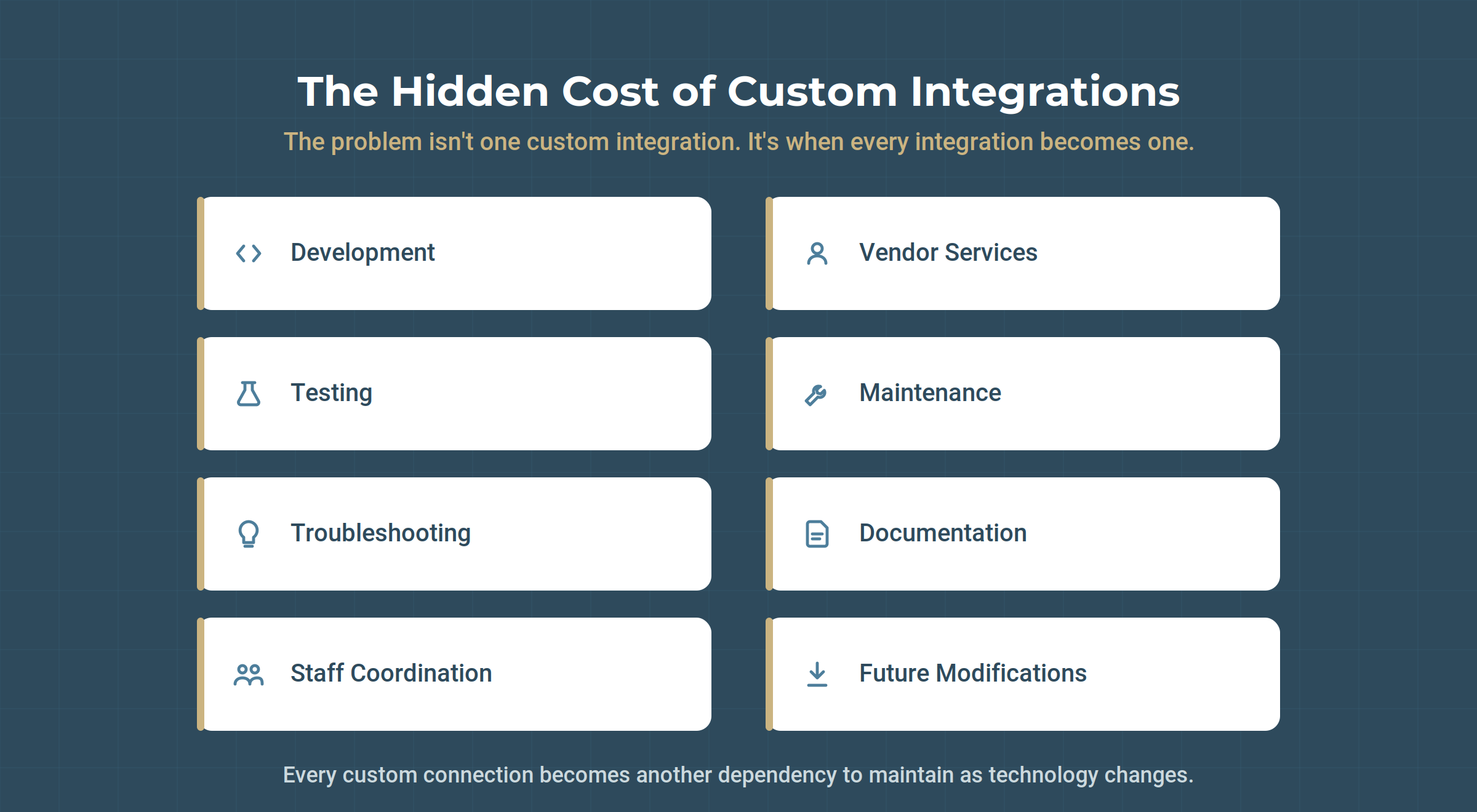
The costs can include:
- Development
- Vendor services
- Testing
- Maintenance
- Troubleshooting
- Documentation
- Staff coordination
- Future modifications
And every custom connection can create another dependency that must be maintained as technology changes.
Integrations Should Enable Modernization
Your billing system shouldn't prevent you from adopting better technology.
If connecting a new application is difficult, your organization may delay the project altogether.
That creates a technology bottleneck:
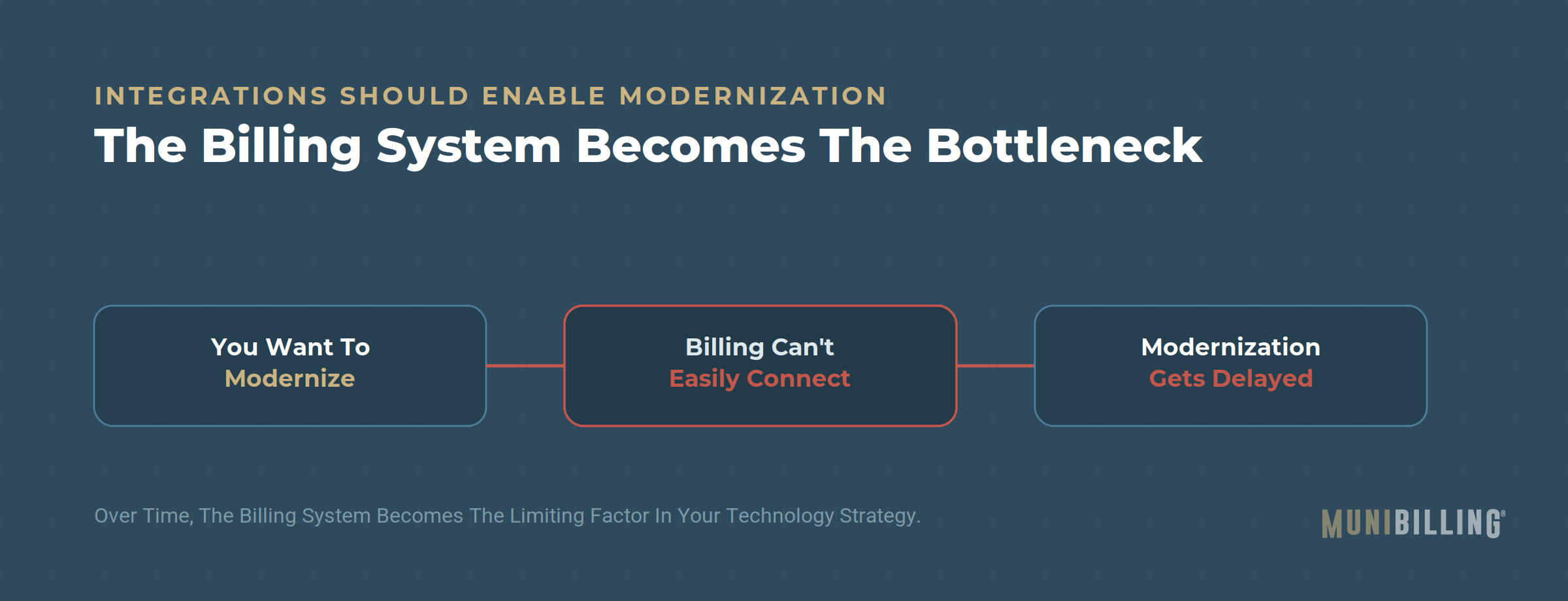
Your organization wants to modernize → your billing system can't easily connect → modernization gets delayed.
Over time, the billing system becomes the limiting factor in your technology strategy.
The Better Question
Don't just ask:
“Can our billing system integrate with it?”
Ask:
“How much work will it take to integrate—and how much work will it take to maintain that integration?”
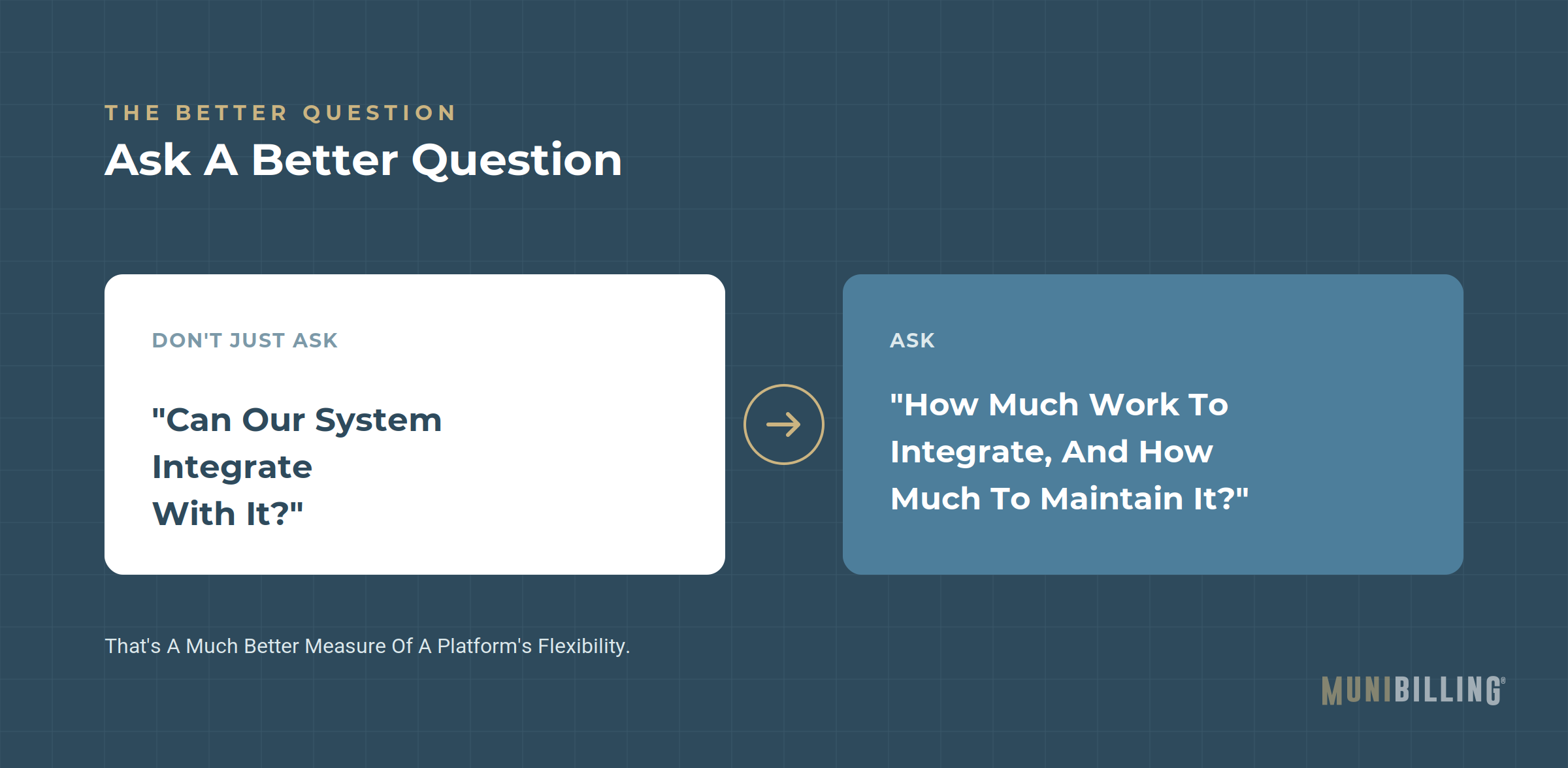
That's a much better measure of a platform's flexibility.
Is Your Billing System Becoming a Liability?
If every new integration requires custom development, lengthy testing, or significant vendor involvement, your billing platform may be creating technology debt instead of reducing it.
A modern billing platform should make it easier to connect the systems your organization already uses—and adopt new technology as your needs change.


 Jai Lewis